

More
Checking your session
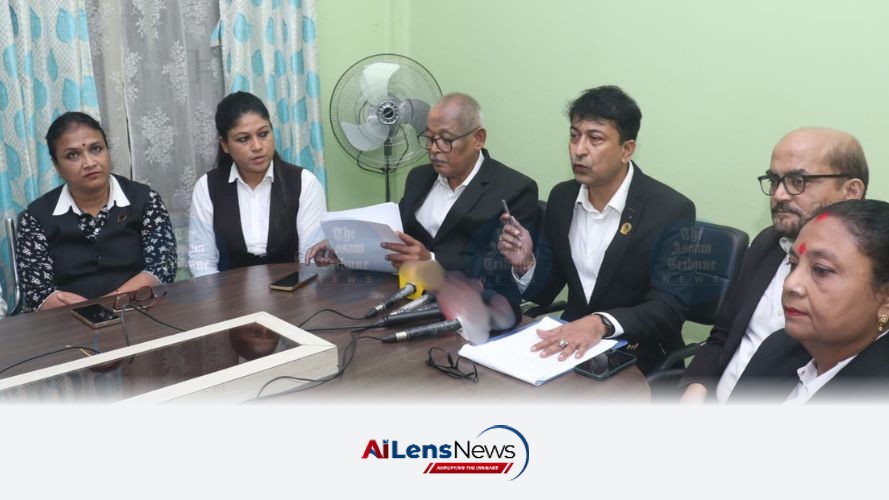



The Lawyers’ Association of Guwahati is urging the Assam government for a clear timeline regarding the relocation of district courts to the proposed Rangmahal judicial township.
Imphal, India Aug 24, 2026 ALN: The Lawyers’ Association, Guwahati (LAG), on Monday, sought a clear timeline for relocating the district judiciary to the proposed integrated judicial township at Rangmahal, urging the Assam government to clarify its stand on the permanent shifting of courts. This demand comes amid growing concerns regarding the adequacy of current court facilities and the implications of prolonged uncertainty for legal practitioners and the public.
Addressing a press conference at the association’s Panbazar office, LAG general secretary Apurba Kumar Sharma stated that the association had obtained the Detailed Project Report (DPR) for the Rangmahal judicial township through a Right to Information (RTI) application filed with the Public Works Department (PWD). The transparency afforded by the RTI process is significant, as it sheds light on the government’s plans and the expectations surrounding the relocation.
According to Sharma, the DPR envisages the relocation in three phases but does not clearly specify when the district judiciary will be shifted. This lack of clarity has raised alarms among the legal community, which relies on a stable and accessible judicial infrastructure to serve the public effectively. The phased approach outlined in the DPR indicates that while the intention to establish a new judicial township is present, the execution timeline remains vague.
“We found architectural drawings only for the Phase-I buildings. There is no mention of when the district judiciary will be relocated, what type of accommodation will be provided, or what facilities will be available there,” he said. This absence of detailed planning poses a risk to the efficient functioning of the legal system, as lawyers and clients may face disruptions in accessing justice.
According to the DPR received by the association, the first phase involves shifting the Gauhati High Court, High Court offices, and the High Court Bar building, with the work expected to be completed within three years. The second phase involves the expansion of the High Court and Bar facilities, while the district judiciary has been included only in the third phase, Sharma noted. This staggered approach raises questions about the prioritization of the district judiciary, which plays a crucial role in the daily lives of citizens seeking legal recourse.
Sharma expressed concern that the lack of a clear roadmap has created uncertainty among advocates, particularly as the number of lawyers continues to grow. The growing legal community in Assam underscores the importance of adequate facilities to meet the increasing demands for legal services. “If we cannot operate or perform properly, it will be the common people who suffer the most in their pursuit of justice. That is why we demand that the government clarify its stand and provide a clear timeline for our permanent relocation,” he emphasized. The implications of this uncertainty extend beyond the legal profession; they affect the general populace's access to justice, which is a cornerstone of democratic society.
Concerns over GAD building
The association also raised concerns about the condition of courts that have already been shifted to the General Administration Department (GAD) building. The adequacy of court facilities is a pressing issue that directly impacts the quality of legal proceedings. LAG president Pradip Kumar Konwar alleged that the courtrooms were “too small and lack sufficient space for advocates, litigants, and members of the public.” The spatial constraints in the GAD building may hinder the ability to conduct hearings effectively, leading to potential delays and frustrations for those involved in legal matters.
The association also claimed that the premises have inadequate sanitation facilities, poor ventilation, and no lifts, creating difficulties for elderly people and persons with disabilities. These accessibility issues are particularly concerning as they highlight the systemic barriers that can prevent marginalized individuals from accessing justice. Displaying a photograph at the press conference, Sharma highlighted the case of a woman with a disability who was allegedly forced to sit on a staircase because she could not access the upper floors of the building. This incident exemplifies the urgent need for facilities that accommodate all individuals, regardless of their physical capabilities.
“This lady came to the Chief Judicial Magistrate Court on July 17. When I asked why she was sitting on the stairs, she said she had a case but could not climb the stairs,” Sharma recounted. Such anecdotes serve to illustrate the real-world consequences of inadequate infrastructure on the pursuit of justice. The office-bearers stated that the matter had been brought to the notice of the Chief Judicial Magistrate, but no corrective measures had been taken so far, further amplifying the frustration of legal practitioners and the public alike.
Opposition to temporary relocation
The association also expressed concern that the government may demolish the historic Lawyers’ Association, Guwahati office and premises as part of the Brahmaputra riverfront beautification project. This potential loss of a significant legal landmark raises questions about the preservation of historical sites and their role in the legal community. Several Chief Judicial Magistrate courts have already been shifted from the Panbazar complex to the GAD building, indicating a trend towards centralization that may not adequately address the needs of the local population.
While opposing any temporary relocation, the association clarified that it is not against permanently moving the judiciary to an integrated campus. “However, we strongly oppose any temporary arrangement without adequate facilities. If such a decision is imposed, we will have no option but to launch an agitation,” Konwar and Sharma stated. This declaration of intent to protest underscores the seriousness of their concerns and highlights the potential for civil action if their demands are not met.
Founded in 1885, the Lawyers’ Association, Guwahati is one of the oldest advocates’ bodies in the country and has been associated with several major political, legal, and social developments in Assam’s history. The association's long-standing presence in the region adds weight to their demands, as they represent not only the interests of their members but also the broader implications for the legal system in Assam. The outcome of this situation may have lasting effects on the judiciary's operational capacity and the public's access to justice in the region.
To learn more about the latest developments in Crime & Law, stay updated with our exclusive reports and analyses on AILensNews.

Northeast power ministers have called for a larger share of the 10% Gross Budget…

In response to renewed tensions in Senapati, the CRPF's CoBRA unit conducted doo…

A joint operation by security forces in Manipur led to the recovery of numerous …

The Cockroach Janta Party plans a protest march in Delhi on Teachers' Day, citin…

In a tragic incident in Ghaziabad, a man killed his wife and 15-year-old daughte…