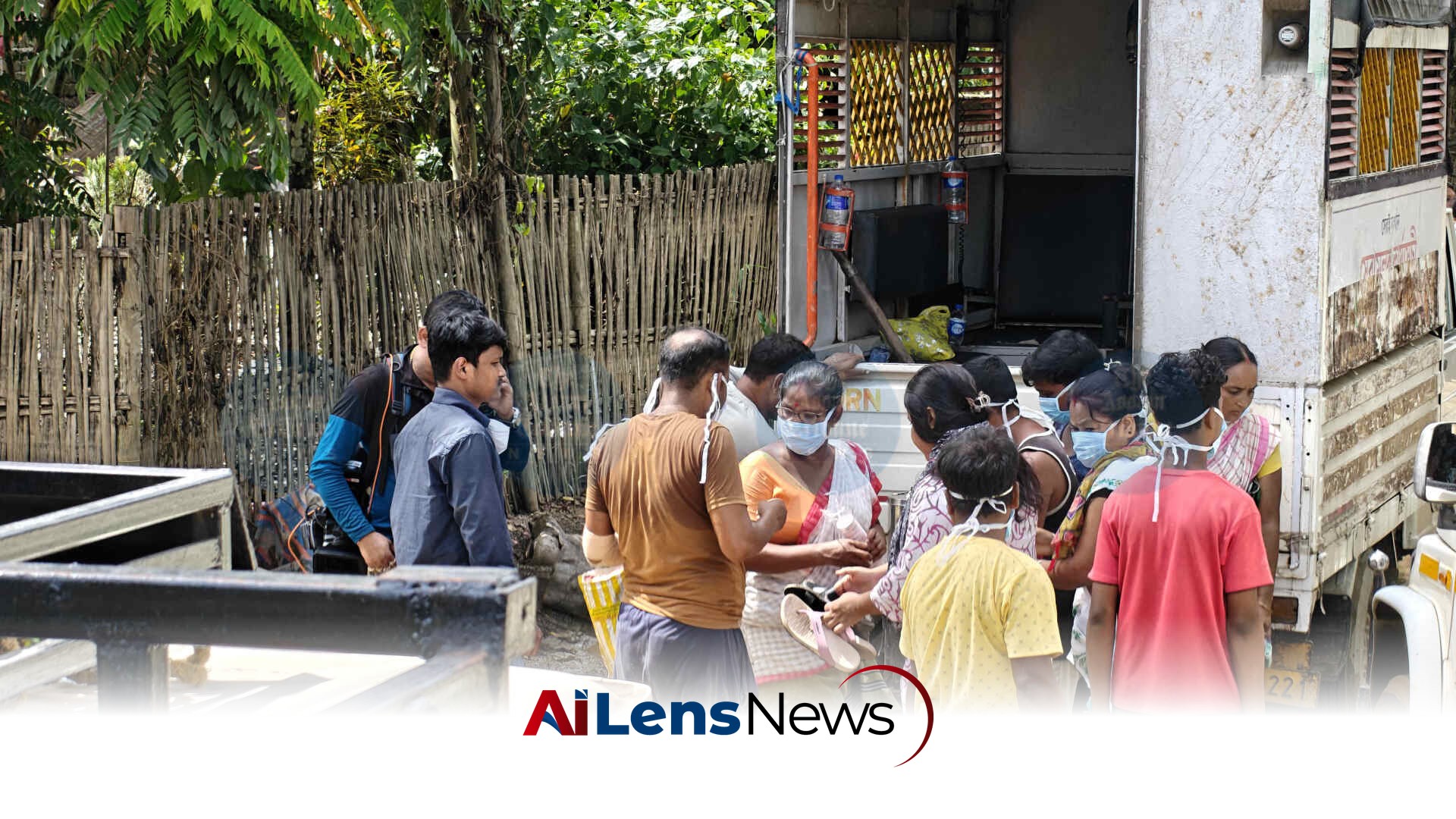


In Upper Assam, nearly 2,000 relief vehicles daily unite communities to aid flood survivors, showcasing extraordinary solidarity and compassion.
Imphal, India Aug 1, 2026 ALN: Even as floodwaters continue to linger across parts of Upper Assam, another tide has refused to recede, one of compassion. The region has been grappling with the aftermath of devastating floods that have impacted the lives of thousands, leaving communities in despair and destruction.
Nearly two weeks after the catastrophic floods swept through Sivasagar, Charaideo, and Jorhat, convoys of vehicles carrying relief materials continue to pour into some of the worst-hit villages. These convoys are offering not just food and essentials but also reassurance to families beginning the long journey of rebuilding their lives. The floods have not only destroyed homes and infrastructure but have also disrupted the local economy, leading to a significant loss of livelihood for many.
As The Assam Tribune travelled through Sivasagar, the roads offered a striking contrast to the devastation left behind. The resilience of the human spirit is evident in the faces of the volunteers and the communities that have come together to support one another. Convoy after convoy rolled past, with volunteers wearing gamosas draped around their necks, making their way towards flood-ravaged villages. For many of them, the journey is about far more than delivering relief; it is a testament to the unyielding bond of community and the shared responsibility to uplift each other in times of crisis.
"Iyate xokolu bhai-bhoni (everyone here is family). When our own people are in distress, it is our responsibility to stand beside them," said Sanjib, one of the volunteers distributing relief materials. His words encapsulate the essence of Assamese culture, which emphasizes community, kinship, and mutual aid.
Every day, convoys carrying relief materials are reaching some of the worst-affected villages. These villages, including Nepali Khuti, Sontok, Simoluguri, Nazira, Betbari, Suladhara, Kalita Gaon, Nigiripukhuri, Nimolia, Padum Pukhuri, and Kamal Chapori, have become symbols of resilience and hope amid despair. The residents roughly estimate that nearly 2,000 vehicles now enter these flood-hit areas daily, showcasing a remarkable mobilization of resources and support.
The vehicles carry far more than food. They are loaded with cooking utensils, clothes, medicines, disinfectants, bleaching powder, phenyl, mosquito repellents, hygiene essentials, and household items—supplies that have become indispensable for families returning to homes buried under mud or still surrounded by stagnant water. This comprehensive approach to relief reflects an understanding of the multifaceted needs of the affected populations, addressing both immediate survival and longer-term recovery.
Behind almost every relief package lies a story of collective generosity. Some donated money, others contributed clothes, utensils, medicines, or daily essentials. This grassroots mobilization has been crucial in ensuring that aid reaches those who need it most. Volunteers pooled contributions from neighbours, friends, and local communities before setting out for the flood-ravaged districts, demonstrating the power of community solidarity in times of crisis.
"They had everything just a few days ago, and this catastrophe took it all away. We came to tell them they are not alone. Today they are suffering; tomorrow it could be us. We must stand by one another," Sanjib said, highlighting the shared vulnerability that binds communities together in the face of disaster.
Behind almost every relief package lies a story of collective generosity. (AT Photo) The stories of those who have come to help are as inspiring as the relief efforts themselves. Kasturika Dhadumia, who travelled from Namrup with relief supplies, said the overwhelming response from across Assam reaffirmed her faith in its people. "We came from Namrup, but when we reached here, we saw people from every part of Assam doing the same. This is the Assam we are proud of. People with kind hearts have come together without expecting anything in return," she said, reflecting the spirit of unity that transcends geographic boundaries.
Bijoy Das, who travelled from Azara, believes the response has reflected the true spirit of Assam. "These families will need at least ten years to rebuild their homes. A house takes a lifetime to build, but a disaster like this can destroy it within hours. We could not simply sit and watch. We brought whatever we could because this is a time to share their grief. Humanity still exists, and we must continue to stand hand in hand," he said, emphasizing the long road ahead for recovery and the importance of continued support.
For survivors, the relief has eased some of the immediate hardships. But many say what has touched them even more is the compassion shown by complete strangers who travelled hundreds of kilometres simply to remind them that they had not been forgotten. This solidarity serves as a beacon of hope, reinforcing the idea that in the face of adversity, communities can come together to support one another.
Long after the relief vehicles have stopped arriving and the floodwaters have finally receded, it may well be this spirit of solidarity that survivors will remember most. The emotional and psychological impact of such disasters can be profound, and the kindness shown by others can play a crucial role in healing. As communities begin to rebuild, the relationships forged during this crisis may lead to stronger networks of support and resilience in the future.
The floods in Upper Assam are a stark reminder of the vulnerability of communities to natural disasters, which are becoming increasingly frequent and severe due to climate change. As the region grapples with the immediate aftermath of this disaster, there is a pressing need for long-term strategies to mitigate the impact of future floods. This includes improving infrastructure, enhancing early warning systems, and implementing sustainable land management practices.
In conclusion, the response to the floods in Upper Assam is not just about the immediate relief efforts but also about fostering a sense of community and resilience. The compassion flowing through the region serves as a powerful reminder of the strength of human connection in the face of adversity. As the affected communities begin to rebuild their lives, the spirit of solidarity that has emerged may well be the foundation upon which they can construct a brighter future.
To learn more about the latest developments in Society & Social Issues, stay updated with our exclusive reports and analyses on AiLensNews.

