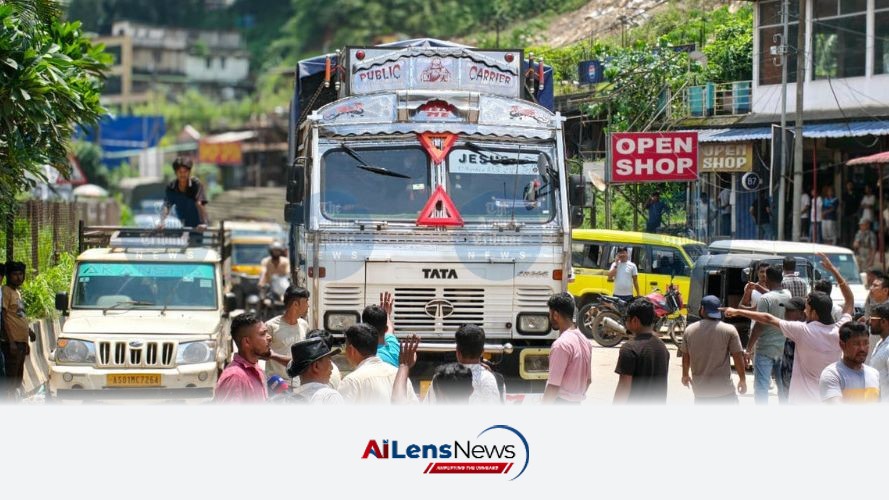



The Assam State Drivers’ Association is waiting for a written proposal from Meghalaya before engaging in transport discussions following recent tensions.
Imphal, India Aug 25, 2026 ALN: Amid speculation over a proposed meeting between transport operators from Assam and Meghalaya on August 26, the Assam State Drivers’ Association (ASDA) stated that it has received only a verbal communication so far and is awaiting formal written correspondence.
ASDA president Dhrubaraj Axom informed that the association was informed over the phone about a proposed meeting with the All Khasi Meghalaya Tourist Taxi Association on August 26. However, no formal written communication has been received yet.
“We have received a verbal communication through phone for the proposal of a meeting with the All Khasi Meghalaya Tourist Taxi Association from Meghalaya,” Axom said.
He emphasized that the association had requested a written communication before proceeding with any formal engagement. “We had asked for a written assurance and so far, we have not received any. A formal meeting cannot be carried out without written communication. The next step depends on it,” he added.
This development follows the resumption of tourist taxis from Assam entering Meghalaya on August 24, after Meghalaya-based tourist taxi associations agreed to withdraw their blockade at Umiam, thereby restoring movement between the two states.
The transport row escalated after violence during a Khasi Students’ Union (KSU) rally in Shillong on August 19, during which several Assam-registered vehicles were reportedly attacked. This incident marked a significant escalation in tensions between transport operators from both states, highlighting long-standing grievances that have often flared up into conflict.
In response to the violence, Assam-based drivers’ organizations initiated protests and blocked key entry points to Meghalaya, disrupting passenger and commercial transport between the neighboring states. The blockade not only affected the movement of vehicles but also had broader implications for local economies, particularly in areas dependent on tourism and inter-state trade.
While movement has largely resumed, the underlying dispute remains unresolved. Meghalaya Deputy Chief Minister Sniawbhalang Dhar had previously announced that a joint meeting involving transport authorities and representatives of taxi associations from both states would be convened by September 10. This announcement came as a relief to many stakeholders who were concerned about the potential for further disruptions and violence.
Following this announcement, Meghalaya’s tourist taxi associations suspended their agitation only until September 10 after receiving assurances from the state government that their concerns would be addressed. The government’s engagement in this matter reflects a recognition of the critical role that transport operators play in the socio-economic fabric of both states, particularly in the context of tourism which is a vital source of revenue.
For now, ASDA leaders indicated that any direct engagement with their Meghalaya counterparts would depend on receiving a formal written request, along with the proposed agenda for the talks. This insistence on formal communication underscores the need for clarity and transparency in negotiations, which is essential for building trust among the parties involved.
The transport sector in the region has been historically fraught with challenges, often exacerbated by political and ethnic tensions. The recent incidents are a stark reminder of how quickly relations can deteriorate and the importance of dialogue in preventing further escalation. Both Assam and Meghalaya have diverse populations with varying interests, and transport operators often find themselves caught in the crossfire of larger socio-political issues.
Moreover, the transport dispute is not just a local issue; it has implications for the broader North-Eastern region of India, which has its own unique challenges related to connectivity and infrastructure. The region has been striving for improved transport links to enhance trade and tourism, and conflicts such as these can hinder progress.
As the situation develops, it will be crucial for both state governments to facilitate constructive dialogue and ensure that the voices of all stakeholders are heard. The outcome of the proposed meeting on August 26, if it takes place, could set the tone for future interactions between transport operators from Assam and Meghalaya and may either pave the way for a more collaborative approach or exacerbate existing tensions.
In conclusion, the ongoing transport discussions between Assam and Meghalaya highlight the complexities of inter-state relations in India, particularly in regions characterized by ethnic diversity and historical grievances. The need for formal communication, as emphasized by the ASDA, is not just a procedural formality; it is a critical step towards fostering understanding and cooperation between the two states. As stakeholders await further developments, the hope remains that dialogue will lead to a more stable and cooperative transport environment in the region.
To learn more about the latest developments in Transport & Mobility, stay updated with our exclusive reports and analyses on AILensNews.

