

More
Checking your session



Mumbai's Metro Line 7A may require demolition of a viaduct due to insufficient height clearance for overhead equipment, a planning error that could cost Rs 250 crore.
Mumbai, India Aug 28, 2026 ALN: Construction work costing Rs 250 crore on Mumbai’s Metro Line 7A may have to be demolished and rebuilt after authorities found that nearly 1 km of a viaduct in Vile Parle East does not have enough height clearance for the overhead electrical equipment, The Indian Express quoted unidentified officials as saying on Thursday.
The line is planned as a 3.4-km extension of Metro Line 7 from Andheri East to the Mumbai airport. This extension is crucial for enhancing connectivity to one of the busiest airports in the country, which serves millions of passengers each year. The Mumbai Metro project itself is part of a broader initiative to improve urban transportation in the city, which is known for its heavy traffic congestion and inadequate public transport facilities.
This stretch falls within the airport funnel zone, where height restrictions are imposed by the Airports Authority of India (AAI). The AAI has strict regulations regarding the height of structures in proximity to airports to ensure the safety of aircraft during takeoff and landing. These regulations are in place to prevent any potential hazards that could arise from obstacles interfering with flight paths.
When the airports authority issued the no-objection certificates for the project in 2022, the additional height for the overhead electrical equipment was not factored into the design, the newspaper reported. This oversight has led to a mismatch of about 2.5 metres in height, which is significant enough to necessitate a reevaluation of the entire project segment. The failure to incorporate necessary height adjustments into the initial design process raises concerns about the planning and coordination among various stakeholders involved in the project.
The concern was raised in 2025, following which construction was paused and revised permissions sought from the Airports Authority of India. The work on the stretch has been halted since. This pause in construction not only delays the completion of the metro line but also has implications for the overall timeline of the broader metro project, which is designed to alleviate traffic congestion and improve public transport efficiency in Mumbai.
“If we do not arrive at a solution, the viaduct may have to be reconstructed,” The Indian Express quoted an unidentified Mumbai Metropolitan Region Development Authority (MMRDA) official as saying. The prospect of demolition and reconstruction poses significant financial implications, as it would require additional funding and resources, potentially straining the budgets allocated for the metro project.
The line was originally scheduled to open in 2021 and has already missed several deadlines. The delays in the project are not just a logistical concern; they also affect the daily lives of commuters who rely on public transportation. The Mumbai Metro has been touted as a solution to the city's perennial traffic woes, and any further delays in its expansion could exacerbate existing issues, leading to increased travel times and reduced accessibility for residents.
This situation highlights the importance of thorough planning and adherence to regulatory requirements in large infrastructure projects, especially those that intersect with critical zones like airport funnel areas. The need for comprehensive risk assessments and collaborative planning among various governmental and regulatory bodies cannot be overstated. Such oversights can lead to costly and time-consuming corrections that could have been avoided with more meticulous planning.
As the authorities work to resolve the issue, stakeholders are left to ponder the implications of potential delays and the financial burden of reconstruction. The MMRDA and other involved parties must now navigate a complex landscape of regulatory approvals, design modifications, and construction logistics to find a viable solution. The outcome of this situation will likely set a precedent for future infrastructure projects in the region, emphasizing the necessity for stringent compliance with safety regulations and effective inter-agency communication.
Furthermore, the public's perception of infrastructure projects can be significantly impacted by such setbacks. Trust in governmental agencies and their ability to deliver essential services can wane if projects are repeatedly delayed or mismanaged. It is crucial for the MMRDA and other stakeholders to communicate transparently with the public regarding the steps being taken to address the issue and to ensure that similar mistakes are not repeated in the future.
In conclusion, the challenges faced by the Mumbai Metro Line 7A serve as a reminder of the complexities involved in urban infrastructure development. As cities grow and evolve, the need for efficient public transport becomes increasingly critical. However, this must be balanced with rigorous planning and compliance with regulatory frameworks to ensure the safety and efficiency of such projects. The resolution of the current predicament will not only determine the future of Line 7A but will also have lasting implications for Mumbai's transportation landscape as a whole.
To learn more about the latest developments in Transport & Mobility, stay updated with our exclusive reports and analyses on AILensNews.

Shiv Sena (UBT) leader Sanjay Raut claims the Maharashtra government's support f…
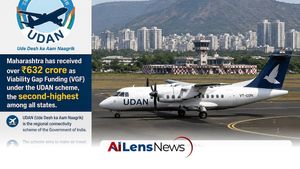
Maharashtra has become the second-largest beneficiary of the UDAN scheme, receiv…

The Maharashtra Public Service Commission has cancelled the Drug Inspector recru…

A fire in the Neonatal Intensive Care Unit of Amravati's District Women’s Hospit…

A fire in the NICU of Amravati District Women’s Hospital led to the deaths of th…