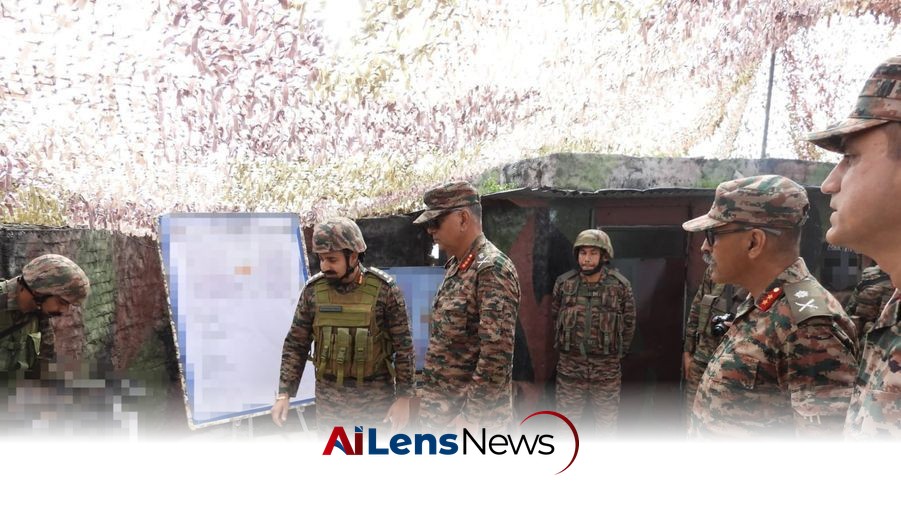


Lt Gen P K Mishra visited Rajouri to assess the operational preparedness and future warfare initiatives of the White Knight Corps.
Leh, India Jul 13, 2026 ALN: General Officer Commanding of White Knight Corps, Lt Gen P K Mishra, visited the headquarters of the Ace of Spades division and Counter-insurgency Romeo Force in Jammu and Kashmir's Rajouri on Monday. This visit is part of a series of inspections aimed at ensuring that the Indian Army remains vigilant and prepared in a region that has long been a focal point of conflict and military engagement. The strategic significance of Jammu and Kashmir, particularly Rajouri, cannot be overstated, as it borders Pakistan and has been a site of numerous military operations and counter-insurgency efforts over the years.
During this visit, Lt Gen Mishra was briefed on precision strike capabilities and initiatives aimed at enhancing readiness for future warfare, as reported by the army. Precision strike capabilities refer to the ability to engage targets with high accuracy, minimizing collateral damage and increasing operational efficiency. These capabilities are increasingly important in modern warfare, where the distinction between combatants and non-combatants can often be blurred, and the consequences of military action can have far-reaching implications. The evolution of warfare has necessitated a shift towards more sophisticated technology and strategies, making precision strikes a critical component of military operations.
Lt Gen Mishra commended all ranks for their indomitable vigilance, operational excellence, and sustained commitment towards maintaining a secure and stable environment. His visit was part of a broader effort to ensure that the forces are well-prepared for any challenges that may arise. The commendation of troops reflects the leadership's recognition of the challenging conditions under which the army operates in this region, where terrain, weather, and the presence of insurgent groups complicate military operations. The mountainous terrain of Jammu and Kashmir poses unique challenges, making logistics and troop movements difficult, which further underscores the importance of operational readiness.
The army stated, "GOC White Knight Corps visited operational locations of Ace of Spades Division and CIF (Counter-insurgency Force) Romeo to review the prevailing security situation and operational preparedness." This visit underscores the importance of continuous assessment and readiness in the region. The Ace of Spades division has a storied history, known for its operational successes in various conflicts, and the Counter-insurgency Romeo Force has been instrumental in addressing insurgency and maintaining peace in the area. The historical context of these military formations highlights the Indian Army's long-standing commitment to counter-insurgency operations, which have been a vital aspect of maintaining stability in Jammu and Kashmir.
In a post shared by the White Knight Corps on its official page, it was noted that the corps commander interacted with the deployed troops and appreciated their high morale and professionalism. Such interactions are vital for maintaining the spirit and efficiency of the forces. Morale plays a crucial role in military effectiveness; high morale can lead to better performance in operations and can be the difference between success and failure in high-stress environments. The psychological aspect of military operations cannot be underestimated, as soldiers who feel valued and supported are more likely to perform effectively under pressure.
Furthermore, Lt Gen Mishra was briefed on various aspects of operational preparedness, including capability enhancement, surveillance systems, and precision strike capabilities. The initiatives discussed are crucial for strengthening the army's readiness for future warfare scenarios. In contemporary military strategy, the integration of advanced technology, such as drones and surveillance systems, has transformed how armies conduct operations, allowing for real-time intelligence and more effective response strategies. The use of technology in military operations has not only improved operational effectiveness but has also enabled better situational awareness, which is essential for making informed decisions in the field.
This visit highlights the ongoing commitment of the Indian Army to adapt and prepare for evolving security challenges in the region. The security landscape in Jammu and Kashmir is complex, influenced by historical tensions, ongoing insurgency, and geopolitical factors. The Indian Army's proactive measures to enhance operational readiness are essential not only for national security but also for regional stability. The implications of military readiness extend beyond immediate security concerns, impacting diplomatic relations and the overall perception of stability within the region.
The backdrop to these military operations includes a long history of conflict in Jammu and Kashmir, which has been a contentious issue since the partition of India in 1947. The region has seen multiple wars between India and Pakistan, and the presence of various militant groups has led to ongoing violence and unrest. The Indian government has maintained a strong military presence in the region to counter these challenges and to ensure the safety of its citizens. This military presence, while necessary for security, has also been a point of contention, leading to debates about human rights and the impact of military operations on local populations.
In recent years, the Indian Army has also focused on community engagement and development programs in Jammu and Kashmir, aiming to win the hearts and minds of the local population. This approach is seen as a way to address the underlying issues that contribute to unrest and to promote a sense of stability and normalcy in the region. The balance between military operations and community engagement is delicate but crucial for long-term peace. Initiatives such as infrastructure development, educational programs, and healthcare services are part of a broader strategy to foster goodwill and reduce the appeal of insurgent ideologies among the youth.
As the Indian Army continues to adapt its strategies in response to the evolving security landscape, the role of leadership, such as that demonstrated by Lt Gen Mishra during his visit, remains paramount. Leadership in military contexts involves not only strategic planning and operational oversight but also fostering a sense of unity and purpose among the troops. The morale and readiness of the forces are directly influenced by the leadership's ability to inspire confidence and commitment. Effective leadership is critical in maintaining operational effectiveness, especially in challenging environments where the stakes are high.
In conclusion, Lt Gen P K Mishra's visit to Rajouri serves as a reminder of the Indian Army's ongoing commitment to maintaining security in a region fraught with challenges. The emphasis on operational readiness, precision strike capabilities, and troop morale reflects a comprehensive approach to military preparedness that is essential in the face of evolving threats. As the situation in Jammu and Kashmir continues to develop, the Indian Army's ability to adapt and respond will be critical in shaping the future of security in the region. The ongoing commitment to both military readiness and community engagement will play a significant role in determining the long-term stability and peace in Jammu and Kashmir.
To learn more about the latest developments in Local & Regional, stay updated with our exclusive reports and analyses on AiLensNews.

