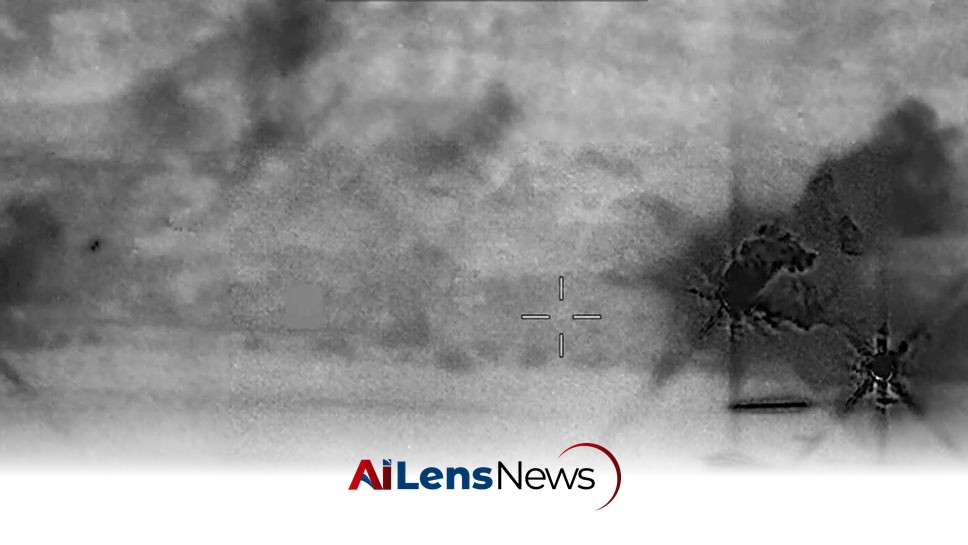


Iran's IRGC asserts it shot down a US drone over the Strait of Hormuz, escalating military tensions as the US reimposes a naval blockade.
Washington DC, United States Jul 14, 2026 ALN: Iran's Islamic Revolutionary Guard Corps (IRGC) claimed on Monday that it downed an American MQ-1 drone over the Strait of Hormuz, intensifying the ongoing military confrontation between Tehran and Washington. The Strait of Hormuz is a strategic chokepoint for global oil shipments, making any military escalation in the region particularly concerning for international trade and security.
According to Iran's state broadcaster, the Islamic Republic of Iran Broadcasting (IRIB), the development was announced via a post on X, stating that the American drone had been downed over the strategic waterway. The report was subsequently carried by several other Iranian state media outlets. The MQ-1 drone is known for its surveillance capabilities and has been used by the US military for intelligence-gathering missions in various conflict zones.
Iranian authorities, however, did not provide further details regarding the incident, leaving questions about the circumstances surrounding the downing of the drone. There has been no official confirmation or response from the US military or the White House so far, which is typical in situations where military engagements are claimed but not independently verified. Such incidents often lead to heightened tensions and can escalate into broader conflicts if not managed carefully.
The development followed hours after US President Donald Trump announced that American forces would reimpose a naval blockade targeting Iran in the Strait of Hormuz. This decision marks a significant escalation in US-Iran relations, which have been fraught with tension since the US withdrew from the Joint Comprehensive Plan of Action (JCPOA) in 2018 and reinstated sanctions against Iran.
Speaking to reporters after signing an Executive Order, Trump stated, "We're hitting them (Iran) very heavily tonight... We have tremendous amounts of ammunition. We're hitting them very hard, and it'll continue, and we'll see what happens. We're knocking out all of their offensive capability, and we're controlling the strait (Strait of Hormuz). We're putting the blockade back. It's a blockade, not for anybody but Iran. In other words, anybody doing business with Iran can't go through. Everyone else will be able to go through... The blockade is probably more effective than hitting them. But I think the combination is the thing that really does it."
Trump's comments reflect a broader strategy aimed at crippling Iran's military capabilities and economic stability. He claimed that US military operations had severely degraded Iran's military infrastructure, targeting its naval, air, missile, and drone production capabilities. The implications of such military actions extend beyond immediate tactical gains; they can lead to long-term shifts in regional power dynamics and influence the behavior of other nations in the Middle East.
"We've been here for four months. I think we've done a lot. We've knocked out their navy in one month. We knocked out their air force, which is non-existent. We knocked out most of their missiles and drones. We knocked out their drone manufacturing capability by about 92 percent. Their missile manufacturing capability was knocked out by 89 percent. They have a little capability left, but they don't have any capability against us. This is almost a military skirmish," Trump said. Such statements suggest a belief that the US can achieve its objectives without entering a full-scale war, although the risk of miscalculation remains high, particularly with ongoing military engagements.
The US President also asserted that a potential agreement with Tehran had collapsed after Iran sought further negotiations. Trump's assertion that Iran has a history of reneging on deals adds to the narrative of mistrust that has characterized US-Iran relations for decades. He noted, "We had a deal with them two days ago, and then they said, 'Oh, we can't make that deal. We have to negotiate it further.' And this is what they've done for 47 years. The difference is nobody negotiates as I do... Frankly, for 47 years, they've been ripping off everybody and really hurting people, killing thousands." This perspective underscores the complexity of diplomacy in the region, where historical grievances and geopolitical interests intersect.
He stated that US military actions against Iran would persist. "We're doing another very major attack tonight (on Iran). They want to make a deal. They came back. We made a deal two days ago... They've been negotiating for 47 years, but nobody's ever hit them militarily. We're hitting them very hard," Trump added. This rhetoric suggests a willingness to escalate military actions further, raising concerns among international observers about the potential for a broader conflict.
Furthermore, Trump alleged that Iran's economy and military had experienced significant setbacks. "Four months ago, they (Iran) had inflation of 5 percent. Now they're at over 350 percent. They made a deal; they broke it probably 10 times, and they killed a lot of people. They killed our people," the US President said. Such economic pressures are part of a broader strategy to weaken Iran's influence in the region, but they also risk exacerbating humanitarian crises and increasing anti-American sentiment among the Iranian populace.
These developments occurred following a third consecutive night of US strikes on Iranian targets. US Central Command stated that the operations were aimed at degrading Iran's military capabilities and reducing its ability to threaten commercial shipping in the Strait of Hormuz. The Strait is crucial for global oil transportation, with a significant percentage of the world's oil passing through it. Any disruption to shipping in this area can have far-reaching economic implications, not just for the countries directly involved but for global markets as well.
Iran's Mehr News Agency reported that US projectiles hit Omidiyeh in the southwestern province of Khuzestan, injuring at least four people, citing a local official. This incident underscores the potential for civilian casualties and collateral damage in military operations, raising ethical concerns about the conduct of war and the protection of non-combatants.
Separately, the agency stated that an explosion was heard in the southern city of Bushehr at approximately 3:10 am local time. Iranian authorities had not officially commented on the cause of the blast at the time of reporting, adding to the uncertainty and tension in the region. Such incidents can further escalate hostilities and complicate efforts for diplomatic resolution.
Meanwhile, the security situation in the Strait of Hormuz deteriorated further after the UAE stated that two of its tankers were hit by Iranian cruise missiles in Omani territorial waters near the waterway. This attack highlights the vulnerability of commercial shipping in the region and the potential for direct confrontations between Iranian forces and those of other nations. According to the UAE, one Indian crew member was killed and eight others sustained injuries in the attack, illustrating the human cost of escalating military tensions. The incident also raises questions about the effectiveness of international maritime security measures and the need for greater cooperation among nations to ensure the safety of vital shipping lanes.
To learn more about the latest developments in World News & International Affairs, stay updated with our exclusive reports and analyses on AiLensNews.

