

More
Checking your session
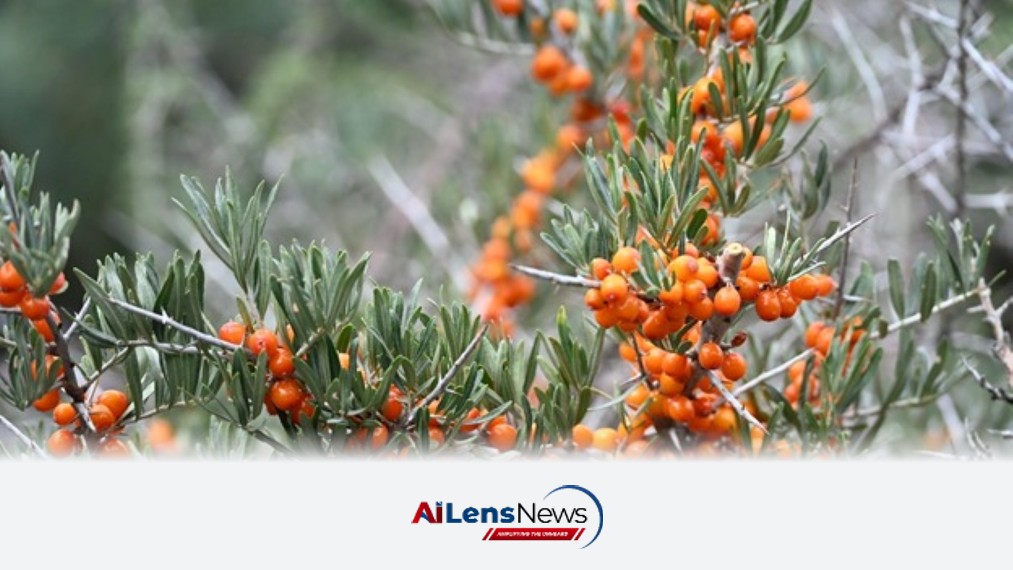



The Union Ministry of Agriculture has formed a committee to explore the establishment of a National Sanjeevani Research Centre for Sea Buckthorn in Nubra Valley, enhancing agricultural research and commercialization.
Leh, India Aug 26, 2026 ALN: The Union Ministry of Agriculture and Farmers Welfare has constituted a High-Level Committee to examine the proposal for establishing a dedicated National Sanjeevani Research Centre for Sea Buckthorn in Nubra Valley, following a request by Lieutenant Governor Vinai Kumar Saxena.
The committee has been tasked with assessing the scope of research, development, scientific cultivation, value addition, processing and commercialization of Sea Buckthorn, a high-value Himalayan crop with significant medicinal, nutritional and livelihood potential. This initiative underscores the growing recognition of Sea Buckthorn as a vital agricultural resource, not only for its economic benefits but also for its ecological importance in the fragile Himalayan ecosystem.
The development comes after L-G Saxena wrote to Union Agriculture and Farmers Welfare Minister Shivraj Singh Chouhan on August 14, 2026, proposing the establishment of the National Sanjeevani Research Centre in Nubra Valley, which is among the major Sea Buckthorn-producing areas. This proposal reflects a broader strategy to enhance agricultural productivity and sustainability in the region, particularly in the face of climate change and its impacts on traditional farming practices.
Responding to the proposal, the Indian Council of Agricultural Research (ICAR) constituted the High-Level Committee on August 21 to examine the feasibility of the proposed centre and recommend an appropriate institutional and operational framework. The establishment of such a centre could serve as a catalyst for agricultural innovation and research in the region, potentially transforming the livelihoods of local farmers and contributing to the local economy.
The committee, headed by Dr V.B. Patel, Additional Director General (F&PC), Horticultural Science Division, ICAR, includes Dr Maheshwar Singh, Dean (Agriculture), University of Leh; Dr Tsering Stobdan, Scientist-F, DRDO, Leh; and Tsewang Punchok, Director (Horticulture), Administration of UT, among its members. The composition of the committee brings together a diverse range of expertise, ensuring a comprehensive approach to the research and development of Sea Buckthorn.
The committee undertook its first field visit on August 24 and held interactions with stakeholders and officials to assess the existing status of Sea Buckthorn cultivation, research, processing and utilization in the region. This hands-on approach allows the committee to gather essential insights directly from those involved in the cultivation and processing of Sea Buckthorn, which is crucial for understanding the challenges and opportunities present in the local agricultural landscape.
The proposal for the dedicated research centre followed L-G Saxena’s recent visit to Nubra Valley and interactions with farmers, during which several stakeholders sought greater support for scientific cultivation, processing and marketing of Sea Buckthorn. These interactions highlighted the need for enhanced technical support and resources to enable farmers to maximize the potential of Sea Buckthorn, which is known for its rich nutritional profile, including high levels of vitamins, antioxidants, and essential fatty acids.
A naturally occurring Himalayan plant, Sea Buckthorn has applications across agriculture, food products, nutraceuticals and processing. Its cultivation and value addition also have the potential to create livelihood opportunities for farmers, entrepreneurs, cooperatives and local communities. The plant is particularly well-suited to the harsh climatic conditions of the Himalayas, making it an ideal candidate for sustainable agricultural practices in the region.
The proposed centre is aimed at developing as a hub for Sea Buckthorn research, innovation, value addition and sustainable commercialization, while strengthening scientific support for farmers and local enterprises. By focusing on research and development, the centre could facilitate the introduction of advanced cultivation techniques, improve processing methods, and enhance the marketing strategies for Sea Buckthorn products.
The implications of establishing the National Sanjeevani Research Centre are significant. Not only could it lead to increased productivity and profitability for local farmers, but it may also foster a greater sense of community among stakeholders involved in the Sea Buckthorn supply chain. Furthermore, as the demand for natural and organic products continues to rise globally, the centre could position Nubra Valley as a key player in the international market for Sea Buckthorn-based products.
In conclusion, the establishment of the High-Level Committee and the proposed National Sanjeevani Research Centre represents a proactive step towards enhancing agricultural research and development in Nubra Valley. By leveraging the unique qualities of Sea Buckthorn, this initiative has the potential to create sustainable economic opportunities while preserving the ecological integrity of the Himalayan region. The success of this project will depend on collaborative efforts among government bodies, research institutions, and local communities to ensure that the benefits of Sea Buckthorn cultivation are realized equitably and sustainably.
To learn more about the latest developments in Crime & Law, stay updated with our exclusive reports and analyses on AILensNews.