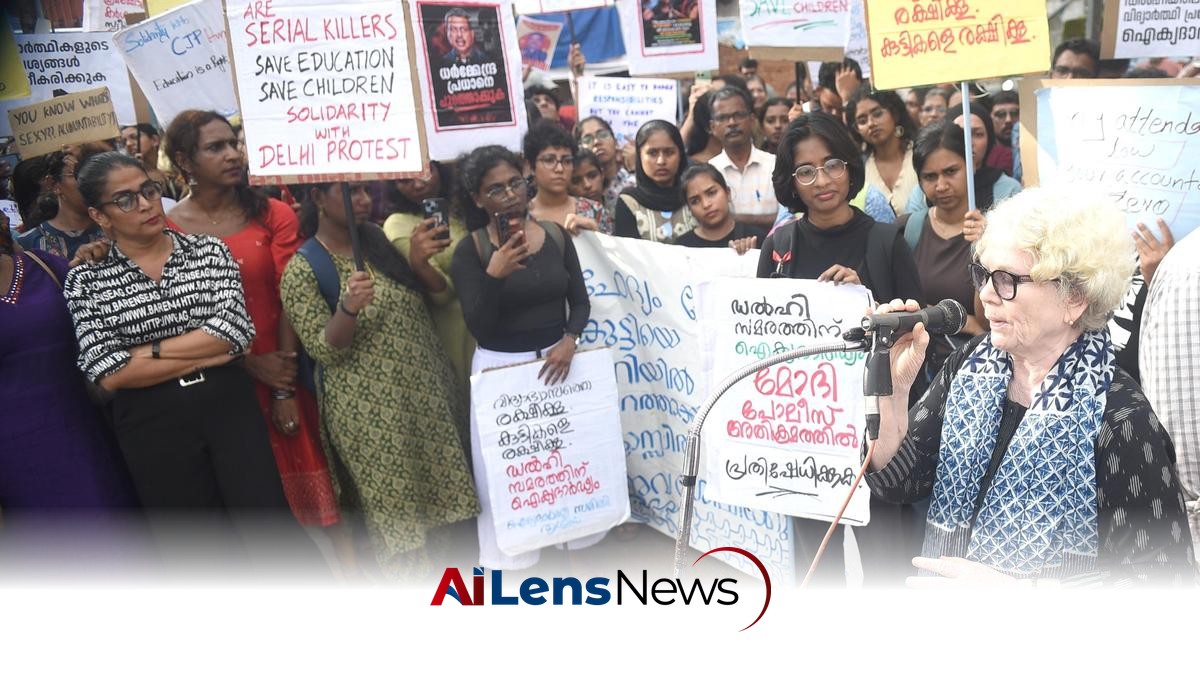


In a show of solidarity, students and activists in Thrissur marched to support NEET-UG protestors facing police action in Delhi, demanding educational reforms.
Thiruvananthapuram, India Jul 24, 2026 ALN: The recent rally in Thrissur, held on July 23, 2026, marks a significant moment in the ongoing protests against the NEET-UG paper leak, a situation that has sparked outrage among students, parents, and activists across India. Over a hundred participants, including students and local citizens, gathered to express their solidarity with the protestors at Jantar Mantar in Delhi, where significant demonstrations have taken place in response to allegations of systemic failures within the National Testing Agency (NTA) and broader issues within the Indian education system.
The protests at Jantar Mantar have gained momentum as students demand accountability and reform in the face of what they describe as a corrupt education system. The NEET (National Eligibility cum Entrance Test) is a crucial examination for aspiring medical students in India, and the recent paper leak incident has raised serious concerns regarding the integrity of examinations designed to assess their capabilities. The Thrissur Solidarity Committee, which organized the local march, aimed to amplify the voices of those affected by this scandal, reflecting a growing discontent with the current educational framework.
The NEET-UG paper leak incident is not an isolated event but part of a troubling trend that has plagued Indian examinations in recent years. Since the Bharatiya Janata Party (BJP) came to power in 2014, there have been approximately 152 reported instances of paper leaks across various examinations. This alarming statistic has eroded trust in the examination process, raising questions about the efficacy of the NTA and its ability to conduct fair assessments. The implications of these leaks extend beyond the immediate concerns of students; they reflect a broader systemic failure that undermines the credibility of the educational institutions responsible for shaping the future of the country's youth.
Writer Sarah Joseph, who addressed the gathering, articulated the frustrations of many participants. She emphasized that the protests extend beyond the immediate demands for the resignation of Education Minister Dharmendra Pradhan, pointing to a broader dissatisfaction with the education system under the BJP government. The collective sentiment among the protestors is one of disillusionment; they feel that the government has failed to protect the interests of students and has instead prioritized political agendas over educational integrity.
Joseph condemned the police's aggressive response to peaceful protestors at Jantar Mantar, highlighting the need for a more humane approach to dissent. The viral video of students singing the national anthem in front of security personnel has become emblematic of the struggle for justice and accountability in the face of state repression. This image resonates deeply with many who see the students' actions as a courageous stand against systemic injustice. The juxtaposition of peaceful protest against a backdrop of heavy-handed policing underscores the tensions between state authority and the rights of citizens to express their grievances.
Poet Anwar Ali's reflections during the rally also captured the sentiments of despair and hope among the protestors. He expressed that the current moment represents a turning point, where the youth are awakening to the myriad challenges facing the country, including rising communal tensions and the introduction of increasingly authoritarian laws. His remarks underscore a growing consciousness among students and activists regarding the need for collective action to address not only educational inequities but also broader societal issues. This awakening is significant; it suggests that the protests are not merely about one examination but reflect a larger struggle for justice, equality, and democratic rights in India.
The presence of students and parents with placards bearing messages such as 'All eyes on Jantar Mantar' and 'Save education, save children' further illustrates the widespread concern regarding the future of education in India. Many shared personal stories of the impact of the NEET paper leak, highlighting the emotional toll it has taken on students and families. The experiences recounted during the rally reflect a collective anxiety about the viability of pursuing higher education and the dreams that accompany it. This anxiety is compounded by the pressures faced by students in a highly competitive environment, where the stakes for success are incredibly high.
Mary, a third-year literature student participating for the first time, shared a poignant story about a local boy who attempted suicide following the NEET leak. Her testimony highlights the severe psychological impact that educational pressures and systemic failures can have on young people. The incident serves as a grim reminder of the stakes involved in the ongoing struggles for reform in the educational landscape. It raises critical questions about the mental health support available to students and the responsibilities of educational institutions to safeguard their well-being.
Another protestor, Sijitha, articulated her concerns as a parent, reflecting on the uncertainty surrounding her daughter's aspirations to become a doctor. Her statement underscores a generational anxiety that has emerged in the wake of repeated educational crises, raising questions about whether the current system can truly support the ambitions of young students. This sentiment was echoed by many at the rally, who voiced their fears that unless systemic changes are made, the dreams of countless students could be irreparably dashed. The intersection of parental aspirations and the realities of an unstable educational environment highlights the urgent need for reform.
Vysakh, a student from Thrissur Fine Arts College, emphasized the importance of solidarity among students, noting that the sacrifices made by those protesting in Jantar Mantar should inspire others to join the fight against injustice. His call for unity reflects a growing awareness of the interconnectedness of issues facing students across India, suggesting that the struggle against educational corruption is part of a larger fight for social justice. This solidarity is essential for sustaining the momentum of the protests and for fostering a sense of community among those advocating for change.
The organizers of the Thrissur rally expressed optimism about the turnout and the potential for future gatherings, indicating that the movement is gaining traction. The ongoing protests against the NEET-UG paper leak and related issues represent a critical juncture in India's educational landscape, where students are increasingly vocal about their rights and the need for systemic reform. The involvement of diverse groups, including students, parents, and activists, suggests that the movement has the potential to evolve into a broader coalition advocating for educational justice.
As the protests continue, they raise important questions about the integrity of educational institutions, the role of government in safeguarding the interests of students, and the need for transparency and accountability in examination processes. The response from the government and educational authorities in the coming weeks will likely shape the trajectory of this movement and the future of education in India. The implications of these protests extend beyond immediate demands; they signal a growing recognition among students and citizens that systemic change is necessary to build a more just and equitable society.
In conclusion, the rally in Thrissur is not just a local event but part of a larger national discourse on education reform. It highlights the urgent need for a comprehensive overhaul of the examination system and a commitment to ensuring that all students have a fair opportunity to pursue their dreams. The voices of students and activists are becoming increasingly difficult to ignore, and their demands for change resonate across the country as they seek a more equitable future for all. The outcome of these protests could have far-reaching effects on the educational landscape in India, influencing policy decisions and shaping the experiences of future generations of students.
To learn more about the latest developments in Crime & Law, stay updated with our exclusive reports and analyses on AiLensNews.

