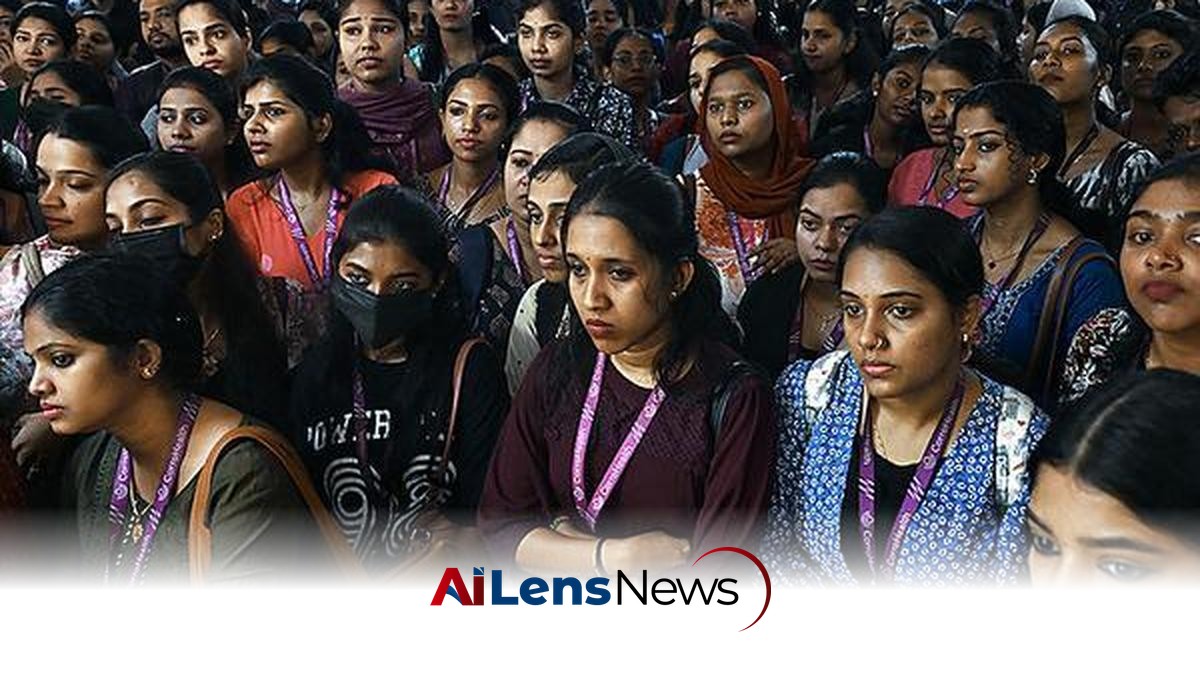


The retrenchment of 800 employees by CorroHealth raises questions about the legality of layoffs under new Labour Codes, as trade unions demand stronger protections.
Thiruvananthapuram, India Jul 13, 2026 ALN: The story so far:
U.S. technology firm CorroHealth Infotech Private Limited has retrenched approximately 800 employees from its Kochi and Kozhikode centres. The company cited operational losses as the reason for this decision, but both the State Government and the Opposition have declared the move illegal. Labour Minister Bindu Krishna has indicated that she will address the issue with Union Labour Minister Mansukh Mandaviya on Monday (July 13, 2026).
This recent wave of retrenchments at CorroHealth has raised serious concerns about the state of labor rights and protections in India, particularly within the technology sector. The decision to lay off such a significant number of employees in a single action has not only affected the lives of those directly involved but has also sparked a larger debate on the implications of labor laws and corporate governance in the country.
While the Union Government has remained silent on the matter, senior officials argue that had the four Labour Codes been implemented, workers would have received better protections. Senior Congress MP K.C. Venugopal and former Labour Minister V. Sivan Kutti have blamed the implementation of these Labour Codes for such unilateral retrenchments. Their comments underscore a growing concern that the regulatory framework meant to protect workers may, in fact, be contributing to job insecurity.
The Industrial Disputes Act of 1947, the Trade Unions Act of 1926, and the Industrial Employment (Standing Orders) Act of 1946 have been merged into the Code on Industrial Relations. This Code defines retrenchment as the termination of a worker's service by the employer for any reason other than disciplinary action. It does not include retirement or termination due to non-renewal of contracts. The consolidation of these laws into a single code was intended to simplify the legal landscape for both employers and employees, but critics argue that it has led to confusion and has weakened protections for workers.
Chapter IX of the Industrial Relations Code outlines the conditions for layoffs, retrenchments, and closures in establishments. It specifies the prerequisites for retrenching workers, including a one-month written notice indicating the reasons for retrenchment, compensation equivalent to fifteen days’ average pay for each completed year of continuous service, and a notification to the appropriate authority regarding the retrenchment. These provisions are designed to ensure that employees are treated fairly and that their rights are respected during the retrenchment process.
The recently published Rules of the Industrial Relations Code mandate that employers serve prior notice of retrenchment in Form-XIII to the Central Government and the concerned Deputy Chief Labour Commissioner (Central) via email or speed post. Employers must also submit an application in Form XIV to the Central Government electronically, clearly stating the reasons for the intended retrenchment, with a copy sent to the affected workers. This procedural requirement aims to provide transparency in the retrenchment process and to ensure that employees are informed of their rights and the reasons behind their dismissal.
Chapter XI of the Code mandates the establishment of a worker re-skilling fund by the appropriate Government. Employers are required to contribute an amount equal to 15 days’ wages last drawn by the worker before retrenchment. The fund is to be utilized by crediting the last drawn wages to the account of the retrenched worker within forty-five days of retrenchment. This provision is particularly significant in a rapidly changing job market, where workers may need to acquire new skills to remain employable.
Additionally, every employer who has retrenched a worker must electronically transfer an amount equivalent to fifteen days of the last drawn wages to the fund within ten days of the retrenchment. This information is to be displayed on the Ministry of Labour and Employment's website, further emphasizing the government's commitment to transparency and accountability in labor practices.
Although the Government pre-published the draft Rules for all four Labour Codes, it decided to suspend them following opposition from trade unions. The decision to pause the implementation of these codes reflects the contentious nature of labor reform in India, where the interests of workers often clash with the demands of employers for greater flexibility in hiring and firing practices.
The previous Pinarayi Vijayan Government constituted an expert committee led by retired Supreme Court Judge V. Gopal Gowda on January 22, 2026, to study the Labour Codes. The committee submitted its report in March 2026, stating that the Labour Codes represent “an active and conscious departure” from the foundational principles of the Constitution. The report indicated that by enacting these Codes, the State has aligned itself with corporate interests rather than acting as a guarantor of workers’ rights. The committee recommended that the State government amend the Labour Codes to protect workers' rights. This recommendation highlights the ongoing tension between corporate interests and the need for a robust framework to safeguard labor rights.
Following the election, the newly formed UDF Government stated that it would hold broader consultations before deciding on the implementation of the Labour Codes. Labour Minister Bindu Krishna mentioned in the Assembly that the State government had not yet finalized its position on framing rules under the Labour Codes and would first review the recommendations from the Justice Gowda committee. This cautious approach suggests that the government is aware of the potential backlash from trade unions and workers if it moves forward without adequate protections in place.
Trade unions argue that since the draft Rules of the Codes were suspended, the existing laws, specifically the Industrial Disputes Act, will prevail. Fredy K. Thazhath, President of the Trade Union Centre of India, stated, “The State has yet to adopt the Labour Codes and their Rules due to objections from the working class represented by trade unions, including the Bharatiya Mazdoor Sangh. In this case of retrenchments, the existing State laws will apply. An employer cannot unilaterally fire 800 workers without government permission; that is illegal.” He criticized the Union Government for overlooking the legality of the retrenchment process and colluding with foreign corporations. This statement reflects a broader concern among trade unions that the current labor regulatory framework may be insufficient to protect workers in the face of corporate interests.
The implications of these retrenchments extend beyond the immediate impact on the affected employees. They raise critical questions about the future of labor relations in India, the balance of power between employers and employees, and the role of the government in safeguarding workers' rights. As the debate continues, it is essential for all stakeholders—government, employers, and trade unions—to engage in constructive dialogue to find solutions that ensure both economic growth and the protection of workers' rights.
In conclusion, the recent retrenchments at CorroHealth Infotech have highlighted significant gaps in labor protections and have reignited discussions about the need for comprehensive labor reform in India. The response of the government, trade unions, and the broader community will play a crucial role in shaping the future landscape of labor relations in the country. Addressing these issues thoughtfully and collaboratively will be vital to fostering a fair and equitable labor market that benefits all parties involved.
To learn more about the latest developments in Crime & Law, stay updated with our exclusive reports and analyses on AiLensNews.

