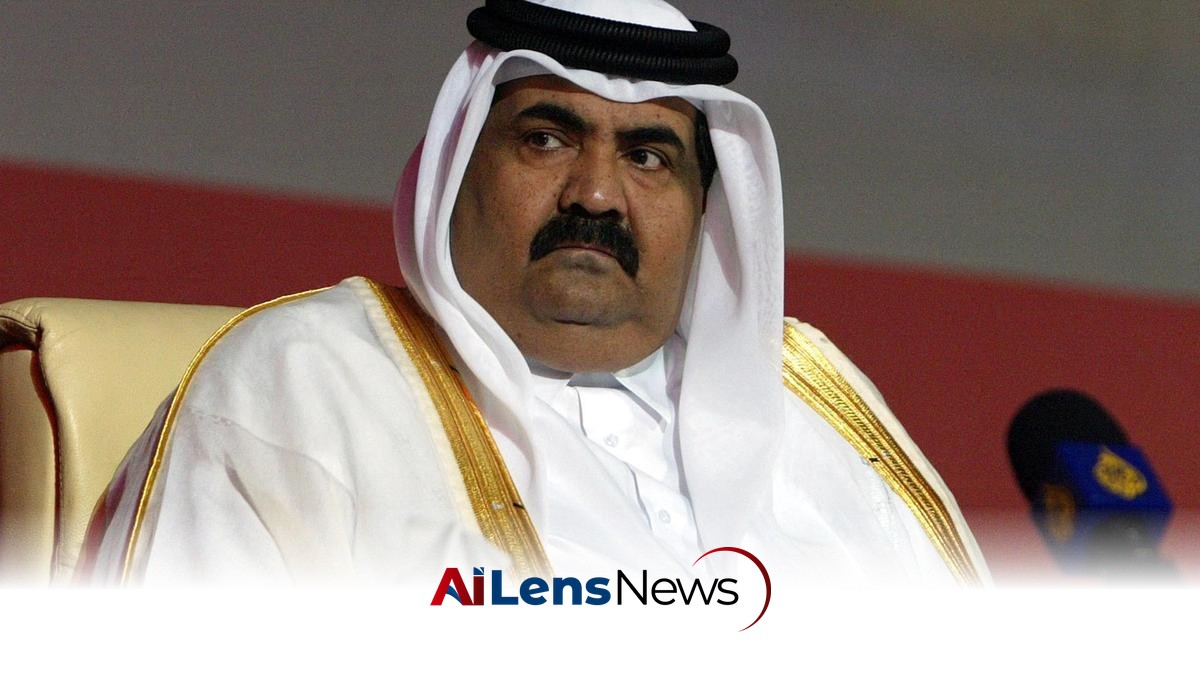


The State of Qatar has declared a period of mourning following the death of Sheikh Hamad bin Khalifa Al Thani, with official functions suspended.
Doha, Qatar Jul 13, 2026 ALN: The State of Qatar is currently observing a period of State mourning on Monday, July 13, 2026, following the passing of Sheikh Hamad Bin Khalifa Al Thani, affectionately known as the Father Amir of Qatar. This decision to enter a mourning period aligns with directives issued by the Union government, as confirmed by officials. Sheikh Hamad Bin Khalifa Al Thani, who served as the ruler of Qatar from 1995 until his abdication in 2013, is remembered for his transformative leadership and significant contributions to the development of the nation, both economically and socially.
Sheikh Hamad Bin Khalifa Al Thani passed away on Sunday, leaving behind a substantial legacy that has forever altered the landscape of the Gulf region. His reign marked a pivotal period in Qatar's history, during which the small Gulf state transitioned from a relatively modest economy, primarily dependent on oil and gas, to a prominent player on the global stage. Under his leadership, Qatar invested heavily in infrastructure, education, and healthcare, laying the groundwork for its future as a modern and prosperous nation. This transformation was not merely economic; it also involved a profound cultural shift that aimed to position Qatar as a center of innovation and excellence in various fields.
In light of this significant event, the government has instructed all departments and district authorities to adhere to the mourning protocols. This includes flying the national flag at half-mast at all locations where it is typically displayed, in accordance with the Flag Code of India. The observance of mourning reflects the deep respect and admiration the Qatari people hold for their former ruler, who was instrumental in shaping the country’s identity and international presence. Such mourning practices are customary in many cultures and serve to unify the populace in their collective grief.
Furthermore, the government has mandated that there will be no official entertainment or celebratory State functions during this mourning period. This directive underscores the somber nature of the occasion and allows citizens to reflect on Sheikh Hamad’s contributions and the impact he had on their lives. Mourning periods are significant in many cultures, providing an opportunity for collective grief and remembrance, and in Qatar's case, it also serves to reinforce national unity.
District Collectors have been tasked with notifying all offices within their jurisdictions where the national flag is flown, ensuring strict compliance with these directives. The order emphasizes the importance of honoring the memory of the former ruler. Such measures are customary in many nations when a prominent leader passes away, as they signal a unified national sentiment of loss and respect. The mourning period is not only a reflection of grief but also a time for introspection regarding the future of the nation.
Heads of departments and other competent authorities have also been instructed to take immediate action to implement these instructions, reflecting the nation's respect and remembrance for Sheikh Hamad bin Khalifa Al Thani. The mourning period serves not only as a tribute to the late ruler but also as a reminder of the values and vision he instilled in the nation during his time in power. His leadership style was characterized by a blend of traditional values and modern governance, which resonated deeply with the citizens of Qatar.
Sheikh Hamad's legacy is particularly notable for his role in diversifying Qatar’s economy. Under his leadership, Qatar began to invest in various sectors beyond oil and gas, including education, sports, and tourism. This diversification strategy has positioned Qatar as an attractive destination for foreign investment and tourism, contributing to its rapid development and modernization. The establishment of the Qatar National Vision 2030 under his guidance aimed at transforming the nation into a knowledge-based economy, ensuring sustainable development for future generations.
Additionally, Sheikh Hamad was a key figure in promoting Qatar’s cultural identity and heritage. He established numerous cultural institutions, including the Museum of Islamic Art, which has become a symbol of Qatar’s commitment to the arts and education. His efforts to promote education led to the establishment of Qatar University and the Qatar Foundation, which has been pivotal in fostering research and innovation in the region. These institutions have not only enhanced Qatar's educational landscape but have also attracted international scholars and researchers, further enriching the nation’s academic environment.
Internationally, Sheikh Hamad was known for his diplomatic initiatives and efforts to position Qatar as a mediator in regional conflicts. His foreign policy was characterized by a willingness to engage with a diverse range of countries, fostering relationships that enhanced Qatar's influence on the global stage. This diplomatic approach has continued to shape Qatar’s foreign relations even after his abdication. Sheikh Hamad's tenure saw Qatar emerge as a crucial player in Middle Eastern politics, often acting as a bridge between various factions and promoting dialogue.
Sheikh Hamad’s abdication in 2013 was a historic moment for Qatar, as he passed the reins of power to his son, Sheikh Tamim bin Hamad Al Thani. This transition was notable for its peaceful nature, reflecting the stability that Qatar has maintained over the years. Sheikh Tamim has continued many of his father's policies while also introducing his own vision for the future of the nation, further solidifying the foundations laid by his father. The leadership transition was viewed as a model for governance in the region, demonstrating that peaceful succession is possible in a part of the world often characterized by turmoil.
The mourning period for Sheikh Hamad bin Khalifa Al Thani is not only a time for reflection on his life and contributions but also a moment for the Qatari people to come together in solidarity. As the nation navigates this period of loss, it is likely to also engage in discussions about the future direction of the country and how to continue building on the foundations laid by the former ruler. The collective memory of Sheikh Hamad's achievements will undoubtedly serve as a source of inspiration for the Qatari people as they strive to uphold his vision for a prosperous and inclusive society.
In conclusion, the State of Qatar's observance of mourning for Sheikh Hamad bin Khalifa Al Thani signifies the profound impact he had on the nation and the respect he commanded among its citizens. As Qatar moves forward, the legacy of Sheikh Hamad will undoubtedly continue to influence the country's trajectory, serving as a guiding light for future generations. His contributions to economic diversification, cultural development, and international diplomacy have left an indelible mark on Qatar, ensuring that his vision will endure long after his passing. The mourning period serves as a poignant reminder of the values he championed and the aspirations he ignited within the hearts of the Qatari people.
To learn more about the latest developments in World News & International Affairs, stay updated with our exclusive reports and analyses on AiLensNews.

