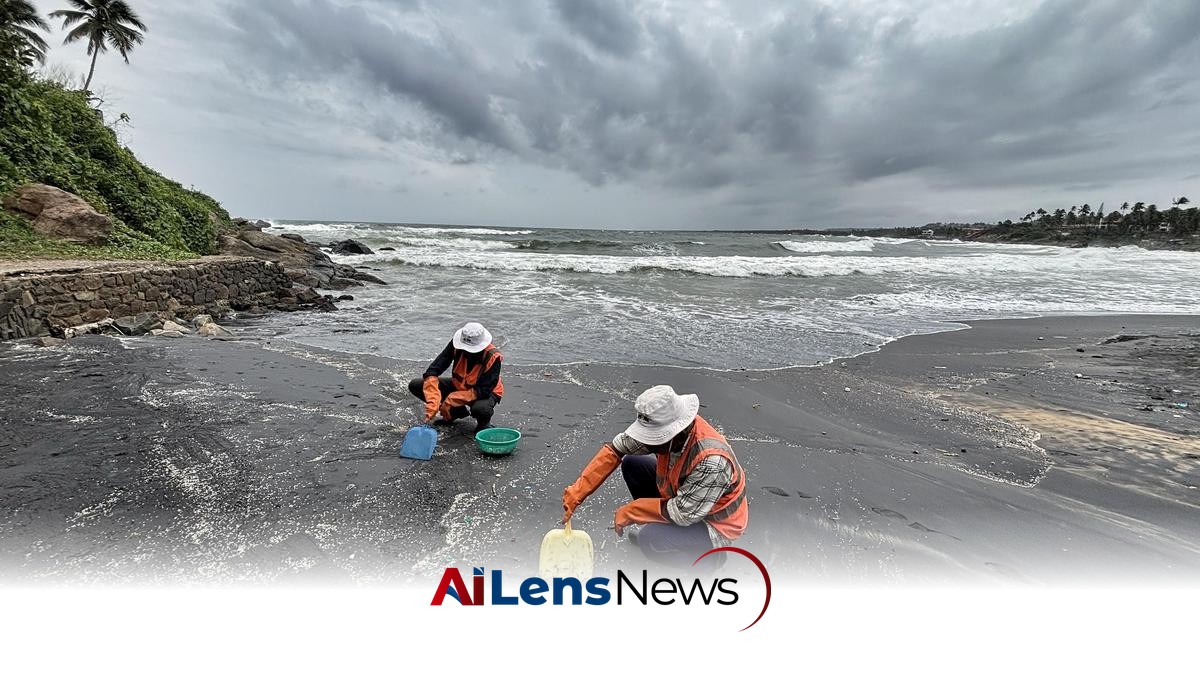


The High Court has mandated a report from the Defence Ministry on hazardous cargo from the MSC Elsa 3 shipwreck, emphasizing the need for independent verification of environmental risks.
Thiruvananthapuram, India Jul 15, 2026 ALN: The recent directive from the High Court regarding the MSC Elsa 3 shipwreck is a significant development in the ongoing concerns surrounding maritime safety and environmental protection. The vessel, which sank off the coast of Alappuzha in May 2025, was carrying hazardous cargo, raising alarms about the potential risks associated with its wreckage. The court's order for the Ministry of Defence to investigate the condition of the containers highlights the urgency of the situation and the need for immediate action to mitigate any environmental threats.
The MSC Elsa 3 was a Liberia-flagged cargo ship, which indicates that it was registered in Liberia but likely operated by a company based elsewhere. This kind of registration is common in the shipping industry, as it allows ship owners to take advantage of more favorable regulations and lower costs associated with labor and safety standards. However, it also complicates accountability in cases of incidents like shipwrecks, as multiple jurisdictions may be involved. The ship's sinking has raised questions not only about the immediate dangers posed by the hazardous materials onboard but also about the broader implications for maritime law and international shipping practices.
In its ruling, the Division Bench of Justices V. Raja Vijayaraghavan and K.V. Jayakumar emphasized the importance of a thorough and independent investigation into the shipwreck. The National Institute of Oceanography had previously planned to conduct an environmental damage assessment and long-term scientific study, but the court made it clear that such an assessment should not replace an independent technical verification of the survey reports. This distinction is critical, as environmental assessments can sometimes be influenced by various factors, including the interests of stakeholders involved in the shipping industry.
The court's concerns regarding the structural integrity of the containers and their potential to leak hazardous materials into the marine environment are valid. With approximately 84 containers reported to be partially embedded in the seabed, the risk of environmental contamination is heightened. The court noted that some of these containers had sustained structural damage, which could lead to the release of toxic substances. The uncertainty about whether the doors of these containers remain secured adds another layer of complexity to the situation, as any breach could result in catastrophic consequences for local marine ecosystems.
In addition to environmental concerns, the court's directive underscores the need for accountability from the Mediterranean Shipping Company, the owners of the MSC Elsa 3. The court called for an independent scrutiny of the survey reports by a competent expert body, which is essential for ensuring that the wreck does not pose a long-term hazard to the environment. The Mediterranean Shipping Company, as one of the largest shipping companies in the world, has a responsibility to address the aftermath of the shipwreck and to cooperate with authorities in the investigation.
The role of the Indian Navy in this situation cannot be understated. The Amicus Curiae informed the court that the Navy possesses the necessary expertise in deep-sea diving operations, remotely operated vehicle-based underwater interventions, and complex salvage operations. The Navy has a long history of undertaking challenging salvage and marine pollution response operations, which positions it as a key player in addressing the aftermath of the MSC Elsa 3 shipwreck. Furthermore, the commissioning of INS Nistar, the first indigenously designed and constructed diving support vessel in India, specifically for complex deep-sea saturation diving, rescue, and salvage operations, showcases the Navy's commitment to enhancing its capabilities in maritime safety and environmental protection.
The implications of this court ruling extend beyond the immediate concerns surrounding the MSC Elsa 3. It highlights the need for robust maritime regulations and the enforcement of safety standards to prevent similar incidents in the future. As shipping continues to be a vital part of the global economy, the challenges associated with maritime safety, environmental protection, and corporate accountability must be addressed comprehensively.
Moreover, this incident serves as a reminder of the vulnerabilities associated with hazardous cargo transportation. The potential for accidents involving ships carrying dangerous materials necessitates stringent regulations and oversight to protect marine environments and coastal communities. The court's insistence on an independent investigation may set a precedent for how similar cases are handled in the future, emphasizing the importance of transparency and accountability in the shipping industry.
In conclusion, the High Court's order for the Ministry of Defence to investigate the MSC Elsa 3 shipwreck is a critical step towards ensuring environmental protection and accountability in maritime operations. The involvement of the Indian Navy and the call for independent assessments reflect the seriousness of the situation and the need for a coordinated response to mitigate potential hazards. As the investigation unfolds, it will be crucial to monitor the situation closely and to consider the broader implications for maritime safety and environmental regulations moving forward.
To understand the full scope of the situation, it is essential to consider the broader context of maritime safety regulations. The shipping industry has long been subject to various international treaties and agreements designed to protect the marine environment and ensure the safety of vessels. The International Maritime Organization (IMO), a specialized agency of the United Nations, plays a pivotal role in establishing these regulations. However, enforcement remains a challenge, especially in cases involving flagged vessels from countries with less stringent safety standards.
The MSC Elsa 3 incident also raises questions about the effectiveness of current regulations governing the transportation of hazardous materials. The shipment of dangerous goods is regulated under the International Maritime Dangerous Goods (IMDG) Code, which mandates specific packaging, labeling, and handling procedures. Despite these regulations, incidents like the MSC Elsa 3 shipwreck highlight potential gaps in compliance and oversight, calling for a reevaluation of existing protocols to enhance safety and environmental protection.
Furthermore, the economic implications of maritime incidents cannot be overlooked. The shipping industry is a cornerstone of global trade, and disruptions caused by accidents can have far-reaching effects on supply chains and economies. The financial ramifications for companies involved in shipping accidents can be substantial, including costs related to salvage operations, environmental cleanup, and potential legal liabilities. The MSC Elsa 3 shipwreck may lead to increased scrutiny of shipping practices and greater demand for accountability, which could ultimately reshape industry standards.
In light of the MSC Elsa 3 incident, stakeholders, including shipping companies, regulatory bodies, and environmental organizations, must engage in constructive dialogue to address the challenges posed by hazardous cargo transportation. Collaborative efforts can lead to the development of more robust safety protocols, improved training for crew members, and enhanced monitoring of compliance with existing regulations. Such initiatives are essential to prevent future incidents and protect marine ecosystems.
As the investigation into the MSC Elsa 3 shipwreck progresses, it will be important for the public and relevant authorities to remain informed about the findings and any subsequent actions taken. Transparency in the investigation process can foster public trust and ensure that the lessons learned from this incident are applied to improve maritime safety and environmental protection measures. Ultimately, the outcome of this case could serve as a catalyst for meaningful change within the shipping industry, promoting a culture of safety and accountability that prioritizes the protection of our oceans and coastal communities.
To learn more about the latest developments in Crime & Law, stay updated with our exclusive reports and analyses on AiLensNews.

