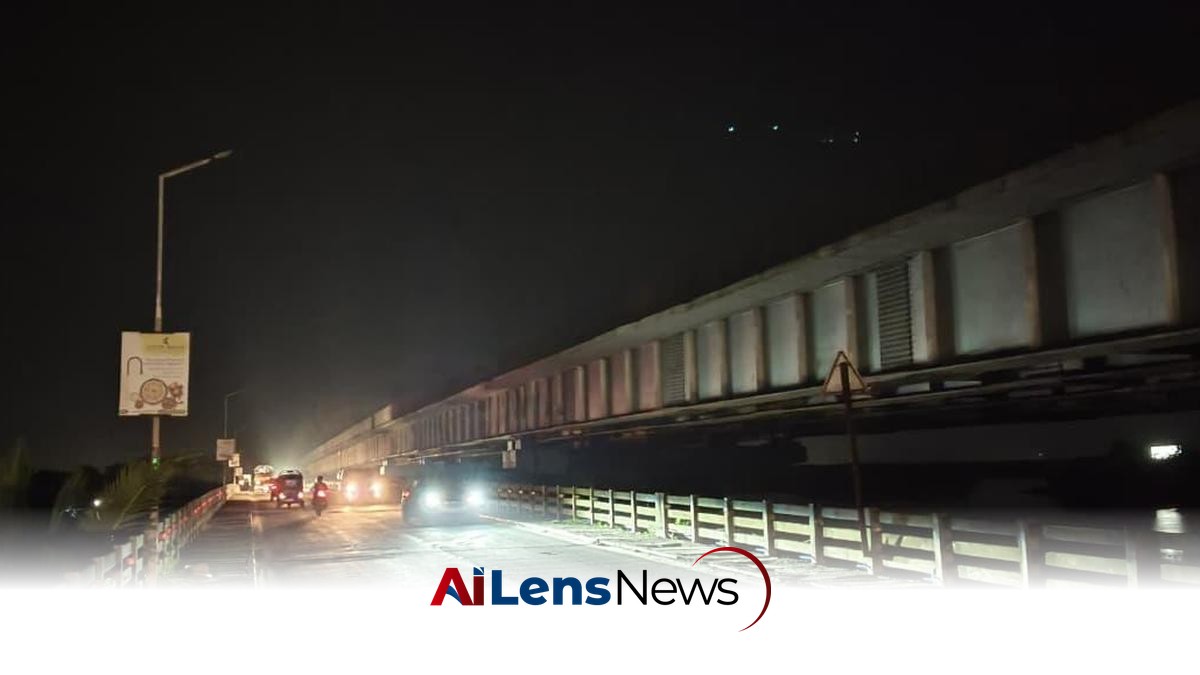


Residents demand immediate repairs to Chettuva bridge's street lights and surface, citing increased accidents and safety hazards.
Thiruvananthapuram, India Jul 23, 2026 ALN: Months after the street lights on the Chettuva bridge in Thrissur stopped functioning, motorists and pedestrians continue to negotiate the busy stretch in near-total darkness, raising serious concerns over road safety. The Chettuva bridge, which serves as a vital link for the local community, carries hundreds of vehicles every day, including heavy trucks and container lorries. The absence of adequate lighting at night has become a significant issue, as it compromises visibility and increases the risk of accidents, particularly during peak traffic hours.
The bridge, built to facilitate the flow of traffic between various parts of Thrissur, has been a critical infrastructure component for both local residents and businesses. However, the failure of the street lights has exacerbated an already precarious situation on the bridge. Local residents have expressed frustration over the lack of action from the authorities, despite their repeated complaints regarding the non-functional street lights and the deteriorating condition of the bridge surface.
Community members have reported that they have reached out to local government officials and relevant departments multiple times, urging them to restore the street lighting and carry out permanent repairs to the damaged surface of the bridge. However, their appeals have largely gone unheeded, with only temporary patchwork repairs being conducted. This lack of effective maintenance has led to growing dissatisfaction among residents, who feel that their safety is being compromised.
“Accidents have become common on the bridge. Recently, a car, a pickup van, and a scooter were involved in a collision, leaving the two-wheeler rider critically injured,” said Latheef Kettummal, a social activist who has been spearheading campaigns to draw the authorities’ attention to the bridge’s poor condition. Kettummal has taken it upon himself to organize awareness campaigns, including a recent torchlight protest demanding the immediate repair of the street lights and comprehensive repairs to the bridge. His efforts reflect the community's growing concern over the safety risks posed by the current conditions.
Ironically, while the street lights remain defunct, boards of a private firm have been installed on almost all the electric poles on the bridge, according to local residents. This has led to accusations that the authorities prioritize commercial interests over public safety. “Authorities have shown greater interest in displaying signs than in restoring the street lights needed for public safety,” they alleged. The presence of these boards, which had previously been removed, raises questions about the priorities of local governance and the allocation of resources for public infrastructure.
Furthermore, the lack of street lights has resulted in several near-miss incidents. In one recent case, a middle-aged fisherman tipped over a raised pedestrian walkway slab and fell onto the road, sustaining minor injuries. Fortunately, a major tragedy was averted as no vehicles were on the road at that moment. Such incidents highlight the urgent need for improved safety measures on the bridge, particularly for vulnerable road users such as pedestrians and cyclists.
Local residents have called for the immediate restoration of the streetlights and resurfacing of the bridge. They argue that the uneven tar patches and raised portions on the road pose a serious safety hazard, particularly to two-wheeler riders. The community is urging the authorities to undertake scientific re-tarring of the entire bridge to ensure the safety of motorists and pedestrians alike. The calls for action emphasize the need for a comprehensive approach to infrastructure maintenance that prioritizes public safety over temporary fixes.
The implications of the current situation extend beyond just the immediate safety concerns. The Chettuva bridge serves as a crucial artery for transportation in the region, and its deteriorating condition could have broader repercussions for local commerce and connectivity. If accidents continue to rise due to inadequate lighting and poor road conditions, it could deter motorists from using the bridge, potentially leading to increased traffic congestion on alternative routes. This would not only inconvenience local residents but could also impact businesses that rely on the efficient movement of goods and services.
Moreover, the ongoing neglect of the bridge raises questions about the effectiveness of local governance and the accountability of public officials. Residents are left wondering why the authorities have not prioritized essential maintenance and safety improvements, especially when the bridge is a known high-traffic area. The situation calls for a renewed commitment from local government to address infrastructure issues and enhance public safety measures.
In light of these concerns, community leaders and activists are likely to continue advocating for change. They may seek to engage with local media, organize further protests, or even petition higher levels of government for assistance. The situation on the Chettuva bridge serves as a critical reminder of the importance of maintaining public infrastructure and the need for responsive governance that prioritizes the safety and well-being of its citizens.
As residents await action from the authorities, the situation remains precarious. The combination of defunct street lights and a deteriorating bridge surface presents a significant risk to all who use this vital thoroughfare. The community's calls for immediate restoration of the streetlights and comprehensive repairs to the bridge are not merely requests; they are urgent demands for safety and accountability in local governance. Only through sustained advocacy and community engagement can the residents hope to see meaningful improvements in their infrastructure and, by extension, their safety on the roads.
The ongoing dialogue between the community and local authorities is essential for fostering a sense of responsibility and accountability. Residents have begun to recognize the power of collective action, organizing meetings to discuss strategies for raising awareness about the bridge's condition. These gatherings serve not only as a platform for sharing experiences and concerns but also as a means to empower individuals to take part in civic engagement.
As awareness grows, some residents have taken it upon themselves to document incidents occurring on the bridge, compiling evidence that could be presented to local officials. This initiative reflects a proactive approach to community safety, as residents seek to establish a clear link between the bridge's deteriorating condition and the rising number of accidents. By gathering data and testimonials, they aim to strengthen their case for urgent repairs and improvements.
In addition, social media has become a powerful tool for residents to amplify their voices. Posts highlighting the dangers of the Chettuva bridge, accompanied by images of the darkened stretch and the damaged surface, have garnered attention from a wider audience. This digital activism has the potential to reach not only local government officials but also state-level representatives who may be able to influence the allocation of resources for infrastructure maintenance.
Furthermore, the community's concerns are not isolated to the Chettuva bridge. Many residents have begun to draw parallels between their situation and other areas facing similar neglect. This broader perspective highlights the need for systemic changes in how infrastructure is managed and maintained across the region. Local governance must evolve to address the pressing needs of communities, ensuring that public safety is prioritized and that infrastructure is adequately funded and maintained.
As discussions continue, the community remains hopeful that their efforts will lead to tangible results. They are seeking not only immediate repairs but also a commitment from local authorities to establish a regular maintenance schedule for the bridge and other critical infrastructure in the area. Such a proactive approach would help prevent future deterioration and ensure that safety concerns are addressed before they escalate into serious incidents.
The situation on the Chettuva bridge serves as a microcosm of larger issues facing many communities across the country, where aging infrastructure and insufficient maintenance have led to dangerous conditions for residents. It underscores the need for a collective response from citizens and government alike to prioritize public safety and ensure that essential services are delivered effectively.
In conclusion, the plight of the Chettuva bridge and its users highlights the urgent need for action from local authorities to restore street lighting and repair the bridge's surface. The community's proactive stance, combined with their determination to advocate for change, may ultimately lead to improvements that enhance safety for all who traverse this vital thoroughfare. As they continue to push for accountability and action, residents of Thrissur are setting an example of civic engagement that could inspire similar movements in other communities facing infrastructure challenges.
To learn more about the latest developments in Crime & Law, stay updated with our exclusive reports and analyses on AiLensNews.

