

Arvind Kejriwal condemns the Centre's actions against Sonam Wangchuk, urging support for his protest against education system reforms.
New Delhi, India Jul 18, 2026 ALN: The recent hospitalization of activist Sonam Wangchuk has ignited a significant political controversy in India, drawing sharp criticism from Arvind Kejriwal, the convener of the Aam Aadmi Party (AAP). The incident has raised questions about the government's approach to dissent and the treatment of peaceful protests in the country. Wangchuk, a prominent figure known for his activism in education reform and environmental issues, has been on an indefinite hunger strike since June 28, 2023, alongside fellow activists from the All India Students' Association (AISA). Their protests are centered around allegations of irregularities in the Eligibility cum Entrance Test (NEET) examination and the tragic deaths of several students connected to these controversies.
Kejriwal's condemnation of the Central government's actions reflects a growing sentiment among opposition parties regarding the handling of dissent in India. He characterized the government's decision to forcibly remove Wangchuk from his protest site and hospitalize him as a manifestation of "arrogance," suggesting that the government should engage in dialogue rather than resorting to coercive measures. This criticism aligns with broader concerns about the state of democracy in India, where many believe that dissenting voices are increasingly being silenced.
In his statement on social media platform X, Kejriwal expressed that the Modi government should have prioritized discussions with Wangchuk instead of using force. His call for the government to reform the education and examination system underscores the underlying issues that have prompted the protests. Many activists argue that the NEET examination process is fraught with problems, including allegations of corruption and mismanagement, which they claim disproportionately affect students from marginalized backgrounds.
Echoing Kejriwal's sentiments, AAP leader and Rajya Sabha MP Sanjay Singh condemned the police's actions, emphasizing that no representatives from the Central government had engaged with Wangchuk during his hunger strike. Singh's remarks highlight a perceived disconnect between the government and civil society, particularly regarding the urgent issues raised by student activists. He pointed out that the police's intervention occurred just days before a planned march to Parliament, indicating a potential strategy to suppress the movement before it could gain further momentum.
Singh's assertion that attempts to stifle the protest through police action would ultimately fail reflects a common belief among activists that repression often galvanizes support for a cause. The historical context of social movements in India suggests that government crackdowns on dissent can lead to increased public sympathy for the protesters' demands. This perspective is shared by AAP MLA Sanjeev Jha, who took to social media to express that authoritarian regimes fear mass movements. Jha's comments resonate with a broader narrative about the relationship between power and public dissent, suggesting that efforts to suppress protests often backfire, leading to greater unrest.
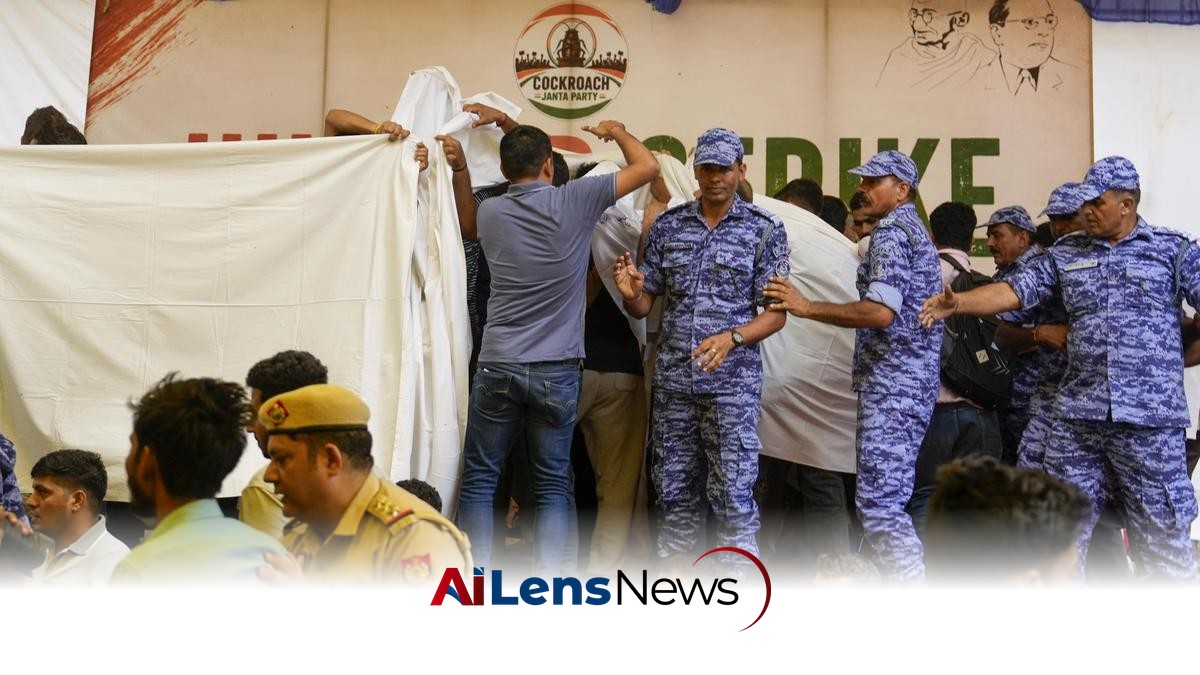
Amid the escalating tensions, AAP Delhi president Saurabh Bharadwaj raised concerns about the tactics employed by the police during the operation to shift Wangchuk to the hospital. He accused police personnel in civilian clothing of obstructing cameras with white bedsheets, alleging that this was an attempt to prevent any documentation of potential mistreatment of Wangchuk and other protesters. This claim adds another layer of complexity to the incident, as it raises questions about transparency and accountability in law enforcement actions.
According to the Delhi Police, Wangchuk's hospitalization was based on medical advice due to his deteriorating health condition. They stated that their actions were in compliance with directives from the Delhi High Court, which has been monitoring the situation closely. The court had previously ordered regular assessments of Wangchuk's health and mandated that appropriate medical intervention be provided if necessary. Reports indicated that Wangchuk had lost approximately 9.5 kg since the onset of his hunger strike, highlighting the serious implications of his protest on his physical well-being.
As the situation unfolded, the police confirmed that Wangchuk was moved to a government hospital following his health deterioration. This decision was framed as a necessary response to ensure his safety and well-being, yet it has been met with skepticism by his supporters and political opponents alike. The timing of the police intervention, occurring just before a significant protest event, has raised suspicions about the government's motivations and its willingness to engage with the issues raised by the activists.
Meanwhile, the other AISA members—Neha, Aameen, and Manish—continued their hunger strike at the protest site, demonstrating their commitment to the cause despite the increasing risks to their health. Supporters formed a human chain to prevent police from forcibly removing them, illustrating the solidarity among the protesters and their determination to bring attention to their demands. This scene reflects a broader trend in contemporary activism, where collective action and public displays of solidarity play a crucial role in amplifying voices that are often marginalized in the political discourse.
The implications of this incident extend beyond the immediate concerns regarding Wangchuk's health and the treatment of protesters. It raises fundamental questions about the state of civil liberties in India and the government's approach to dissent. As activists continue to challenge the status quo, the government's response may shape the trajectory of future protests and the broader landscape of political engagement in the country.
In conclusion, the hospitalization of Sonam Wangchuk has not only sparked a political debate but has also highlighted the urgent need for dialogue and reform in the education sector. As the situation develops, it remains to be seen how the government will respond to the growing calls for accountability and transparency, and whether it will engage constructively with the legitimate concerns raised by students and activists. The ongoing protests serve as a reminder of the power of collective action and the importance of safeguarding democratic principles in the face of adversity.
To learn more about the latest developments in Crime & Law, stay updated with our exclusive reports and analyses on AiLensNews.

