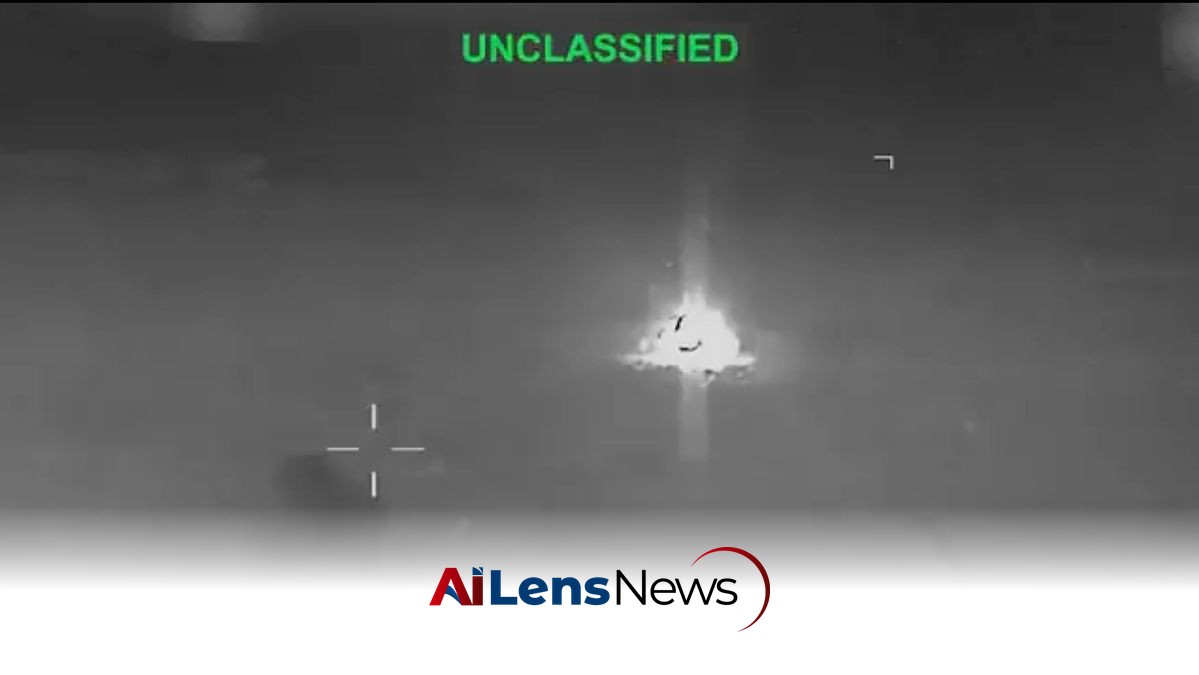


Jordan successfully intercepted four missiles launched by Iran, with no reported casualties or damage, as regional tensions escalate.
New Delhi, India Jul 13, 2026 ALN: In a significant military development, Jordan announced on Monday that it successfully shot down four missiles launched by Iran. This incident underscores the escalating tensions in the region, particularly concerning Iran's military activities. The announcement was made through Jordan's state-run Petra news agency, which reported that the missiles were intercepted without causing any casualties or material damage. The Jordanian military confirmed the successful defense operation, emphasizing the kingdom's preparedness to respond to threats.
Prior to this incident, Iran had claimed responsibility for an attack targeting Jordan, which is known to host U.S. military forces. This context adds a layer of complexity to the situation, as it highlights the ongoing geopolitical tensions involving Iran and its neighbors. The Middle East has long been a region fraught with conflict, where historical grievances, territorial disputes, and sectarian divides frequently intersect, leading to volatile security dynamics.
Jordan's interception of the missiles is particularly noteworthy given the kingdom's strategic position in the region. It shares borders with Iraq, Syria, and Israel, and has been a key ally of Western powers, particularly the United States. The U.S. has maintained a military presence in Jordan for years, primarily to assist in training and equipping Jordanian forces and to counter threats from extremist groups in the region. This military partnership has been crucial for Jordan, which faces significant security challenges stemming from the Syrian civil war and the rise of ISIS.
The Syrian civil war, which erupted in 2011, has had profound implications for regional stability, leading to the displacement of millions and the rise of various extremist groups. Jordan, in particular, has borne the brunt of the refugee crisis, hosting a significant number of Syrian refugees. The influx has strained Jordan's resources and created additional security concerns, as the kingdom has had to navigate the complexities of a conflict that has drawn in multiple state and non-state actors.
In addition to Jordan, reports indicate that Bahrain and Kuwait also faced missile attacks from Iran on the same morning. These coordinated strikes suggest a broader strategy by Iran to exert its influence and challenge regional security. Iran has been known to utilize a range of asymmetric warfare tactics, including missile strikes and proxy warfare, to project power throughout the Middle East. The targeting of multiple nations simultaneously indicates a calculated approach to destabilize the region and test the resolve of neighboring countries and their allies.
The interception of the missiles by Jordan is a critical moment in the ongoing conflict dynamics in the Middle East. It showcases the kingdom's military capabilities and its role as a key ally to Western powers in the region. The successful defense operation not only serves to bolster Jordan's national security but also sends a message to Iran regarding the kingdom's readiness to protect its sovereignty and interests.
The implications of this incident extend beyond immediate military concerns. The situation has the potential to escalate further, particularly if Iran perceives this interception as a provocation. The Iranian government has historically responded aggressively to perceived threats, and the recent missile attacks could be seen as part of a broader pattern of behavior aimed at asserting dominance in the region. This could lead to a cycle of retaliation, which might involve not only direct military confrontations but also increased support for proxy groups operating in neighboring countries.
Moreover, the international community will be closely monitoring the responses from both Jordan and Iran, as well as the implications for regional stability. The United Nations and various international actors may call for restraint and dialogue to prevent further escalation. However, the effectiveness of such diplomatic efforts remains uncertain, especially given the entrenched positions of both parties and the complex web of alliances and enmities that characterize Middle Eastern geopolitics.
In recent years, Iran has intensified its military activities, including missile development and testing, which has raised alarms among its neighbors and the broader international community. The Iranian regime views its missile capabilities as a crucial deterrent against perceived threats from the U.S. and its allies. Conversely, countries like Israel and Saudi Arabia have expressed significant concerns regarding Iran's military ambitions, leading to increased military cooperation among Gulf states and heightened tensions in the region.
The U.S. has responded to these developments by reinforcing its military presence in the region and conducting joint exercises with allied forces. Such actions are intended to deter Iranian aggression and reassure allies of U.S. commitment to their security. However, these military postures can also exacerbate tensions, leading to a precarious security environment where miscalculations could have severe consequences.
The potential for a wider conflict looms large, as the regional landscape is characterized by a multitude of actors with varying interests. Iran's support for proxy groups in Lebanon, Syria, Iraq, and Yemen has created a network of influence that complicates any efforts at conflict resolution. The involvement of external powers, including Russia and China, further complicates the geopolitical dynamics, as these nations have their own strategic interests in the region.
As the situation develops, the potential for diplomatic engagement remains critical. Efforts to de-escalate tensions through dialogue and negotiation have been ongoing, but achieving a lasting resolution to the underlying issues will require significant political will from all parties involved. The complexities of Middle Eastern politics, including the influence of non-state actors and the role of external powers, complicate the path toward peace.
In conclusion, the interception of Iranian missiles by Jordan represents a pivotal moment in the ongoing conflict dynamics in the Middle East. It highlights the delicate balance of power in the region and the potential for further escalation if diplomatic solutions are not pursued. As regional actors navigate these challenges, the importance of international cooperation and dialogue cannot be overstated. The world watches closely as Jordan and Iran respond to this incident, with broader implications for regional stability and security at stake.
To learn more about the latest developments in World News & International Affairs, stay updated with our exclusive reports and analyses on AiLensNews.

