

More
Checking your session
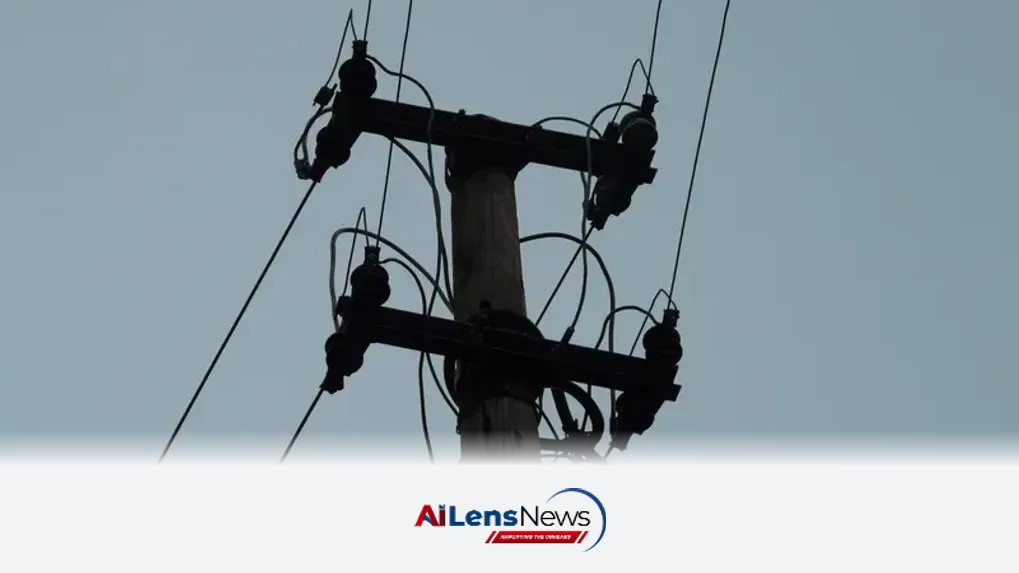



The Joint Electricity Regulatory Commission has approved a 6.83% tariff increase but insists inefficiencies in power distribution must not be passed to consumers.
New Delhi, India Aug 26, 2026 ALN: Even as the Joint Electricity Regulatory Commission (JERC) has approved an average 6.83 percent increase in electricity tariffs in Jammu and Kashmir, it has made it clear that inefficiencies in power distribution cannot be passed on to consumers and has directed Kashmir Power Distribution Corporation Limited (KPDCL) and Jammu Power Distribution Corporation Limited (JPDCL) to take concrete measures to reduce losses.
The revised tariff, approved by JERC for 2026-27, will come into effect from September 1. The increase was approved after the commission examined the revenue requirements of the two distribution companies.
Against this backdrop, the commission's observations on distribution losses assume significance. It has specifically classified distribution loss as a controllable parameter, meaning the two distribution companies are expected to take measures within their control to bring such losses down instead of treating higher losses as a cost to be recovered from consumers. “The actual losses cannot be considered and inefficiencies cannot be passed on to the consumers,” the commission said.
JERC stated that KPDCL and JPDCL “should take all necessary steps to curb the high losses observed in their area of supply.” The commission has provisionally retained the distribution loss targets at 19 percent for KPDCL and 15 percent for JPDCL for the three years of the present control period. The decision is based on the loss-reduction targets already prescribed under successive power-sector reform programmes.
The erstwhile Jammu and Kashmir State Electricity Regulatory Commission had fixed a trajectory for reducing Aggregate Technical and Commercial (AT&C) losses to as low as 15 percent by FY 2019-20 under the UDAY scheme. A similar objective was subsequently incorporated under the Ministry of Power's Revamped Reforms-based and Results-linked, Distribution Sector Scheme (RDSS).
While deciding the Business Plan for FY 2023-24 to FY 2025-26, JERC had considered the distribution loss levels submitted by KPDCL and JPDCL based on AT&C loss targets approved by the Ministry of Power under RDSS. The commission noted that the RDSS scheme has now been extended up to March 2028.
It also referred to the minutes of the 50th review meeting of RDSS, under which the target for FY 2025-26 under the Result Evaluation Framework would remain the same as the target for FY 2024-25. JERC had earlier approved a distribution loss target of 15 percent for JPDCL and 19 percent for KPDCL for FY 2025-26. It has now decided that the same targets will provisionally continue for all three years of the present control period.
The targets for FY 2027-28 and FY 2028-29, however, will be reviewed in the respective future Annual Revenue Requirement (ARR) orders based on the actual performance of the two distribution companies.
The commission's position is particularly important for consumers because distribution losses can arise from both technical and commercial deficiencies in the electricity network. While some losses are inherent in the physical transmission and distribution of electricity, the regulator expects utilities to control losses that can be reduced through better network management, metering, billing, enforcement, and other efficiency measures.
The commission has therefore drawn a line between legitimate costs of supplying electricity and costs arising from inefficiency. At the same time, the regulator has indicated that higher operating costs cannot automatically be justified by allowing controllable distribution losses to remain high.
The commission has also linked the issue to the broader restructuring of the power sector in Jammu and Kashmir. The erstwhile Jammu and Kashmir Power Development Department was restructured and unbundled into separate utilities dealing with generation, transmission, and distribution, with the stated objective of making these corporations more self-reliant and cost-efficient.
JERC said the restructuring primarily aims at enabling “self-reliant and cost-efficient operation” of the corporations in the generation, transmission, and distribution businesses. The commission further observed that financial support and grant-in-aid provided to the utilities during the initial stage of restructuring would need to be gradually phased out.
In the future, the revenue requirement for running these utilities is expected to be met through tariffs charged to consumers. The message from the regulator, therefore, is two-fold: consumers will contribute through regulated tariffs towards the legitimate cost of supplying electricity, but KPDCL and JPDCL cannot expect consumers to bear the cost of inefficiencies that remain within the utilities' control.
To learn more about the latest developments in Crime & Law, stay updated with our exclusive reports and analyses on AILensNews.