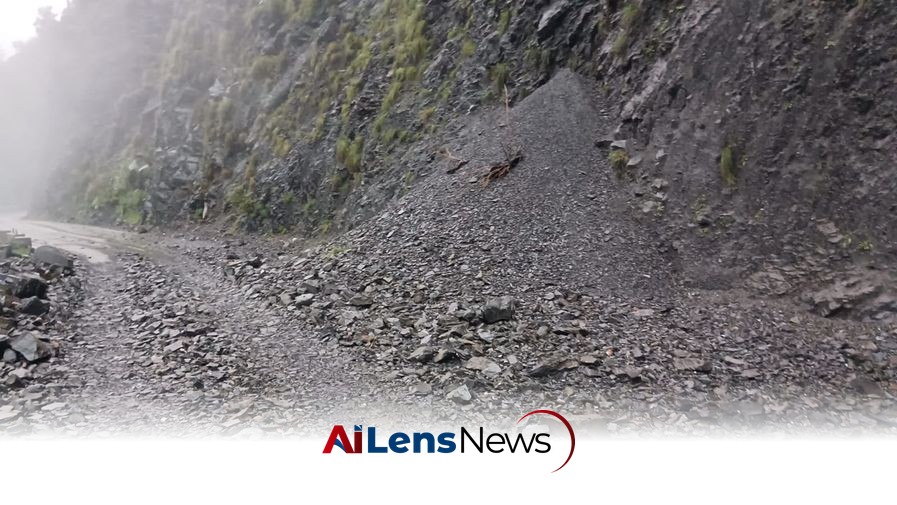


The Jammu-Srinagar National Highway (NH-44) remains closed due to landslides and shooting stones caused by continuous rainfall, with traffic police advising against travel.
Srinagar, India Jul 24, 2026 ALN: The Jammu-Srinagar National Highway (NH-44), a crucial artery connecting the Jammu region with the Kashmir Valley, remains closed to vehicular movement due to intermittent landslides and shooting stones at multiple locations. This closure has been attributed to continuous rainfall in the region, which has significantly compromised road safety and accessibility. The Traffic Police issued an update at 7 am to inform the public of the situation and the ongoing risks associated with travel on this vital route.
The Jammu-Srinagar National Highway is not only a key transportation route but also an essential lifeline for the economy and daily life in both Jammu and Kashmir. It facilitates the movement of goods, services, and people between the two regions, making it a critical infrastructure component. The highway is often susceptible to natural hazards, particularly during the monsoon season when heavy rains can trigger landslides, rockfalls, and other geological hazards.
In light of the current conditions, the Traffic Police have advised commuters to refrain from traveling until the highway is declared safe and clear for traffic. The authorities have highlighted the potential for further landslides and shooting stones, which pose significant risks to vehicles and passengers. This precautionary measure aims to ensure the safety of all road users and to prevent accidents that could result from unforeseen geological events.
Furthermore, the Traffic Police have urged commuters to disregard any rumors regarding the status of the highway and instead to rely on official updates. They have encouraged the public to check the latest road status through the Traffic Police’s social media platforms, including their X handle and Facebook page, as well as through the Traffic Control Units (TCUs) established in various locations. This proactive communication strategy is essential in keeping the public informed and reducing anxiety about travel conditions.
For those needing real-time information on road status, the Traffic Control Units can be contacted directly. The numbers provided for the Jammu region are 0191-2459048, 0191-2740550, 9419147732, and the emergency number 103. In Srinagar, commuters can reach out at 0194-2450022, 2485396, 18001807091, and 103. For Ramban, the contact numbers are 9419993745 and 1800-180-7043, while Udhampur residents can call 8491928625. These contact points are crucial for anyone needing assistance or information regarding travel plans.
The implications of the highway closure extend beyond mere inconvenience for travelers. The Jammu-Srinagar National Highway is vital for the transportation of perishable goods, essential supplies, and medical services. Any prolonged closure can lead to shortages, particularly in the Kashmir Valley, where the majority of food and essential items are transported via this route. Additionally, the closure can impact tourism, an important economic sector for the region, especially during the summer months when visitors flock to the picturesque landscapes of Kashmir.
Historically, the Jammu-Srinagar National Highway has faced similar challenges during the monsoon season. Landslides and road blockages have been recurring issues, prompting the authorities to implement various measures aimed at improving road safety and maintenance. These measures include regular monitoring of weather conditions, timely clearing of debris, and the establishment of early warning systems to alert travelers of potential hazards.
In response to the increasing frequency of landslides, the government has also invested in infrastructure improvements, such as the construction of retaining walls and drainage systems designed to mitigate the impact of heavy rainfall. Such investments are critical in ensuring the long-term viability of the highway and protecting the lives of those who travel it.
The Jammu-Srinagar National Highway, often referred to as the lifeline of Kashmir, plays a pivotal role in the socio-economic landscape of the region. It serves not just as a roadway but as a conduit for cultural exchange, commerce, and connectivity. The highway is essential for the transport of agricultural produce, industrial goods, and daily necessities, making its uninterrupted operation crucial for the local economy.
During the monsoon season, the region experiences heavy rainfall, which increases the risk of landslides. This natural phenomenon is exacerbated by the geography of the area, characterized by steep slopes and loose soil. The government has recognized these challenges and has been working on various initiatives to enhance the resilience of the infrastructure against such natural calamities.
One of the strategies employed by the authorities includes the installation of advanced monitoring systems that can predict landslides based on weather patterns and soil conditions. These systems provide valuable data that can help in making informed decisions about road closures and safety measures. Moreover, the government has sought to improve the drainage systems along the highway to prevent water accumulation, which can lead to landslides.
In addition to infrastructure improvements, community awareness programs have been initiated to educate travelers about the risks associated with traveling during adverse weather conditions. Such programs aim to foster a culture of safety and preparedness among the public, encouraging them to heed warnings and advisories issued by the authorities.
As the situation develops, authorities will continue to monitor the weather and geological conditions closely. The public is encouraged to stay informed and to follow the advice of the Traffic Police and other relevant authorities. Safety remains the top priority, and all efforts will be made to restore normal traffic flow as soon as conditions permit.
In conclusion, while the closure of the Jammu-Srinagar National Highway due to landslides and shooting stones poses immediate challenges for commuters, it also highlights the ongoing need for infrastructure resilience in the face of natural hazards. The collaboration between various government agencies and the public will be essential in navigating these challenges and ensuring safe travel for all in the region. The importance of preparedness and effective communication cannot be overstated, as they are vital in minimizing the impact of such closures on the daily lives of the people in Jammu and Kashmir.
To learn more about the latest developments in Transport & Mobility, stay updated with our exclusive reports and analyses on AiLensNews.

