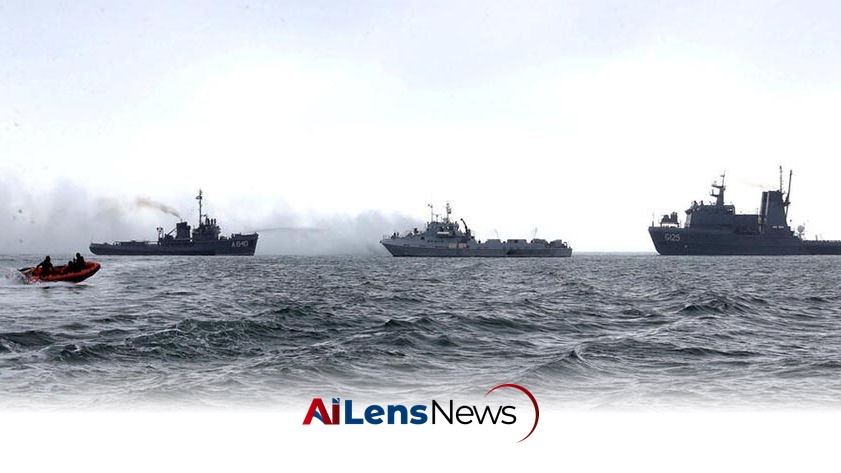


Tehran's foreign ministry has issued a warning of 'unforeseen' repercussions after Ukraine attacked an Iranian vessel in the Caspian Sea, escalating tensions.
New Delhi, India Jul 27, 2026 ALN: Tehran: Iran’s foreign ministry warned on Monday of “unforeseen” consequences following Ukraine’s attack on an Iranian vessel in the Caspian Sea over the weekend. This incident marks a significant escalation in tensions between Ukraine and Iran, particularly in the context of the ongoing conflict stemming from Russia's invasion of Ukraine, which began in February 2022. The geopolitical dynamics in this region have been increasingly complex, with various nations taking sides and engaging in military actions that have far-reaching implications.
“This action by Ukraine was an absolutely illegal and unjustified act, contrary to the Charter of the United Nations, as well as a dangerous act of adventurism that will certainly not go unanswered by us,” the ministry’s spokesman Esmaeil Baqaei said in a weekly press briefing. He emphasized that the consequences of Ukraine’s action “will certainly be unforeseen,” highlighting Iran's determination to respond to what it perceives as a violation of international norms.
Iran’s Foreign Minister Abbas Araghchi on Sunday warned that his country would respond to a deadly attack by Ukraine on an Iranian ship in the Caspian Sea. The attack reportedly resulted in the death of one sailor and injuries to several others aboard the vessel. This incident has drawn international attention, as it underscores the potential for conflict to escalate not just between Ukraine and Russia, but also involving other nations that have strategic interests in the region.
The situation escalated when Ukrainian President Volodymyr Zelensky stated that Kyiv had carried out long-range strikes in the Caspian Sea against vessels transporting military cargo involving Iran. This assertion reflects Ukraine's ongoing military strategy to disrupt supply lines that it believes are aiding Russian military operations. The targeting of Iranian vessels indicates a broader shift in Ukraine's military tactics, as it seeks to diminish Russian capabilities by attacking its allies and their logistical support.
“Zelensky has attacked an Iranian commercial vessel, killing a sailor,” Araghchi said on X, describing it as “a blatant UN Charter violation done at Israel’s behest to drag Europe into its war.” This statement alludes to the complex web of alliances and enmities that characterize the current geopolitical landscape, where nations like Iran and Israel find themselves on opposing sides of the conflict. Araghchi's comments suggest that Iran views this attack not only as a direct assault on its sovereignty but also as part of a larger strategy by Western nations, particularly Israel, to undermine Iranian influence in the region.
In the wake of the attack, Iran's foreign ministry reported that the assault caused the ship “to explode, killing one sailor and injuring several others.” The ministry's swift condemnation of Ukraine's actions indicates Iran's commitment to defending its maritime interests, particularly in the Caspian Sea, which is bordered by several countries, including Russia, Kazakhstan, Turkmenistan, and Azerbaijan. The Caspian Sea is rich in natural resources and holds strategic importance for regional trade and military operations.
The Islamic Republic has maintained a position of non-intervention in the conflict between Russia and Ukraine, as stated by the foreign ministry. However, this incident may challenge that stance, as Iran faces pressure to respond to perceived aggressions against its vessels. The Iranian government has historically been wary of foreign military operations in its vicinity, particularly those that involve its allies or that could threaten its national security.
On Saturday, Ukrainian President Volodymyr Zelensky made a statement on social media asserting that armed forces had achieved “very strong results with long-range strikes in the Caspian Sea — including vessels used in military cargo shipments involving Iran, as well as a warship.” Such statements are indicative of Ukraine's strategy to leverage its military capabilities to target not only Russian forces but also their allies, thereby expanding the conflict's scope.
Ukraine’s intelligence services reported on Telegram that drone attacks had been carried out against “cargo vessels under international sanctions that were used to transport military cargo between Iran and Russia.” This highlights the ongoing tension not just between Ukraine and Russia, but also the broader implications of military cooperation between Iran and Russia. The two nations have been known to collaborate on various military and economic fronts, particularly in the face of Western sanctions and pressures.
According to Iranian state television, the foreign ministry summoned the Ukrainian charge d’affaires in Tehran on Saturday to protest this “hostile and criminal act.” Such diplomatic measures are common in international relations, especially when countries feel their sovereignty has been violated. The summoning of the charge d’affaires signals Iran's serious intent to address the situation through diplomatic channels, although it remains to be seen how both nations will navigate the aftermath of this incident.
The implications of this attack extend beyond just the immediate military and diplomatic responses. As tensions rise, the potential for a wider conflict involving multiple nations increases. The Caspian Sea, a historically contentious area, could become a flashpoint for further military confrontations if diplomatic solutions are not pursued. Additionally, this incident could influence Iran's relationships with other nations, particularly those in the region who may view Iran's response as a test of its military capabilities and resolve.
Furthermore, the attack raises questions about the future of military logistics and alliances in the region. If Ukraine continues to target Iranian vessels, it could lead to a reevaluation of maritime security in the Caspian Sea, prompting other nations to bolster their naval capabilities or reconsider their alliances. The situation is fluid, and as both nations prepare for potential reprisals, the international community watches closely, aware that the consequences of these actions could reverberate far beyond the immediate conflict.
In summary, the attack on the Iranian vessel by Ukraine represents a significant escalation in an already complex and volatile geopolitical landscape. As both nations prepare for potential responses, the implications for regional security, international relations, and military strategies remain uncertain. The international community will be keenly observing the developments in the coming days, as the situation continues to evolve and unfold.
To learn more about the latest developments in Crime & Law, stay updated with our exclusive reports and analyses on AiLensNews.

