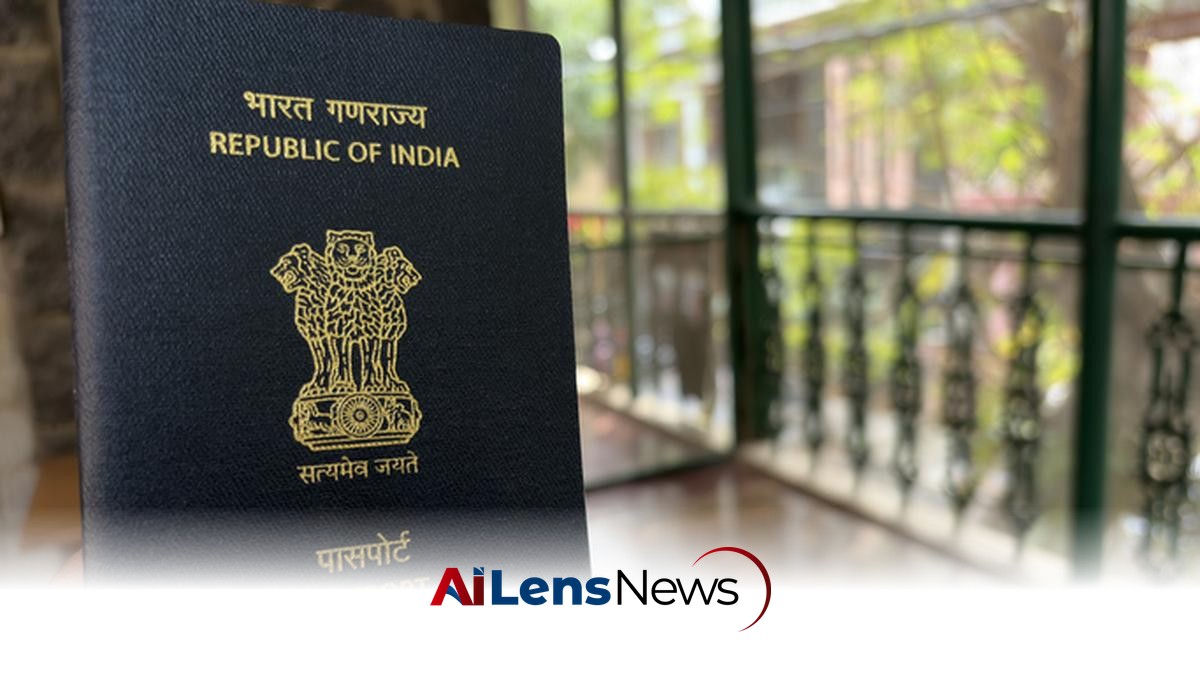


The Ministry of External Affairs clarifies that the Indian passport is intended to regulate citizens' departure from India, with less than 8% currently holding one.
New Delhi, India Jul 15, 2026 ALN: An Indian passport is a document that is meant to “regulate the departure from India of citizens of India,” stated the Official Spokesperson of the Ministry of External Affairs during a press briefing on July 14, 2026. This assertion underscores the fundamental role of passports in not only facilitating inter travel but also in establishing the legal identity of Indian citizens when they seek to travel abroad. The significance of a passport extends beyond mere travel; it embodies the legal recognition of an individual’s citizenship status and serves as a crucial document in various inter interactions.
Randhir Jaiswal, the Official Spokesperson, emphasized that the passport is issued in accordance with the Passports Act of 1967, which outlines the procedures for verifying the identity of applicants. The Passports Act serves as a legal framework that governs the issuance of passports in India, ensuring that all applications undergo a thorough verification process to confirm the identity and eligibility of the applicant. He noted, “An Indian passport is a document that, as per the Passports Act, 1967, is issued by the Government of India to regulate the departure from India of citizens of India.” This legal underpinning is crucial as it delineates the responsibilities of the government in safeguarding the integrity of its passport issuance process, ensuring that passports are granted only to those who meet the necessary criteria.
Mr. Jaiswal further explained that the issuance of passports is governed by established processes to ensure proper verification. This includes checks against various databases to prevent identity fraud and to ensure that the applicant does not have any legal impediments that would prevent them from leaving the country. He highlighted a significant statistic: “Currently, less than 8% of Indian citizens hold a passport.” This figure is particularly striking given India's massive population, which suggests that a substantial majority of citizens may face barriers to obtaining a passport. The implications of this statistic are profound, as it indicates that a large segment of the population may be excluded from the benefits that inter travel can provide.
The low percentage of passport holders in India raises critical questions about accessibility and the potential barriers faced by citizens wishing to travel abroad. Factors contributing to this low number include bureaucratic hurdles, the cost associated with obtaining a passport, and a lack of awareness about the passport application process. Additionally, in rural areas, where access to government services is often limited, the challenges can be even more pronounced. This situation highlights the need for reforms in the passport issuance process to make it more accessible to all citizens, irrespective of their geographical or socio-economic status. The government must consider these barriers seriously, as they prevent many from pursuing opportunities that come with inter travel.
This clarification from the Ministry of External Affairs comes in the wake of recent comments by a government official who referred to the Indian passport as a “travel document,” asserting that it is not a “citizenship document.” This statement sparked discussions regarding the role and significance of passports in establishing citizenship. While a passport does serve as a travel document, it also reflects the legal recognition of an individual's citizenship status. In many countries, including India, the passport is one of the primary documents used to assert one's identity and citizenship, especially when dealing with foreign governments. This dual role of the passport as both a travel document and a citizenship identifier is essential in understanding its importance in inter relations and personal identity.
The Ministry's remarks aim to clarify the purpose of the Indian passport amid ongoing debates about identity and citizenship documentation in India. In recent years, discussions around citizenship have become increasingly complex, particularly with the introduction of policies and laws that have raised questions about the criteria for citizenship and the documentation required to prove it. The Indian passport, therefore, plays a pivotal role in this context, serving as a key document that can affirm an individual’s status as a citizen of India. This is especially relevant in light of recent legislative changes that have sparked public debate about citizenship rights and the documentation required to assert those rights.
As the world becomes increasingly interconnected, the importance of passports as a means of facilitating inter travel remains paramount. Passports not only grant individuals the ability to travel across borders but also serve as a symbol of identity. In an era where global mobility is often essential for education, employment, and personal growth, the role of passports cannot be overstated. The ability to travel freely has become a hallmark of modern citizenship, and passports are the key that unlocks this freedom.
Furthermore, the implications of passport ownership extend beyond mere travel. For many individuals, having a passport opens doors to opportunities that may otherwise be inaccessible. It can enhance one's ability to engage in inter business, pursue higher education abroad, or reunite with family members living overseas. Conversely, the lack of a passport may restrict individuals from accessing these opportunities, thereby perpetuating cycles of inequality. This disparity in access to passports can have long-term effects on economic mobility and social equity, creating a divide between those who can travel and those who cannot.
The Indian government has recognized the need to enhance passport accessibility in recent years. Efforts have been made to streamline the application process, reduce waiting times, and increase the number of passport service centers, particularly in underserved regions. The introduction of online applications and the establishment of passport seva kendras (service centers) have been steps in the right direction. These initiatives aim to simplify the process for applicants, making it easier for citizens to obtain the necessary documentation for inter travel. However, the challenge remains significant, and ongoing efforts will be necessary to ensure that all citizens can obtain a passport with relative ease. Addressing these challenges requires a multifaceted approach that considers the diverse needs of India's population.
In conclusion, the Indian passport serves a critical function in regulating the departure of citizens from the country, reflecting both the legal framework established by the government and the current realities of passport ownership among the populace. As discussions about citizenship and identity continue to evolve in India, the role of the passport as a legitimate and recognized document of identity will remain central to the discourse. The government’s commitment to improving the passport issuance process will be crucial in ensuring that more citizens can participate in the global community, thereby fostering a more inclusive society. The path forward will require ongoing dialogue, reform, and a commitment to accessibility, ensuring that the passport serves its intended purpose as a gateway to the world for all Indian citizens.
To learn more about the latest developments in Politics, stay updated with our exclusive reports and analyses on AiLensNews.

