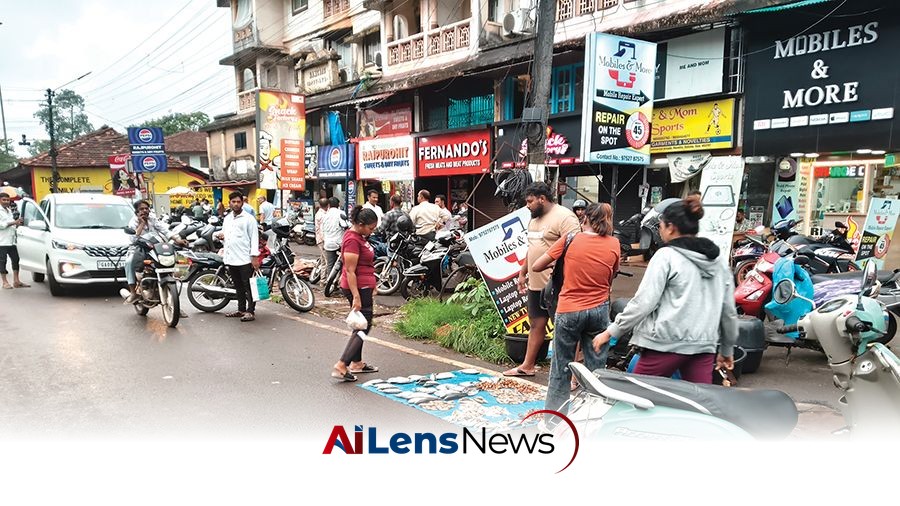


Despite government efforts to curb illegal fish vending in Salcete, unauthorized sales continue, raising concerns among residents and officials.
New Delhi, India Jul 14, 2026 ALN: Margao: Despite the state government’s directives aimed at curbing illegal roadside fish vending and the introduction of the ‘Fishermen Card’ system, unauthorized sale of fish continues to operate across several parts of Salcete. This persistent issue raises questions about the effectiveness of government policies aimed at regulating the fish trade in the region and protecting local livelihoods. The ongoing situation highlights the complexities surrounding informal economies and the socio-economic realities faced by many individuals in the area.
The ‘Fishermen Card’ identity system was introduced as a regulatory measure to ensure that only traditional local fish traders are permitted to sell fish. This system requires proof of 15 years of residency in Goa, which is intended to protect the interests of traditional Goan fishermen. Under the state’s new policy, only those holding valid Fisheries Department identity cards are allowed to engage in fish sales. Furthermore, retail fish sales are mandated to take place in designated municipal markets or village tintos, while non-resident migrant vendors are explicitly barred from conducting retail fish vending. These regulations were designed to preserve the livelihood of local fishermen and ensure that the fish trade remains a sustainable and community-oriented practice.
Despite these regulations, roadside fish stalls continue to operate in various locations, including Navelim, Davorlim, Aquem Baixo, and Chinchinim. In Navelim, several vendors have even encroached upon portions of the national highway, raising significant public safety concerns. This situation has not only led to traffic bottlenecks but has also created road safety hazards, as the stalls often obstruct the flow of vehicles. Moreover, the improper disposal of fish waste along these arterial roads has resulted in unhygienic conditions that pose health risks to the local community. The presence of these stalls can deter both residents and visitors, potentially impacting local businesses that rely on foot traffic.
Local commuters and residents have expressed their frustrations regarding the ongoing situation. Many have submitted formal complaints to the authorities, yet they allege that no concrete corrective action has been taken to address their concerns. This lack of response has led to growing dissatisfaction among the community, who feel that their voices are not being heard in the face of these persistent issues. The perceived inaction from local authorities has created a sense of helplessness among residents, who feel that their quality of life is being compromised by the unauthorized vending activities.
The problem is further complicated by a jurisdictional dispute between different government bodies. Senior police officials have stated that the responsibility for regulating unauthorized vendors and issuing trade licenses falls under the jurisdiction of local bodies and village panchayats. However, panchayat authorities have frequently cited a shortage of police personnel as a significant barrier to safely carrying out eviction drives against illegal vendors. This inter-agency conflict has created a regulatory vacuum, allowing unauthorized fish vending to thrive despite the government's best efforts to impose order. The lack of coordination between various government departments not only hampers enforcement but also raises questions about the overall governance and regulatory framework in the region.
The vendors themselves have defended their livelihoods, arguing that they are simply trying to survive in a challenging economic environment. James Fernandes, a local fish vendor, expressed his plight, stating, "With no employment, we are left with no option but to take up side jobs like selling fish. I have been selling fish since the Covid outbreak and earn my living by selling fish. If the government removes my source of income, what am I to feed my family?" His comments reflect a broader sentiment among vendors who feel that the government’s actions jeopardize their ability to support their families. The struggle for survival in the informal economy is a reality for many who have been adversely affected by the economic downturn caused by the pandemic.
Another vendor, V Naik, echoed similar sentiments, saying, "We sell fish for about two to three hours a day as we have no other source of employment. If the government cracks down on those who are earning their daily bread, then we will have to end our lives as our families will die of hunger. The government should provide alternative employment or take the stakeholders into confidence before implementing the 15-year rule." This highlights the urgent need for the government to consider the socio-economic implications of its policies and to engage with local communities to find solutions that are equitable and sustainable. The voices of these vendors underscore the importance of understanding the human impact of regulatory measures, particularly in a region where economic opportunities may be limited.
The ongoing issue of illegal fish vending in Salcete is not just a matter of regulatory compliance; it also touches upon deeper socio-economic challenges faced by many residents. The COVID-19 pandemic has exacerbated existing vulnerabilities, leading to increased unemployment and economic hardship. Many individuals who previously worked in tourism and hospitality sectors have turned to informal jobs, such as fish vending, as a means of survival. The government's policies must take into account the realities of these individuals' lives, as well as the need for public health and safety. The intersection of public health concerns and economic survival presents a complex challenge for policymakers who must navigate these competing priorities.
Moreover, the persistence of illegal fish vending raises important questions about the effectiveness of the current regulatory framework. While the intention behind the ‘Fishermen Card’ system is to protect local fishermen, the execution of these policies appears to be falling short. Authorities must explore alternative strategies that not only enforce regulations but also provide support and resources to those affected by these changes. For instance, creating pathways for informal vendors to transition into the formal economy could help address both regulatory compliance and economic stability.
In light of these challenges, it is essential for the government to engage in dialogue with all stakeholders, including fish vendors, local residents, and regulatory bodies. This collaborative approach could lead to the development of more effective policies that balance the need for regulation with the economic realities faced by many in the community. Additionally, the government should consider investing in alternative employment opportunities and vocational training programs to help those affected by the crackdown on illegal vending find sustainable sources of income. By fostering an environment of cooperation and mutual understanding, authorities may be able to create solutions that benefit both the community and the regulatory framework.
As the situation continues to evolve, it remains crucial for local authorities to address the concerns raised by residents and vendors alike. Failure to do so may not only exacerbate existing tensions but could also lead to further challenges in enforcing regulations in the future. The balance between regulation and livelihood is delicate, and thoughtful, inclusive policymaking will be essential in navigating these complex issues. The ongoing dialogue between the government and affected parties will be vital in shaping a sustainable future for both the fish trade and the community at large.
To learn more about the latest developments in Crime & Law, stay updated with our exclusive reports and analyses on AiLensNews.

