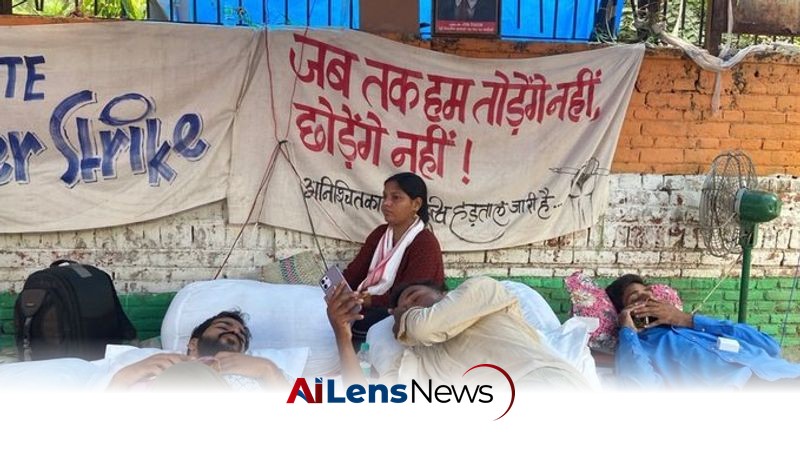


Neha, Ameen Amitoj, and Manish Kumar continue their hunger strike for the 22nd day, demanding action from authorities.
New Delhi, India Jul 19, 2026 ALN: The hunger strike initiated by three students from the All India Students Association (AISA) has entered its 22nd day, drawing attention to their ongoing protest for various demands. Neha, Ameen Amitoj, and Manish Kumar have committed to this indefinite fast, showcasing their determination to stand firm in their cause. Their hunger strike has not only highlighted their personal commitment but has also become a focal point for broader discussions about the challenges faced by students in the current educational landscape.
The students have been vocal about their grievances, which include demands for better educational facilities, increased government support for students, and a more responsive administration. These issues are not new; they reflect long-standing concerns that have been raised by student groups across the country. The current educational framework is often criticized for being underfunded and lacking in infrastructure, which has a direct impact on the quality of education that students receive. Their protest has garnered support from fellow students and various student organizations, highlighting the collective concerns regarding the current state of education in the region.
The hunger strike began as a response to perceived inaction from educational authorities regarding issues that have long plagued the student community. The trio's commitment to fasting symbolizes their desperation and determination to bring about change. Hunger strikes have historically been used as a form of non-violent protest, aiming to draw attention to critical issues that are often ignored by those in power. The students believe that their drastic measure is necessary to compel authorities to take their demands seriously.
In recent years, student protests have gained momentum in India, with various groups advocating for issues such as social justice, gender equality, and the right to affordable education. The AISA, which has a history of activism, has been at the forefront of these movements, pushing for reforms that address systemic inequalities within the educational system. The hunger strike by Neha, Ameen, and Manish is a continuation of this legacy, as they seek to highlight the urgent need for reforms that can enhance the educational experience for all students.
As the days progress, more students and activists have joined the protest, showing solidarity with Neha, Ameen, and Manish. Rallies and gatherings have been organized to raise awareness about their cause, with many calling for immediate action from the government and educational institutions. This growing support underscores the collective frustration felt by many students who are grappling with similar issues. The presence of various student organizations at these rallies demonstrates a unified front, as they collectively demand accountability from those in power.
Social media has played a significant role in amplifying their message, with hashtags related to the hunger strike trending among youth and student circles. The engagement from the online community has not only brought attention to their plight but has also encouraged discussions around the need for systemic changes in the education sector. Activists and supporters have been using various platforms to share stories, organize events, and mobilize resources to sustain the protest and keep the dialogue alive.
With the hunger strike continuing for over three weeks, health concerns for the participants are rising. Medical professionals have been monitoring their health closely, urging them to reconsider their methods of protest. The risks associated with prolonged fasting include severe dehydration, malnutrition, and potential long-term health issues. However, the students remain resolute, stating that they will not back down until their demands are addressed. This commitment, while admirable, raises ethical questions about the lengths to which individuals should go to advocate for their rights.
Supporters have expressed concern for the students' well-being, with many calling for alternative methods of protest that do not jeopardize their health. The tension between the urgency of their demands and the risks associated with their protest strategy is palpable, as advocates for their cause grapple with how to best support them without compromising their health. The students' resolve has sparked discussions about the effectiveness of hunger strikes as a form of protest in contemporary activism.
As the hunger strike continues, the students have indicated that they are prepared to escalate their actions if necessary. Plans for further demonstrations and awareness campaigns are in the works, aiming to keep the momentum of their protest alive. This could involve organizing larger rallies, engaging with media outlets for coverage, and seeking partnerships with other activist groups to broaden their reach. The students are aware that sustaining public interest is crucial to their cause, and they are strategizing on how to maintain pressure on the authorities.
Additionally, there are discussions about potentially involving alumni and other stakeholders in the educational community to lend their voices to the cause. By expanding their network of support, the students hope to create a more formidable coalition that can advocate for meaningful change. The potential for collaboration with other organizations may also help amplify their demands and increase visibility for the issues they are fighting for.
In conclusion, the hunger strike by Neha, Ameen, and Manish serves as a poignant reminder of the ongoing struggles faced by students today. Their unwavering commitment to their cause highlights the urgent need for dialogue and action from educational authorities. As the situation continues to evolve, it will be crucial for all stakeholders to engage in constructive conversations about the future of education in the region. The outcomes of this protest may have lasting implications, not only for the immediate demands of the students involved but also for the broader educational landscape in India.
To learn more about the latest developments in Society & Social Issues, stay updated with our exclusive reports and analyses on AiLensNews.

