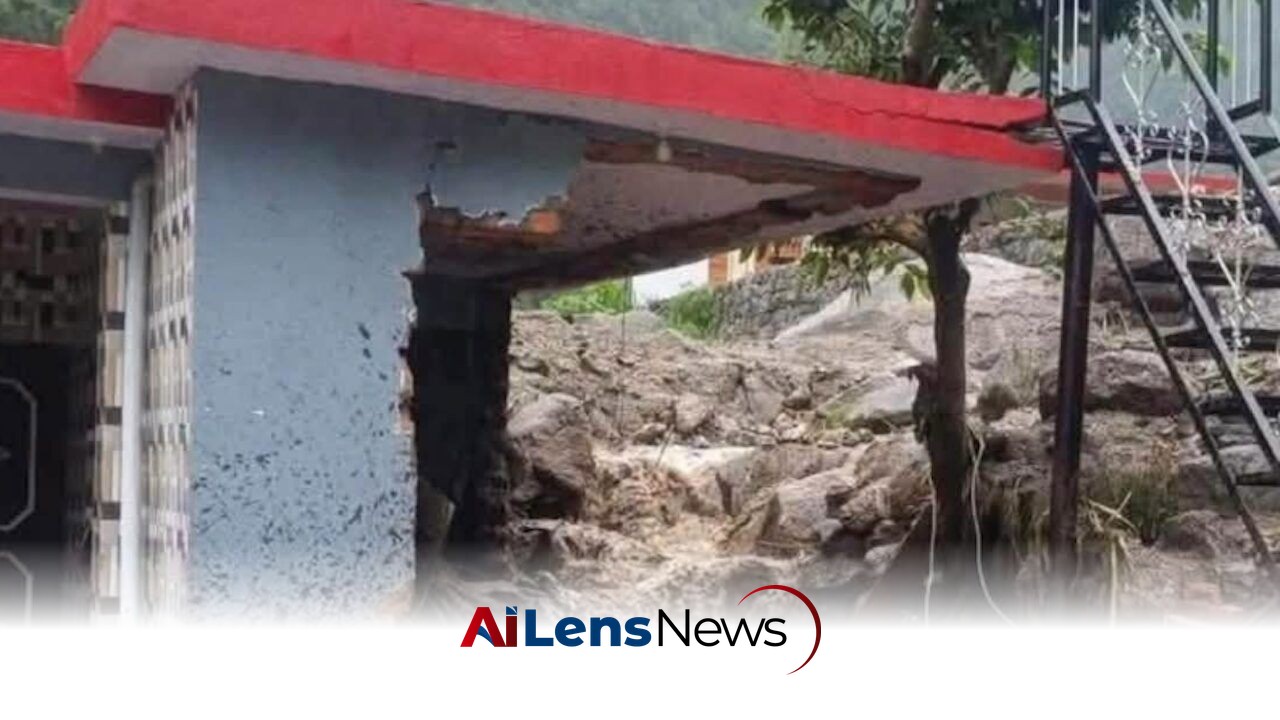


A cloudburst in Speda village, Himachal Pradesh, has caused severe destruction, flattening houses and displacing families to relief camps.
Shimla, India Jul 22, 2026 ALN: Dharamshala: A cloudburst has caused widespread destruction in Speda village under Boh Panchayat in the Shahpur Assembly constituency of Himachal Pradesh’s Kangra district, leaving several families homeless and forcing authorities to evacuate residents from the affected area.
The cloudburst, which struck around 11 a.m. on Tuesday, triggered flash floods and landslides that flattened four houses and rendered eight others uninhabitable after they were inundated with debris. Cracks have also appeared in the ground and the walls of several homes, raising concerns over the stability of the entire village.
The disaster has severely damaged village infrastructure, with footpaths and traditional irrigation channels (kuhls) washed away. Residents said the landslide has left the area highly vulnerable, with three massive boulders precariously perched on the hillside directly above the village, posing a constant threat of further destruction.
Fear and uncertainty have gripped the villagers as the unstable terrain continues to endanger lives and property. Many residents were forced to flee their homes immediately after the cloudburst.
Approximately 25 affected families have been shifted to a temporary relief camp established at the Government School in Boh village. However, a few residents continue to remain in their damaged houses despite the risks.
Deputy Commissioner Hemraj Bairwa visited the affected village on Wednesday evening along with officials from the district administration to assess the extent of the damage. After inspecting the site, he directed officials to relocate the entire village population to safer locations, stating that severe landslides had caused extensive cracks in the land, making the area unsafe for habitation.
The district administration has initiated relief and rehabilitation measures while keeping a close watch on the situation. Officials are assessing the losses and monitoring the unstable hillside to prevent any further tragedy.
This incident highlights the increasing vulnerability of regions like Himachal Pradesh to extreme weather events, which scientists have linked to climate change. The state, known for its picturesque landscapes and rich biodiversity, is also prone to natural disasters, including landslides, flash floods, and cloudbursts, especially during the monsoon season. The geography of the region, characterized by steep slopes and fragile ecosystems, exacerbates the impact of such weather phenomena.
Cloudbursts are sudden and intense rainfall events that can lead to rapid flooding, particularly in hilly terrains. The rainfall can be so intense that it overwhelms the land’s ability to absorb water, leading to flash floods and landslides. The occurrence of cloudbursts in Himachal Pradesh has been on the rise, raising alarms among environmentalists and disaster management experts. The rapid urbanization and deforestation in the region further contribute to the instability of the land, increasing the risk of such disasters.
In the aftermath of the cloudburst, local authorities are tasked not only with immediate relief efforts but also with long-term strategies to mitigate the impacts of future disasters. This includes improving drainage systems, restoring traditional irrigation methods, and enhancing early warning systems to alert residents about impending weather threats.
The psychological toll on the villagers cannot be overlooked. The trauma of losing homes and the uncertainty of their future can lead to long-term mental health issues. Community support and mental health services will be essential in helping families cope with the aftermath of this disaster. Non-governmental organizations (NGOs) and local community groups often play a vital role in providing such support, alongside government efforts.
As the situation unfolds, the need for comprehensive disaster management plans becomes increasingly clear. The government’s response will likely include not only immediate relief but also a reassessment of land use policies and building regulations to ensure that future constructions are resilient to such extreme weather events. Engaging with local communities in these planning processes is crucial, as they possess valuable knowledge of their environment and the risks they face.
In the broader context, this incident serves as a wake-up call for policymakers at both state and national levels to prioritize climate resilience in their planning and development agendas. Investing in infrastructure that can withstand extreme weather, restoring natural ecosystems, and promoting sustainable land management practices are all critical components of a strategy to reduce vulnerability to climate-related disasters.
As the recovery efforts continue in Speda village, the resilience of the community will be tested. The collective response of local authorities, NGOs, and the community will determine how quickly and effectively they can rebuild their lives and restore their homes. The incident underscores the urgent need for collaborative efforts to address the challenges posed by climate change and to ensure that vulnerable communities are better prepared for future disasters.
In conclusion, the cloudburst in Speda village is a stark reminder of the power of nature and the fragility of human settlements in the face of extreme weather. It calls for a renewed commitment to disaster preparedness, community resilience, and sustainable development practices that honor the delicate balance between human activity and the environment.
Further investigation into the underlying causes of such extreme weather patterns is essential. Climate scientists emphasize that changes in weather patterns, including increased frequency and intensity of rainfall in certain regions, are linked to broader global climate shifts. The Himalayas, which are particularly sensitive to climate change, face unique challenges that require immediate and sustained attention.
The cloudburst incident in Speda village also raises questions about the adequacy of existing infrastructure to cope with natural disasters. Many villages in Himachal Pradesh are equipped with basic facilities, but the rapid pace of climate change demands a reevaluation of these structures. Enhanced engineering solutions, such as improved drainage systems and retaining walls, could mitigate some of the risks associated with landslides and flooding.
Moreover, the role of education in disaster preparedness cannot be overstated. Communities must be informed about the risks they face and trained in emergency response strategies. Schools can play a pivotal role in this regard, teaching children and their families about safety measures and how to respond during extreme weather events.
As Speda village grapples with the aftermath of the disaster, it is imperative that local governance structures are strengthened to ensure effective disaster response. This includes training local leaders in crisis management and establishing clear communication channels between government agencies and residents. Such measures can enhance community resilience and enable quicker recovery in the face of future challenges.
Lastly, the incident serves as a poignant reminder of the interconnectedness of climate change and social justice. Vulnerable communities, often the least responsible for climate change, bear the brunt of its impacts. Addressing these inequities is crucial in building a sustainable future. Policymakers must ensure that resources are allocated to support those most affected by climate disasters, allowing them to rebuild their lives and livelihoods.
In summary, the cloudburst that devastated Speda village is not just a local disaster but a reflection of global challenges posed by climate change. It highlights the urgent need for comprehensive strategies that encompass immediate relief efforts, long-term infrastructure development, community education, and social equity in disaster response. Only through a multifaceted approach can we hope to build resilience against the inevitable impacts of climate change in vulnerable regions like Himachal Pradesh.
To learn more about the latest developments in Crime & Law, stay updated with our exclusive reports and analyses on AiLensNews.

