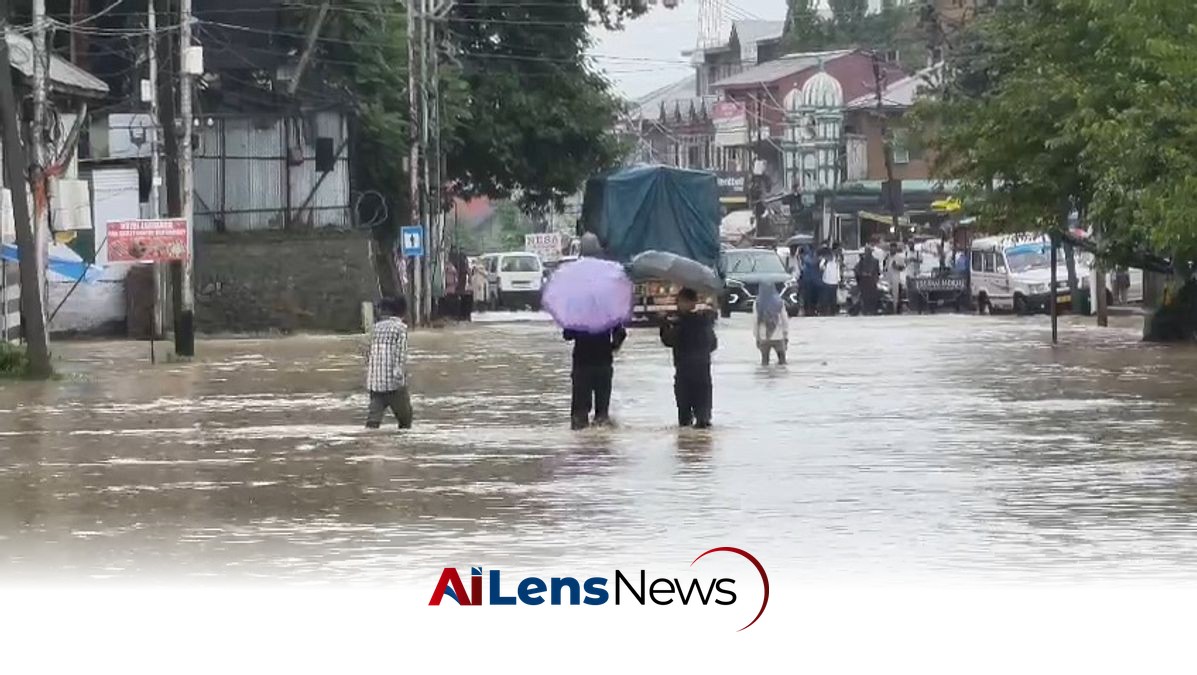


Heavy rains have led to significant waterlogging in Awantipora, inundating shops and disrupting daily life.
New Delhi, India Aug 12, 2026 ALN: Awantipora, a town located in the Pulwama district of Jammu and Kashmir, has recently experienced severe waterlogging due to heavy rains that have inundated the area. This sudden downpour has not only caused extensive flooding but has also disrupted normal activities, leaving residents struggling to navigate through the inundated streets. The situation has raised significant concerns regarding the town's infrastructure and its ability to cope with such weather events.
The rainfall, which has been particularly intense over a short period, has resulted in water levels rising rapidly. Local authorities are actively assessing the situation, as the ongoing rainfall continues to exacerbate the flooding. The impact on both businesses and homes has been substantial, with many shopkeepers reporting significant losses due to damaged goods and a marked decrease in customer accessibility to stores. This has created a ripple effect, affecting the local economy and livelihoods of many residents who rely on daily sales for survival.
Residents have voiced their frustrations regarding the lack of adequate drainage systems in Awantipora. The existing infrastructure has proven insufficient to handle the volume of water generated by such heavy rains. The community's outcry emphasizes the urgent need for improvements to the drainage system to prevent similar incidents in the future. Poor urban planning and inadequate investment in infrastructure are often cited as factors contributing to the town's vulnerability to flooding, particularly during the monsoon season when heavy rains are more common.
In response to the flooding, emergency services have been put on standby to assist those affected by the disaster. However, the extent of the flooding has made it challenging for these services to provide timely help. The local government has issued advisories urging residents to stay indoors and avoid unnecessary travel until the situation improves. This precaution is critical, as navigating through flooded streets poses risks not only to personal safety but also complicates rescue and recovery efforts.
The heavy rains are predicted to continue over the coming days, raising fears of further flooding in the region. Authorities are closely monitoring weather updates and are prepared to implement emergency measures if necessary. The possibility of landslides in hilly areas nearby also poses an additional threat, as saturated soil can lead to instability. This interconnectedness of weather patterns and geographical features highlights the need for comprehensive disaster preparedness plans that take into account local topography.
As the community grapples with the immediate effects of this natural disaster, the focus will inevitably shift toward recovery efforts and long-term solutions to mitigate future risks. The local government may need to engage with urban planners and environmental experts to develop a robust infrastructure plan that includes improved drainage systems, flood control measures, and enhanced emergency response capabilities. This could involve community consultations to ensure that the voices of residents are heard and considered in the planning process.
In addition to infrastructure improvements, there is a growing recognition of the importance of sustainable practices in urban development. This includes considering the environmental impact of construction, maintaining natural waterways, and implementing green spaces that can absorb excess rainwater. Education and awareness campaigns may also play a vital role in preparing residents for future weather events, equipping them with knowledge about safety measures and emergency procedures.
Moreover, the effects of climate change cannot be overlooked. As weather patterns become increasingly unpredictable and extreme, communities like Awantipora may face more frequent and severe weather events. This reality underscores the importance of integrating climate resilience into urban planning and disaster preparedness strategies. Local governments, in collaboration with national and international organizations, may need to explore funding opportunities for climate adaptation projects that can enhance the town's resilience to future flooding.
In conclusion, the severe waterlogging in Awantipora serves as a stark reminder of the challenges posed by heavy rainfall and the inadequacies of current infrastructure to manage such events. The immediate focus on recovery and assistance for those affected is crucial, but it is equally important for the community and local authorities to engage in long-term planning to address the underlying issues that contribute to flooding. By investing in infrastructure improvements, fostering community engagement, and considering the impacts of climate change, Awantipora can work towards a more resilient future that minimizes the risks associated with severe weather events.
To better understand the implications of this flooding, it is essential to consider the broader context of climate change and its impact on weather patterns. The region of Jammu and Kashmir, known for its distinct seasons, is increasingly experiencing erratic weather phenomena. The monsoon season, which typically brings consistent rainfall, has become unpredictable, leading to scenarios where localized flooding occurs more frequently. This unpredictability complicates agricultural planning and can devastate crops, further impacting the local economy.
Furthermore, the topography of Awantipora and its surrounding areas plays a significant role in how water accumulates during heavy rains. The town is situated in a valley, which can exacerbate flooding as water drains from higher elevations. This geographical factor necessitates a thorough assessment of land use and urban development strategies to ensure that future growth does not further strain the existing drainage systems. Urban planners are urged to consider permeable surfaces and natural drainage solutions that can help mitigate flooding risks.
In addition, the role of community engagement in disaster preparedness cannot be overstated. Local residents are often the first responders in emergencies, and their knowledge of the area can be invaluable in formulating effective response strategies. Community-led initiatives can foster resilience by promoting awareness of flood risks and encouraging collective action during emergencies. Workshops and training sessions on emergency preparedness can empower residents to take proactive measures, thereby reducing vulnerability during extreme weather events.
The economic ramifications of the flooding in Awantipora extend beyond immediate losses. Businesses that suffer damage may face long-term repercussions, including increased insurance costs and a decrease in customer trust. The local economy, heavily reliant on small businesses, may struggle to recover if such incidents become more frequent. Therefore, it is essential for local authorities to consider economic recovery plans that support affected businesses and encourage investment in resilient infrastructure.
In conclusion, the severe waterlogging in Awantipora is a multifaceted issue that requires a comprehensive approach to address both immediate needs and long-term solutions. By investing in infrastructure improvements, fostering community engagement, and integrating climate resilience into urban planning, the town can work towards a more sustainable future. The lessons learned from this experience can serve as a blueprint for other communities facing similar challenges, highlighting the importance of preparedness, adaptability, and collaboration in the face of climate-related disasters.
To learn more about the latest developments in Society & Social Issues, stay updated with our exclusive reports and analyses on AiLensNews.

