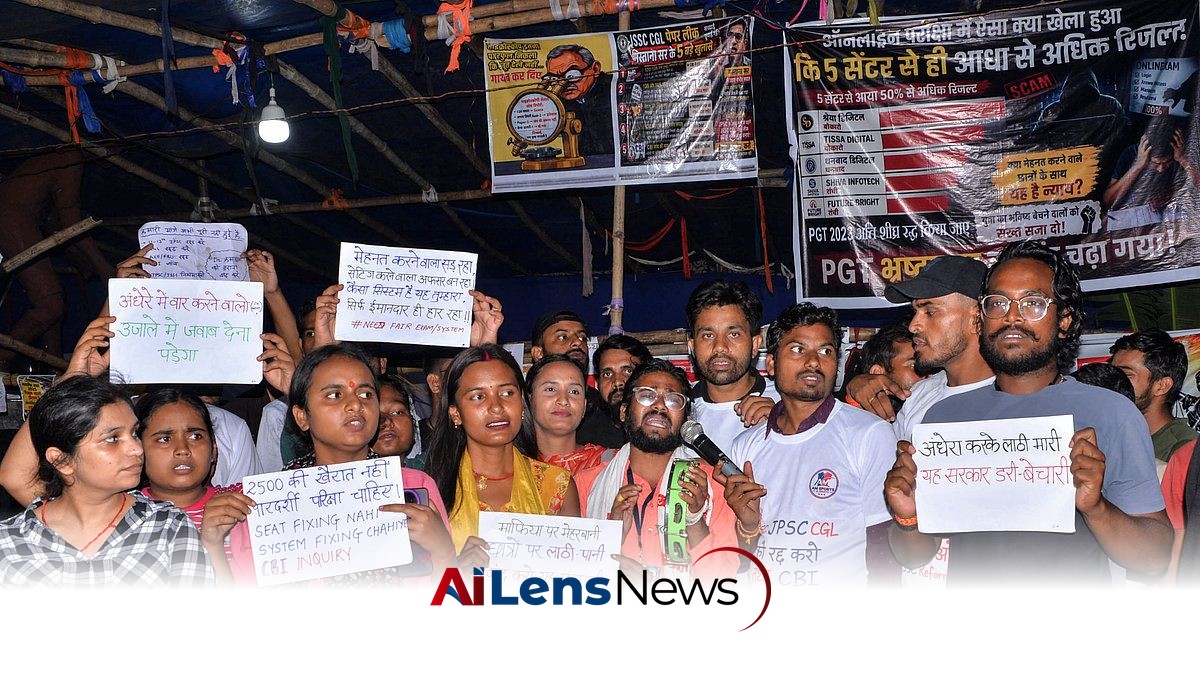


In Ranchi, various social organizations are supporting students protesting against alleged recruitment irregularities by providing free meals. The protest has been ongoing since July 29.
New Delhi, India Aug 13, 2026 ALN: Several social organisations, authors, and many others have not only come out in support of the agitating students but are also serving them free food since the protest began at Jaipal Singh Munda Stadium here over the alleged irregularities in the public recruitment examinations. This grassroots initiative has garnered significant attention, highlighting the role of community support in social movements, especially in the context of student activism.
The protests began on July 29, 2023, and have since attracted a diverse group of supporters, including those from various social organisations and individuals motivated by a sense of justice. The protests are rooted in allegations of corruption and irregularities in the recruitment process for government jobs, which many students view as a critical pathway to secure stable employment in a competitive job market. The demand for transparency and fairness in recruitment processes resonates deeply with the aspirations of the youth, particularly in a state like Jharkhand, where unemployment rates have been a growing concern.
Bhairav Singh, an RSS swayamsevak (worker), stated that his team, known as 'Team Bhairav', has been diligently serving food to the agitating students since the protest began. Singh emphasized the importance of supporting these students, many of whom come from middle-class and lower-middle-class families. He noted that the students are not only fighting for their rights but also for the rights of future generations, reflecting a broader concern about systemic issues that affect youth in the region.
"When I see these students fighting against a corrupt system that snatches away their rights, it pains me. However, serving them food brings a deep sense of satisfaction knowing that we are helping these children to the best of our ability. We provide food to over 1,000 students daily and will continue as long as they remain here with their demands," Singh said. His commitment underscores the solidarity that can arise in times of social unrest, as communities rally to support those who are advocating for change.
The logistics of feeding such a large group of students are significant. Singh mentioned that around 40 to 50 members of his team are involved in this effort, demonstrating the community's collective commitment to supporting the cause. Interestingly, the protests have been characterized by a peaceful demeanor, with participants refraining from abusive language or anti-government slogans. This approach has drawn attention to the nature of the protest itself, contrasting it with other recent protests in different parts of India, such as the Gen-Z protests at Jantar Mantar, which have been marked by a different tone and style of activism.
Another team from the 'Hindu Jagrit Manch' arrives daily at the protest site with food for students. Rishi Sahdev, a member of the Manch, shared that they have been continuously providing food to the students for the past 12 days. He recounted a particularly difficult day, August 10, when many students were disheartened after a police lathicharge during a march to the Assembly. "On that day, the students were deeply dejected," Sahdev noted, highlighting the emotional toll that such protests can take on participants.
"Our team has 10 to 12 members, and we are very happy to serve these children. They are fighting for genuine issues. When we ourselves were students, we too had little money. These children are in the same phase of life, so supporting them is our duty (dharma)," Sahdev explained. This sentiment reflects a shared experience among generations, where older individuals empathize with the struggles of the youth, fostering a sense of community and mutual support.
In addition to the efforts of Team Bhairav and the Hindu Jagrit Manch, another team led by Ravi Singh Choudhary, who authored 'Jaago Maa', has also been distributing food among the students for the past two weeks. Choudhary's involvement highlights the intersection of activism and literature, as authors and intellectuals lend their voices to social causes, amplifying the messages of those who are directly affected by the issues at hand.
A team member serving food mentioned that their support began on the very first day of the protests, indicating a strong commitment to the cause from the outset. On a recent night, they served traditional Indian food, which included 'puri, bundiya and chane ki sabzi', showcasing the cultural significance of food in bringing people together during times of struggle.
The students' protest over alleged irregularities in Jharkhand recruitment examinations reached a significant milestone as it entered its 20th day on Thursday, with the agitators steadfastly refusing to call off the stir until their demands were met. The persistence of the protests speaks to the determination of the students and their supporters to seek accountability and reform in the recruitment process.
The 'JPSC-JSSC Reforms Manch’ has been at the forefront of these demonstrations, demanding greater transparency in recruitment examinations, the cancellation of several tests that are believed to be flawed, and an independent investigation by the Central Bureau of Investigation (CBI) or a panel of retired judges from outside Jharkhand. These demands reflect a deep-seated frustration with the existing system and a call for reforms that can ensure fairness and integrity in public service recruitment.
The implications of these protests extend beyond the immediate demands of the students. They highlight broader issues of governance, accountability, and the role of youth in advocating for change. As the protests continue, they serve as a reminder of the power of collective action and the importance of community support in addressing systemic issues. The involvement of social organizations in providing food and resources not only sustains the protesters physically but also reinforces the message that they are not alone in their struggle.
As the situation unfolds, it will be crucial to monitor how the government responds to the students' demands and whether these protests lead to meaningful reforms in the recruitment process. The outcome could set a precedent for future activism and influence how similar movements are organized and supported across the country.
To learn more about the latest developments in Crime & Law, stay updated with our exclusive reports and analyses on AiLensNews.

