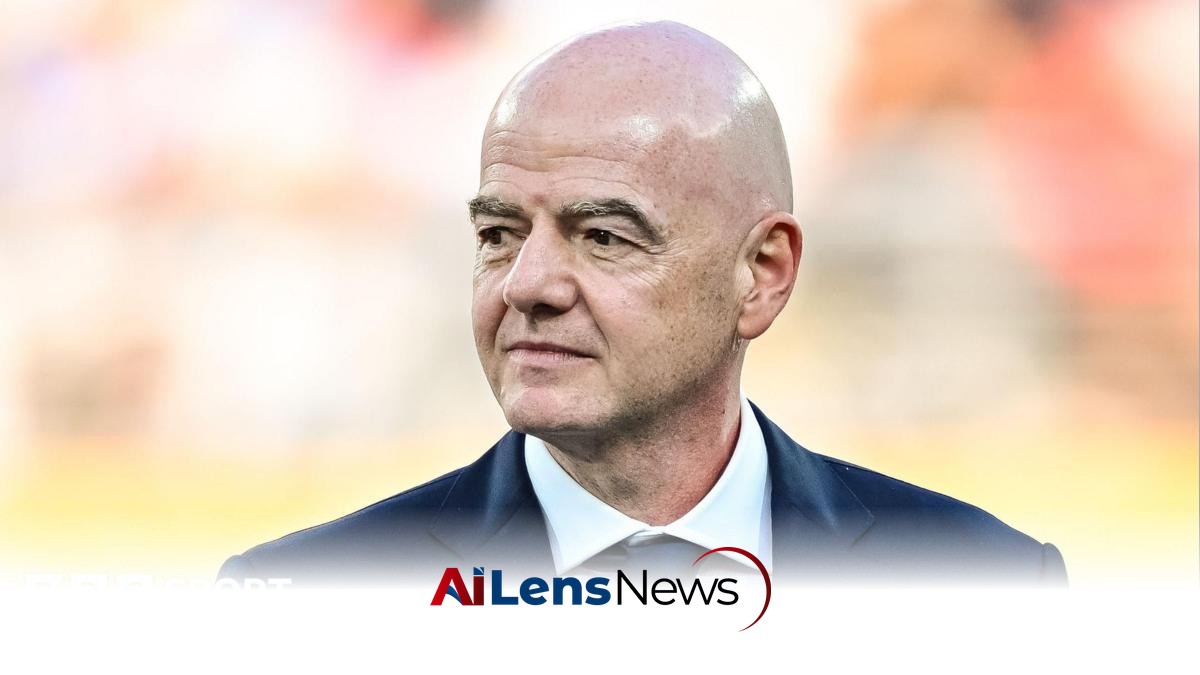


FIFA president Gianni Infantino has scrapped a contentious proposal to sell stakes in major competitions following backlash from member associations.
New Delhi, India Aug 1, 2026 ALN: FIFA president Gianni Infantino has announced the cancellation of a controversial plan to sell off stakes in the governing body's major competitions, following widespread opposition from member associations.
Infantino stated that the project had "created divisions" that were "no longer in the interest" of its original objective. He emphasized, "As a result, this proposal will not proceed." The plan had aimed to offer all 211 member associations $40 million (£30 million) in exchange for their support of private investment in FIFA tournaments, including the men's and women's World Cups.
European football's governing body, UEFA, voted to boycott World Cups if the investment plans were implemented. FIFA's chief operating officer, Kevin Lamour, expressed that the governing body's administration had been "deceived" regarding the project. Carlos Cordeiro, Infantino's senior adviser on global strategy and governance, resigned over the matter, labeling the proposal as "a bad deal for football" that would "mortgage football's future." This resignation followed strong opposition from two major confederations.
Concacaf, which oversees football in North, Central America, and the Caribbean, rejected the proposal, with sources indicating that many associations in the region had lost faith in Infantino. The Asian Football Confederation (AFC) also expressed solidarity with UEFA and Concacaf, while UK Prime Minister Andy Burnham criticized Infantino as "the wrong man" to lead FIFA.
Infantino, now facing immense pressure as he seeks re-election for a fourth term at the FIFA Congress in March, stated his intention to "bring all interested parties back together" in a spirit of shared interest in football.
Despite initial vows to continue with the proposals, Infantino acknowledged the necessity of securing the backing of the majority of FIFA member associations, which required 106 out of 211 votes. The situation became increasingly untenable when the AFC joined UEFA and Concacaf in opposing the plans. UEFA has 55 votes, Concacaf has 35, and Asia has 46, meaning that if all member associations aligned with their governing bodies, 136 nations would vote against Infantino's proposal.
The governing bodies in Africa (CAF) and Oceania (OFC) planned to discuss FIFA's proposal in August, while South America's governing body, Conmebol, sought additional information regarding the proposal's scope and potential effects.
Infantino aimed to establish a commercial subsidiary to manage FIFA's main events, including the World Cups, allowing external investors to purchase stakes. The plan proposed inviting third parties to make minority, non-controlling investments in a new subsidiary called FIFA Forward Enterprise (FFE). Infantino set a deadline of September 19 for football federations to accept his plans to access an initial $20 million (£15 million).
A 25-page document created by investment bank JP Morgan outlined how FIFA's tournaments would expand, projecting an increased payout of 24 million euros (£20.5 million) per member association in the 2035-2039 cycle. The document mentioned "new business initiatives" and "attracting top talent with incentive-driven compensation," but notably did not address the women's game.
Thrive Eternal, an American venture capital firm founded by Joshua Kushner, was expected to lead the proposed investor group for FFE. Infantino's relationship with Trump, who addressed the proposals for the first time, has developed since Trump assumed office for a second time in 2025.
Infantino became FIFA president in 2016 after defeating AFC president Sheikh Salman al-Khalifa by 115 votes to 88. The next president will be confirmed at FIFA's 77th Congress in Morocco next March, with candidates having until November 18 to declare their intentions. Prior to this week's events, Infantino was anticipated to be re-elected unopposed, with many associations, including some in Europe, already expressing their support.
However, the recent backlash may lead to a significant withdrawal of that support. Infantino reiterated that his plan aimed to strengthen member associations, particularly in regions where support is most needed. He concluded by stating, "Our purpose has always been - and always will be - to unite and improve." Nevertheless, the proposal clearly created divisions within FIFA itself, with Cordeiro being the first senior figure to resign over the plans. Lamour criticized the initiative as "the project of one person," emphasizing that a president should unite and inspire rather than divide.
The decision to abandon the investment plan reflects a broader concern within the football community regarding the influence of private investors in the sport. Many stakeholders fear that such moves could lead to a prioritization of profit over the integrity and traditional values of football. The backlash against Infantino's proposal indicates a growing sentiment among member associations that the governance of football should remain within the sport's community rather than being subjected to external commercial pressures.
Historically, FIFA has faced scrutiny over its governance practices and decision-making processes. The organization has been criticized for a lack of transparency, particularly in the awarding of World Cup hosting rights and the management of its finances. Infantino's recent proposal, which was perceived as an attempt to further commercialize the sport, ignited fears that FIFA might prioritize financial gain over the welfare of football itself.
In addition to the immediate implications for Infantino's presidency, the failure of the investment plan raises questions about the future direction of FIFA and its relationship with member associations. The governing body must now navigate a complex landscape in which trust has been eroded among its members. Infantino's ability to mend these relationships and restore confidence will be crucial as he seeks re-election.
The cancellation of the investment plan also highlights the importance of unity within FIFA. The organization comprises a diverse array of cultures, footballing traditions, and economic realities. For any future initiatives to succeed, they must be carefully considered and inclusive of all member associations' perspectives. Infantino's challenge will be to foster this unity while addressing the differing needs of various regions.
As FIFA moves forward, it must also consider the growing importance of women's football, which has gained significant traction in recent years. The lack of focus on women's competitions in Infantino's proposals has drawn criticism and may further alienate certain member associations. Addressing gender equity in football governance and investment will be a key issue for FIFA as it seeks to rebuild trust and credibility.
In conclusion, the abandonment of the controversial investment plan marks a pivotal moment for FIFA and its leadership. Infantino's ability to navigate the fallout from this decision will determine not only his political future but also the future of FIFA as a governing body. The need for transparency, inclusivity, and a commitment to the core values of football has never been more critical as the organization seeks to unify its member associations and chart a sustainable path forward.
To learn more about the latest developments in Politics, stay updated with our exclusive reports and analyses on AiLensNews.

