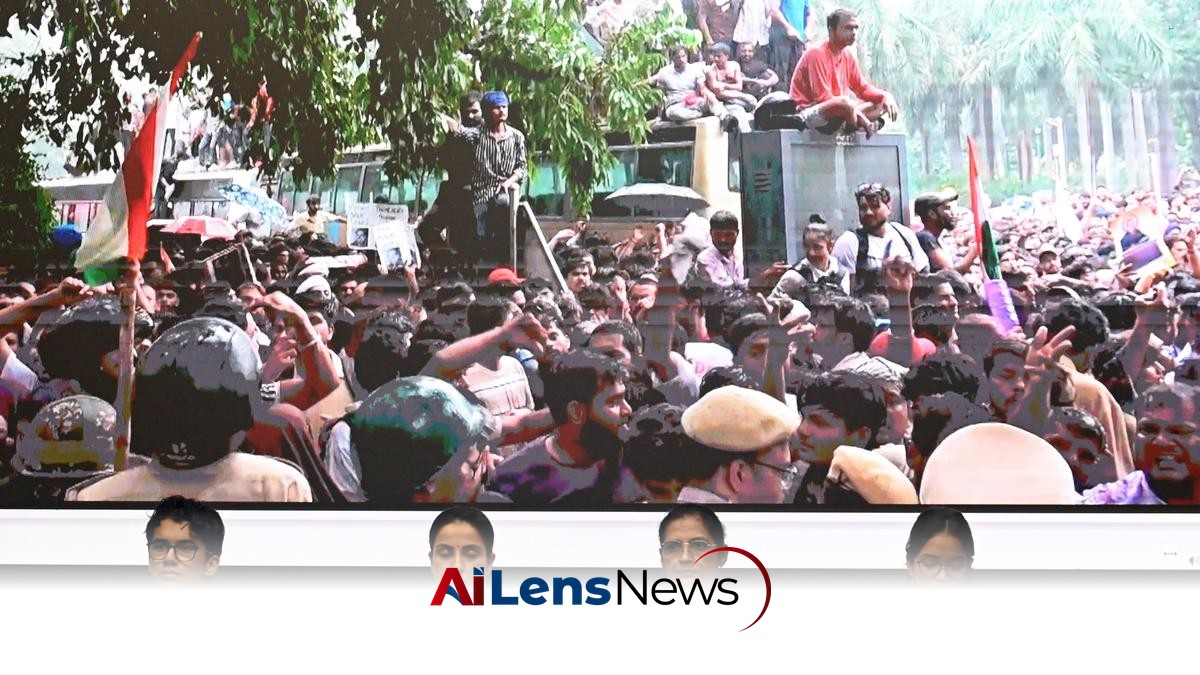


Family members of injured Delhi police personnel call for a parliamentary discussion to share their experiences and highlight the violence during a recent protest.
New Delhi, India Aug 1, 2026 ALN: Family members of four Delhi Police personnel injured during the crackdown on the Cockroach Janta Party (CJP)-led march to Parliament on July 20 are urging for a discussion in Parliament regarding the injuries suffered by the policemen on duty. They expressed that the public discourse has been “one-sided.” The call for a parliamentary discussion comes amidst rising tensions between law enforcement and various student groups, highlighting a growing divide in perceptions of police conduct and the rights of protesters in India.
During a press conference at the Constitution Club, the family members—including the wives of an Assistant Commissioner of Police (ACP) and an Assistant Sub-Inspector (ASI), along with the children of two injured officers—shared their accounts of the events that unfolded that day. They emphasized the need for “their side of the story” regarding the violence that occurred on June 20 to be heard. This incident has sparked significant debate about the role of police during protests and the balance between maintaining order and respecting democratic rights.
The families showcased a slideshow of photographs depicting injured and bleeding police personnel, claiming that over 250 officers were injured during the violence. They reported significant damage, including over 110 barricades, 300 body protectors, 350 helmets, 20 loudhailers, 10 hand-held metal detectors, and one X-ray baggage scanner. Additionally, more than 25 government vehicles and private properties were vandalized. These statistics paint a stark picture of the chaos that ensued during the march, raising questions about the preparedness and response of law enforcement in the face of large-scale protests.
Allegations were made that several anti-social elements had infiltrated the student protesters, leading to the attacks on police personnel. The wife of an ASI who was injured stated, “Students should be released after their records are verified, but the miscreants who attempted to disrupt the students’ protest, tarnish its image, and undermine the dignity of Parliament should be held accountable for their actions and should not be spared.” This statement reflects a common concern among law enforcement families that their loved ones are often unfairly vilified in the media and public discourse, overshadowing the complexities of their roles during such events.
A Delhi University student, whose father, a sub-inspector, was injured in the clashes, shared that her father had served for 15 years as a Marine Commando in the Indian Navy before joining the police force. She recounted how her father returned home with his uniform soaked in blood, yet social media had already labeled him a criminal. This personal account underscores the emotional toll that such incidents take on police families and highlights the urgent need for a more nuanced understanding of the challenges faced by law enforcement officers during public demonstrations.
Another family member of an injured ACP expressed frustration, stating, “Whenever I go online, I see videos portraying only the police as criminals. There is no discussion, even in Parliament, about the police personnel who were injured. We only want our side to be heard.” This sentiment speaks to a broader issue within society regarding the portrayal of police in media narratives, often emphasizing negative incidents while neglecting the sacrifices and dangers faced by officers on duty. The family members' insistence on having their voices heard reflects a desire for recognition of the complexities involved in policing protests.
Questions have been raised regarding the alleged use of excessive force against protesters during the July 20 march. Videos circulating on social media have identified some police officers using excessive force, while other clips show personnel in plain clothes wielding batons. The emergence of these videos has led to a public outcry and renewed calls for accountability within the police force. Critics argue that the use of force must be proportionate and necessary, emphasizing the need for training and guidelines to prevent excessive responses to civil unrest.
On July 28, the Supreme Court indicated that it would consider forming a high-powered investigative team to conduct a “thorough, fair and independent” inquiry into allegations of police excesses during the recent student protests in Delhi. This potential inquiry represents a significant step towards addressing the ongoing concerns regarding police conduct and ensuring that both the rights of protesters and the safety of law enforcement personnel are upheld. The outcome of this inquiry could have far-reaching implications for future protests and the relationship between the police and the public.
The events of July 20 serve as a reminder of the delicate balance that must be maintained between the right to protest and the need for public safety. As families of injured police personnel seek recognition and accountability, the broader societal discourse must also consider the rights and responsibilities of all parties involved in such confrontations. The call for a parliamentary discussion is not only about the injuries sustained by police officers but also about fostering a more comprehensive understanding of the complexities surrounding protests, the role of law enforcement, and the need for constructive dialogue in a democratic society.
In the wake of these events, it is essential for lawmakers, civil society, and the police to engage in open discussions that address the root causes of dissent and the appropriate responses to it. This includes examining the grievances of student protesters, understanding their motivations, and finding common ground to prevent future violence. As the families of injured police personnel continue to advocate for their loved ones, their voices add to the growing chorus calling for a more balanced and fair approach to policing in India.
To learn more about the latest developments in Crime & Law, stay updated with our exclusive reports and analyses on AiLensNews.

