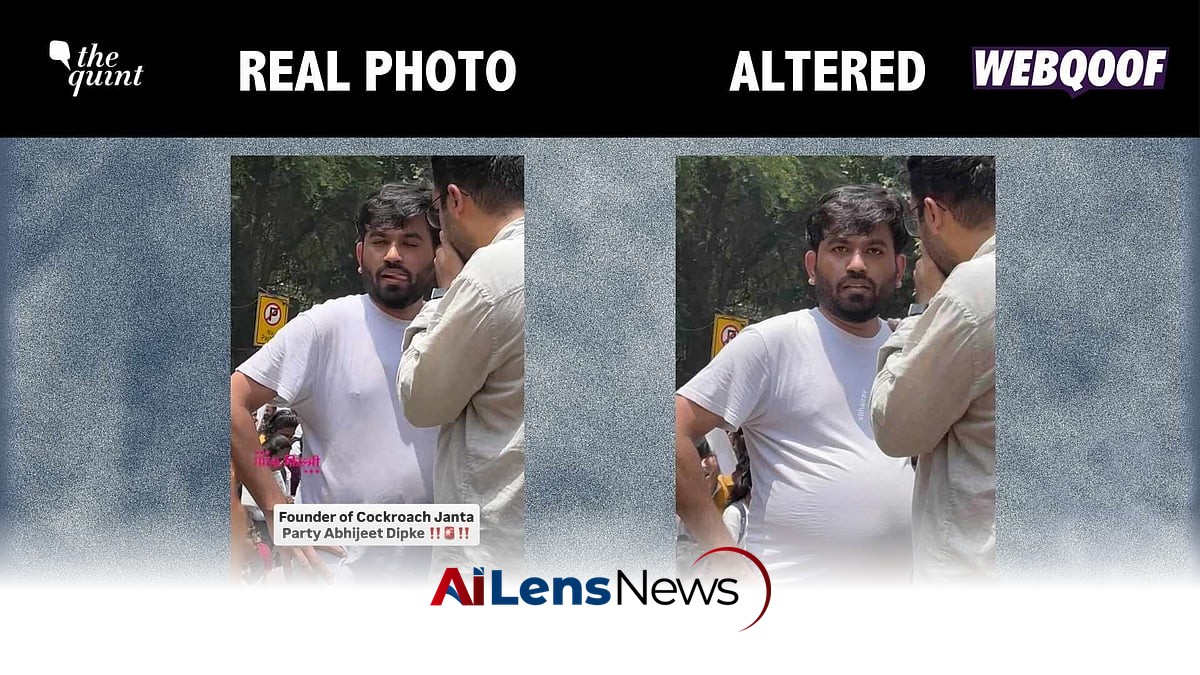


A manipulated image of CJP's Abhijeet Dipke is circulating on social media, falsely suggesting he gained weight amid Sonam Wangchuk's hunger strike.
New Delhi, India Jul 17, 2026 ALN: In recent days, a misleading image featuring Abhijeet Dipke, a member of the Cockroach Janta Party (CJP), has circulated widely on social media platforms. The image depicts Dipke in a white T-shirt, and it has been manipulated to exaggerate his midsection, leading to claims that he has gained significant weight during a hunger strike led by activist Sonam Wangchuk. This claim has sparked discussions and debates among users, with some pointing out the contrast between Dipke's supposed weight gain and Wangchuk's reported weight loss of eight kilograms during his hunger strike.
The claim: The edited image is being used as a tool to mock and target Dipke, suggesting that while Wangchuk is losing weight for his cause, Dipke is not making the same sacrifices. This narrative plays into the larger discourse surrounding the hunger strike, which is meant to draw attention to specific social and political issues. The image has been shared extensively, and many users have taken it at face value, further amplifying the misinformation.
(Archived versions of more posts sharing this claim can be seen here, here, and here.)
Is it true?: The assertion that Dipke has gained weight as depicted in the viral image is false. Investigations into the origins of the image reveal that it has been digitally altered. The original and unedited photo was sourced from a video posted on June 6, which predates Wangchuk's hunger strike that began on June 28.
In the original video, which was shared by an Instagram account known as 'totalfilmii', Dipke appears without the exaggerated midsection that the edited image suggests. This discrepancy indicates that the viral image was manipulated for effect.
Moreover, the timeline of events is crucial in understanding the context of this misinformation. Wangchuk joined the protest movement on the same day that the video featuring Dipke was released, but he did not commence his hunger strike until weeks later. This timeline highlights the fact that any claims regarding Dipke's physical condition in relation to Wangchuk's hunger strike are unfounded and misleading.
In the video from which the image is derived, Dipke's appearance is consistent with his usual physique, further supporting the conclusion that the viral image has been edited.
As the situation developed, Dipke continued to post updates on his Instagram account regarding the ongoing protests at Jantar Mantar, where he was actively participating. One of these posts featured a photograph of him alongside farmer leader Rakesh Tikait, who had come to show solidarity with Wangchuk and the cause they are advocating for.
In this particular photo, Dipke's appearance is again consistent with his normal physique, countering the claims made by the edited image that he had gained weight.
Conclusion: The narrative surrounding Abhijeet Dipke's alleged weight gain during Sonam Wangchuk's hunger strike is rooted in a manipulated image that does not accurately reflect reality. The dissemination of this edited image serves not only to mislead the public but also to undermine the genuine efforts of activists involved in the protest. It highlights the broader issue of misinformation in the digital age, where images can be easily altered and spread rapidly, leading to false narratives that can impact public perception and discourse.
The implications of such misinformation are significant. In the context of social movements, where public support and perception can be critical to the success of a cause, misleading imagery can detract from the seriousness of the issues at hand. It can also create divisions among supporters and detractors, further complicating the dialogue surrounding the protests. In this case, the hunger strike led by Wangchuk is intended to address pressing social and environmental concerns, and the focus should remain on these issues rather than being diverted by personal attacks or unfounded claims.
As social media continues to play a pivotal role in shaping public opinion, it is essential for users to approach information critically, verifying claims before sharing them. The ability to conduct a reverse image search, as demonstrated in this case, can help individuals discern the authenticity of images and the context in which they are presented. In an era where misinformation can spread like wildfire, fostering a culture of critical thinking and fact-checking is more important than ever.
Furthermore, the case of the edited image serves as a reminder to activists and public figures about the potential for their images and narratives to be manipulated. It underscores the need for vigilance in managing one's public image and the importance of transparency in communication. By maintaining open lines of communication and providing accurate updates on their activities, activists can help counteract misinformation and maintain the integrity of their movements.
In conclusion, the false narrative surrounding Abhijeet Dipke's weight gain illustrates the dangers of misinformation in the digital age. As discussions surrounding activism and social justice continue to evolve, it is vital for all stakeholders to engage thoughtfully and responsibly, ensuring that the focus remains on the critical issues at hand rather than being sidetracked by misleading representations.
To fully understand the context of this incident, it is important to explore the backgrounds of both Abhijeet Dipke and Sonam Wangchuk, as well as the broader socio-political climate in which they operate. Abhijeet Dipke, as a member of the Cockroach Janta Party, is known for his active participation in various social movements, advocating for issues that resonate with the public. His engagement in protests and activism highlights a commitment to addressing societal challenges, which is often met with both support and criticism.
On the other hand, Sonam Wangchuk is a prominent figure recognized for his efforts in promoting sustainable development and environmental conservation in the region. His hunger strike, which aims to address urgent social and environmental issues, has garnered significant attention, showcasing the power of activism in drawing public focus to critical matters. The contrast between Wangchuk's reported weight loss during his hunger strike and the misleading portrayal of Dipke serves to illustrate the complexities of public perception in activism.
This incident also reflects a growing trend in the manipulation of images and narratives in the political landscape. As political discourse increasingly shifts to online platforms, the potential for misinformation to shape public opinion becomes a pressing concern. The rise of digital media has enabled rapid dissemination of information, but it has also opened the door for the spread of falsehoods that can distort reality and undermine legitimate movements.
In light of these challenges, it becomes imperative for individuals and organizations to prioritize media literacy and critical engagement with information. Educational initiatives aimed at fostering a discerning approach to media consumption can empower individuals to navigate the complexities of the digital information landscape. By equipping the public with the tools to critically assess information, it is possible to mitigate the impact of misinformation and promote a more informed citizenry.
The implications of this incident extend beyond the immediate context of the hunger strike and the individuals involved. It raises broader questions about the role of social media in shaping narratives and influencing public discourse. As users of these platforms, individuals have a responsibility to engage thoughtfully with the content they encounter, recognizing the potential for images and narratives to be manipulated for various agendas.
In summary, the misleading image of Abhijeet Dipke serves as a stark reminder of the challenges posed by misinformation in the digital age. As activism continues to evolve and adapt to new forms of communication, it is essential for all stakeholders to remain vigilant against the spread of false narratives. By fostering a culture of critical thinking and responsible engagement with information, it is possible to uphold the integrity of social movements and ensure that the focus remains on the pressing issues that demand attention.
To learn more about the latest developments in Society & Social Issues, stay updated with our exclusive reports and analyses on AiLensNews.

