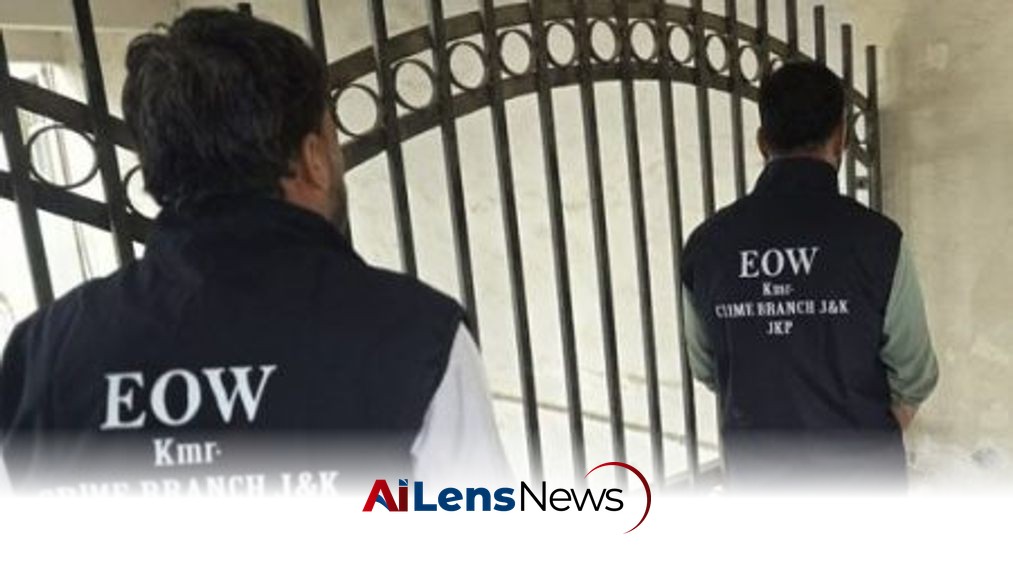


The Economic Offences Wing of Kashmir has apprehended Abdul Majeed Mir, a habitual offender with multiple fraud cases, following a long-pending arrest warrant.
New Delhi, India Jul 13, 2026 ALN: The Economic Offences Wing (EOW), Kashmir, of the Crime Branch, J&K, has successfully executed a long-pending arrest warrant against Abdul Majeed Mir, son of Abdul Rahim Mir and a resident of Lashtiyal, Kalaroos, Kupwara. The arrest marks a significant development in the ongoing efforts of law enforcement agencies in Jammu and Kashmir to tackle economic crimes, particularly those related to fraud and forgery.
The arrest warrant for Mir was issued by the Court of the Principal District and Sessions Judge, Srinagar, in connection with FIR No. 17/2015. This case was registered under multiple sections of the Ranbir Penal Code (RPC), specifically Sections 420 (cheating), 467 (forgery of valuable security), 468 (forgery for purpose of cheating), 471 (using as genuine a forged document), and 120-B (criminal conspiracy). Such serious charges reflect the gravity of the alleged offences committed by Mir, which not only violate the law but also undermine public trust in legitimate employment practices.
The case against Abdul Majeed Mir is not an isolated incident; it is part of a larger pattern of economic offences that have been increasingly prevalent in the region. Mir is described as a notorious and habitual offender, with a troubling history that includes 11 other cases involving cheating and the use of fake and forged employment documents registered against him across various districts in Kashmir. This extensive criminal record highlights the challenges faced by law enforcement in combating fraud, particularly in a region where economic opportunities may be limited, leading individuals to seek out dubious means of securing employment.
Of the 11 cases against him, four are currently under investigation, while seven have already been charge-sheeted before the court. The ongoing nature of these cases suggests that the EOW is actively pursuing all leads and evidence related to Mir's fraudulent activities, which may have affected numerous victims who were misled by his actions. The impact of such fraud is often devastating for individuals who are seeking legitimate employment, as they may invest time and resources based on false promises, only to find themselves defrauded.
Acting on credible inputs, the EOW apprehended Mir, who was subsequently produced before the court and remanded to judicial custody. He has been lodged in Central Jail, Srinagar, in compliance with the court's orders. This procedural step is crucial in ensuring that the accused is held accountable for his actions while also allowing the legal process to unfold in a manner consistent with justice and due process.
The implications of Mir's arrest extend beyond just the individual case. The EOW has taken this opportunity to appeal to the general public to remain vigilant against individuals involved in cheating, forgery, and job-related fraud. In a region where many individuals are in search of employment opportunities, the EOW's advisory serves as a critical reminder for citizens to exercise caution and due diligence when approached with offers of government employment or other job-related promises.
Citizens are advised not to fall prey to false promises of government employment or forged appointment letters and other fraudulent documents. The EOW's public awareness campaign aims to educate the populace about the signs of fraud and the importance of verifying the legitimacy of job offers, particularly those that seem too good to be true. This is especially pertinent in a time when the job market can be exceptionally competitive, and individuals may be more susceptible to deception.
The statement emphasized that anyone who encounters such fraudulent activities or suspects any person of engaging in similar offences should report the matter immediately to the nearest police station or the Crime Branch, J&K, to ensure prompt legal action. This call to action is intended to empower the community to take an active role in combating economic crimes, fostering a sense of collective responsibility in safeguarding against fraud.
Furthermore, the arrest of Abdul Majeed Mir can be seen as part of a broader strategy by the Crime Branch and other law enforcement agencies in Jammu and Kashmir to enhance their capabilities in investigating and prosecuting economic offences. The region has faced numerous challenges in terms of governance and law enforcement, and tackling economic crimes is a vital component of restoring public confidence in state institutions.
As the legal proceedings against Mir progress, it will be essential to monitor the outcomes of the cases against him, as they may set precedents for how similar cases are handled in the future. The legal system's responses to economic crimes will not only affect the individuals involved but also shape the overall environment for business and employment in the region.
In conclusion, the arrest of Abdul Majeed Mir serves as a reminder of the ongoing struggle against economic offences in Jammu and Kashmir. It highlights the importance of vigilance among the public and the need for robust legal frameworks to address and deter such crimes. As the situation develops, it will be crucial for both law enforcement and the community to remain engaged in the fight against fraud, ensuring that justice is served and that the integrity of the job market is upheld.
Economic crimes, particularly those involving employment fraud, have significant implications for the socio-economic landscape of Jammu and Kashmir. This region, which has faced prolonged conflict and economic instability, often sees individuals desperate for job opportunities resorting to risky or illegal avenues. The prevalence of such fraud not only harms individual victims but can also tarnish the reputation of legitimate employers and institutions.
Moreover, the socio-political context of Jammu and Kashmir adds layers of complexity to the issue of economic crimes. With a history marked by conflict, the region has struggled with high unemployment rates, particularly among the youth. This demographic is often the most affected by fraudulent schemes promising easy jobs or government positions. The desperation for employment can lead to increased vulnerability to scams, making it imperative for law enforcement to not only take action against offenders like Mir but also to work on preventive measures.
Educational initiatives aimed at raising awareness about the risks of employment fraud are essential. These initiatives can take various forms, including community workshops, school programs, and media campaigns that inform the public about how to identify legitimate job offers and avoid scams. By empowering individuals with knowledge, the EOW and other agencies can help build resilience against economic crimes.
In addition, collaboration between law enforcement and local communities can play a significant role in tackling these issues. Community policing strategies that involve local residents in the identification and reporting of suspicious activities can enhance the effectiveness of law enforcement efforts. Such partnerships can foster trust between the police and the public, making it easier for individuals to come forward with information about fraud.
As the case against Abdul Majeed Mir unfolds, it will be important to observe how the judicial system addresses the complexities of economic crimes in Jammu and Kashmir. The outcomes of these cases could influence future policies and practices related to employment fraud, potentially leading to more stringent regulations and greater accountability for offenders.
Ultimately, the arrest of Mir serves as a pivotal moment in the ongoing battle against economic offences in the region. It underscores the necessity for continued vigilance, education, and community engagement in order to create a safer and more trustworthy environment for job seekers. The efforts of the EOW, coupled with public awareness and community involvement, can contribute to a more robust framework for combating fraud and ensuring that economic opportunities are accessible and legitimate for all residents of Jammu and Kashmir.
To learn more about the latest developments in Crime & Law, stay updated with our exclusive reports and analyses on AiLensNews.

