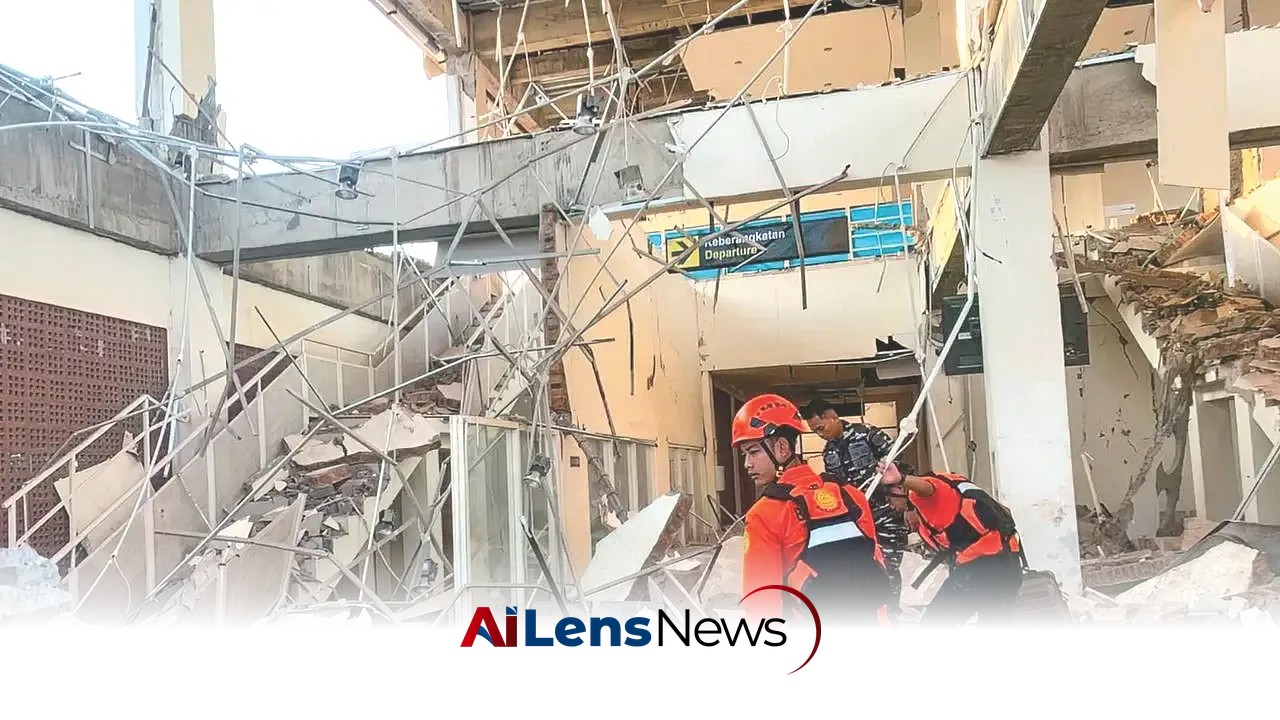


A powerful earthquake struck Indonesia, resulting in at least 40 fatalities, significant structural damage, and a temporary tsunami warning.
New Delhi, India Aug 16, 2026 ALN: MAUMERE (INDONESIA), AUG 15: A powerful magnitude 7.7 earthquake struck off Indonesia early Saturday, killing at least 40 people, collapsing buildings, and injuring dozens in a region prone to deadly quakes. This seismic event underscores Indonesia's vulnerability to natural disasters, particularly earthquakes and tsunamis, due to its location along the Pacific Ring of Fire, which is known for its high seismic activity. The Pacific Ring of Fire is an area where a large number of earthquakes and volcanic eruptions occur in the basin of the Pacific Ocean, making it one of the most geologically active regions in the world.
The region where the earthquake occurred, the Flores Sea, is characterized by complex tectonic plate interactions. Indonesia sits atop several tectonic plates, including the Indo-Australian Plate and the Eurasian Plate, which frequently shift and collide, resulting in significant geological activity. The tectonic setting of Indonesia is complicated further by the presence of smaller plates, such as the Philippine Sea Plate, which also contribute to the seismic hazards faced by the country. This earthquake is a stark reminder of the challenges faced by communities in this area, which has experienced numerous devastating earthquakes and tsunamis in the past, including the catastrophic 2004 Indian Ocean earthquake and tsunami that claimed over 230,000 lives across several countries.
Following the earthquake, authorities issued a tsunami warning and urged coastal residents to evacuate to higher ground. The warning was later lifted after Indonesia’s meteorological agency reported no significant sea-level changes posing a threat to coastal communities. However, the initial response reflects the urgency with which officials treat seismic events in this region, given the potential for catastrophic tsunamis that can follow powerful earthquakes. The protocols in place are a direct result of past experiences with tsunamis, which have often caused extensive loss of life and property damage in Indonesia.
The US Geological Survey stated that the quake struck the Flores region at a depth of 10 kilometers (six miles) at 5:58 am local time. Its epicenter was located 68 km (42 miles) north-northwest of Ende in East Nusa Tenggara province. The depth and location of the quake are critical factors in assessing the potential damage. Shallow earthquakes tend to cause more surface damage than deeper ones, and the proximity to populated areas can exacerbate the impact. In densely populated regions, the consequences of such earthquakes can be catastrophic, as buildings may not be constructed to withstand seismic forces.
The quake triggered landslides and small tsunami waves. The meteorological agency reported that 235 aftershocks were recorded by Saturday afternoon, with the strongest measuring magnitude 6.2. Aftershocks are common following significant seismic events and can pose additional risks to already weakened structures and displaced populations. The frequency and intensity of aftershocks can also complicate rescue and recovery efforts, as they may lead to further collapses and hinder the ability of emergency services to access affected areas.
Sea-level monitoring stations recorded tsunami waves up to 1.61 meters (5.3 feet) in coastal areas of Manggarai and East Manggarai regencies. Waves measuring 0.94 meters (3.1 feet) were also recorded in Maurole, Ende Regency. The measurement of tsunami waves is crucial for understanding the extent of the threat posed to coastal communities and can inform evacuation and safety measures. Despite the relatively small size of the tsunami, the impact on local infrastructure and the livelihoods of coastal residents can be significant, particularly in regions where fishing and tourism are vital economic activities.
AP videos showed Ngada village in East Manggarai covered in mud and debris after a 1.61-meter tsunami. Fishing boats were stranded ashore, while homes and infrastructure suffered significant damage. The visual evidence of destruction highlights the immediate impact on local communities, many of which may already be vulnerable due to economic challenges and limited resources for disaster preparedness and recovery. The destruction of homes and local businesses can have long-term implications for the economic stability of these communities, making recovery efforts even more critical.
Tsunami waves exceeding 0.5 meters (1.6 feet) were also detected in Bulukumba, South Sulawesi, and Sape in Bima Regency. These waves, while not as large as those in East Manggarai, still pose a risk to coastal areas, particularly in regions where infrastructure may not be designed to withstand such events. The widespread nature of the tsunami’s impact across multiple regencies indicates a broader regional threat, necessitating coordinated responses from local and national authorities. The Indonesian government has established disaster response protocols that are activated in the aftermath of such events, which include immediate assessments and assistance to affected areas.
However, the scale of the destruction can overwhelm local capabilities, leading to reliance on national and international aid. The challenge of rebuilding after such disasters is compounded by the ongoing threat of future seismic events, as Indonesia is one of the most seismically active regions in the world. The government often collaborates with international organizations and non-governmental organizations to facilitate recovery efforts, but the process can be slow and fraught with logistical challenges, particularly in remote areas.
In the aftermath of the earthquake, emergency services and disaster response teams will likely be deployed to assess the damage, provide medical care, and distribute aid to those affected. The government will also need to address the long-term recovery and rebuilding efforts, which may involve significant investment in infrastructure and disaster preparedness initiatives to mitigate the impact of future earthquakes. This includes improving building codes, investing in early warning systems, and enhancing community preparedness through training and education.
Moreover, the psychological impact of such disasters on affected communities can be profound, with many individuals experiencing trauma, loss, and uncertainty about the future. Mental health support and community rebuilding initiatives will be essential components of the recovery process. Addressing the emotional and psychological needs of the affected population is critical for fostering resilience and enabling communities to recover more effectively.
This earthquake serves as a reminder of the importance of earthquake preparedness and resilience in Indonesia. Public education campaigns about earthquake safety, early warning systems, and community drills can help reduce casualties and improve response times in future events. Additionally, investment in infrastructure that can withstand seismic activity is crucial for protecting lives and property. The Indonesian government has made strides in recent years to improve disaster preparedness, but continued efforts are necessary to keep pace with the increasing frequency and intensity of seismic events.
As the region begins to assess the full extent of the damage, the number of casualties may rise, and the international community may also respond with offers of assistance, as seen in past disasters. Collaborative efforts in disaster response and recovery can strengthen regional resilience and foster a sense of solidarity among nations facing similar challenges. International aid can play a pivotal role in providing immediate relief and supporting long-term recovery efforts, particularly in areas that are economically disadvantaged and lack the resources to rebuild independently.
In conclusion, the magnitude 7.7 earthquake that struck Indonesia is a stark reminder of the country’s vulnerability to natural disasters. The immediate response efforts will focus on rescue and recovery, but the long-term implications for affected communities will require ongoing support and investment in disaster preparedness and resilience strategies to mitigate the impacts of future seismic events. The lessons learned from this disaster will be essential for shaping future policies and practices aimed at enhancing the safety and resilience of communities throughout Indonesia.
To learn more about the latest developments in World News & International Affairs, stay updated with our exclusive reports and analyses on AiLensNews.

