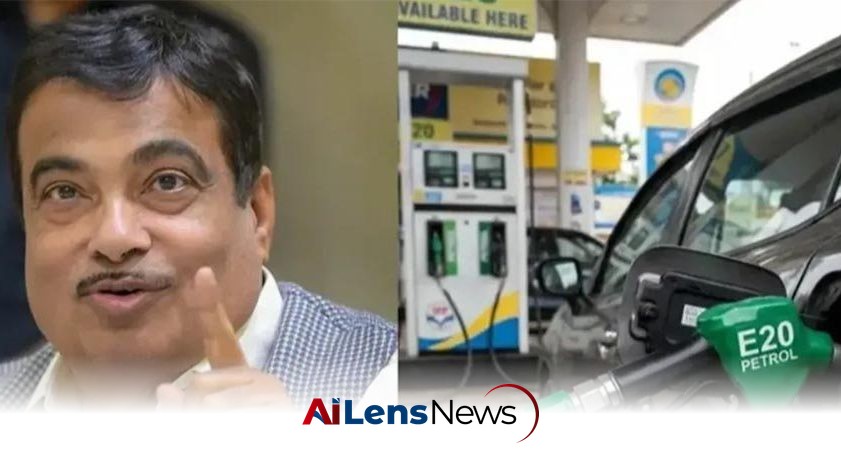


Union Minister Nitin Gadkari informs that older BS-III vehicles may need rubber part replacements when using E20 petrol, though overall vehicle performance remains unaffected.
New Delhi, India Jul 30, 2026 ALN: New Delhi: The Indian government has issued a warning regarding the use of E20 petrol in certain older vehicles, particularly those classified under Bharat Stage III (BS-III) emissions standards, which were manufactured before 2016. This warning was conveyed in the Rajya Sabha by Union Road Transport and Highways Minister Nitin Gadkari, who specified that certain rubber components and gaskets in these vehicles may need to be replaced when using the ethanol-blended fuel. However, he emphasized that the overall performance of the vehicles would not be significantly affected, nor would there be a need for engine modifications.
The discussion arose in response to a question posed by CPI MP A A Rahim, highlighting the government's ongoing efforts to transition to more environmentally friendly fuels. Gadkari referenced comprehensive studies conducted by various authoritative bodies, including the Indian Oil Corporation Limited (IOCL), the Indian Institute of Petroleum (IIP) in Dehradun, the Society of Indian Automobile Manufacturers (SIAM), and the Automotive Research Association of India (ARAI). These studies aimed to assess the impact of E20 fuel on both two-wheeled and four-wheeled vehicles.
According to Minister Gadkari, the findings from these studies indicated that vehicles meeting BS-VI emission standards were able to comply with emission regulations while operating on E20 fuel. Furthermore, it was determined that neither car nor two-wheeler engines would require modifications to function with this ethanol-blended fuel. This is a significant point, considering the concerns raised by consumers regarding potential adverse effects on vehicle performance.
Gadkari stated, "These studies confirmed that even legacy vehicles did not exhibit any significant variations in performance, nor do they show abnormal wear and tear when operated with E20 fuel. No issues were reported in parameters such as drivability, startability, metal compatibility, and plastic compatibility." This assertion aims to reassure vehicle owners that transitioning to E20 fuel will not lead to unexpected performance issues.
However, the minister did highlight a specific concern regarding BS-III vehicles. Testing conducted on these vehicles, which were introduced from April 1, 2005, and manufactured before 2016, indicated that some rubber components could be negatively impacted by the use of E20 fuel. Gadkari noted, "Only in case of testing done on BS-III vehicles introduced from April 1, 2005, and manufactured before 2016, some rubber parts and gaskets may require replacement, which can be easily managed during the routine servicing regime of the vehicle." This acknowledgment points to the need for vehicle owners to be vigilant about the condition of rubber components in older vehicles when using E20 fuel.
The clarification regarding the impact of E20 fuel comes in the wake of an ARAI study, which has not yet been made public, that reportedly concluded that E20 fuel could affect rubber parts in vehicles originally designed for E10 petrol. This has raised concerns among vehicle owners, particularly those with older models, about the compatibility of E20 fuel with their vehicles and the potential for additional maintenance costs.
Mileage Depends on Multiple Factors
In addition to addressing concerns about compatibility, Gadkari also tackled questions regarding fuel efficiency. He explained that vehicle mileage cannot be attributed solely to the type of fuel used, as it is influenced by a multitude of operational and maintenance-related factors. The government has stated that fuel efficiency is affected by driving habits, regular servicing, fuel quality, traffic conditions, tyre pressure, wheel alignment, and the use of air conditioning.
This multifaceted approach to understanding fuel efficiency is essential, especially in the context of the ongoing debate surrounding ethanol-blended fuels. While the government claims to have achieved its target of 20% ethanol blending (E20) ahead of schedule, some consumers have reported experiencing reduced mileage when using E20 fuel. This discrepancy arises from the fact that ethanol has a lower energy content compared to traditional petrol, which can lead to variations in fuel efficiency.
Debate Over Ethanol-Blended Fuel
The Centre's initiative to increase ethanol blending in petrol has sparked a broader debate among vehicle owners, industry experts, and environmental advocates. On one hand, the government promotes the benefits of ethanol as a renewable fuel source that can reduce dependence on fossil fuels and lower greenhouse gas emissions. On the other hand, concerns persist regarding the compatibility of ethanol-blended fuels with older vehicles, as well as the potential economic implications for consumers facing increased maintenance costs.
To address these concerns, the Ministry of Petroleum and Natural Gas has issued a 10-point clarification aimed at countering what it describes as misinformation surrounding the E20 programme. The ministry asserts that the initiative is supported by scientific studies, regulatory safeguards, and international experience, reinforcing the government's commitment to transitioning towards cleaner fuel alternatives.
The implications of this transition are significant, not only for vehicle owners but also for the broader automotive industry and environmental policy in India. As the country seeks to balance economic growth with environmental sustainability, the success of the E20 initiative may serve as a benchmark for future policies aimed at reducing carbon emissions and promoting renewable energy sources.
As the dialogue continues, it will be crucial for the government to engage with stakeholders, including consumers, automotive manufacturers, and environmental groups, to address concerns and ensure a smooth transition to ethanol-blended fuels. The effectiveness of these efforts will ultimately determine the long-term viability of E20 and its role in India's energy landscape.
To learn more about the latest developments in Transport & Mobility, stay updated with our exclusive reports and analyses on AiLensNews.

