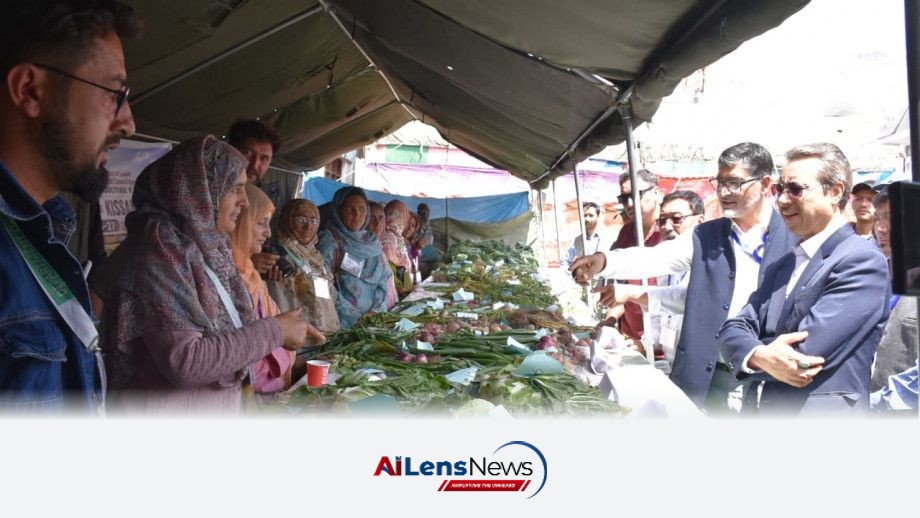



An exhibition-cum-kissan mela in Drass aims to transform the region into an agricultural hub, with local produce showcased and discussions on sustainable farming.
New Delhi, India Aug 25, 2026 ALN: The picturesque town of Drass, renowned for its breathtaking landscapes and strategic location, recently hosted an exhibition-cum-kissan mela aimed at promoting local agriculture and transforming the region into a significant agricultural hub. The event showcased a variety of local produce, emphasizing the importance of sustainable farming practices. This initiative is part of a broader effort to enhance the agricultural landscape of Drass, which has traditionally been known more for its tourism potential than for its agricultural output.
The District Commissioner (DC) of Drass, while inaugurating the event, highlighted the potential of the region in agricultural development. Drass, located in the Kargil district of the Union Territory of Ladakh, has a unique climate and geographical features that can support diverse agricultural activities. The DC urged local farmers to adopt modern techniques and sustainable practices to enhance productivity. The mela served as a platform for farmers to display their produce, including various vegetables and herbs, which attracted considerable attention from visitors, including local residents and tourists alike.
The exhibition featured stalls from various local farmers who presented their best yields. This initiative not only promotes local produce but also encourages the community to engage in agriculture as a viable livelihood option. The DC emphasized that such events are crucial for raising awareness about the benefits of local farming and the need for sustainable practices. The focus on local produce is particularly significant in a region where food security can be a concern due to its remote location and harsh climatic conditions.
Moreover, the exhibition highlighted the diversity of crops that can be cultivated in Drass, ranging from traditional staples to exotic herbs. This variety not only caters to local dietary needs but also opens up opportunities for farmers to explore niche markets, potentially increasing their income. The emphasis on sustainable farming practices is intended to ensure that the agricultural methods employed do not deplete the natural resources of the region, which is crucial given the fragile ecosystem of the Himalayas.
In addition to the exhibition, the mela included workshops and demonstrations on modern agricultural techniques. Experts shared insights on organic farming, pest management, and efficient irrigation methods tailored to the unique conditions of the Drass region. These sessions aimed to equip farmers with the knowledge needed to improve their farming practices. Workshops on organic farming are particularly relevant in today’s context, where there is a growing demand for organic produce both nationally and internationally.
The demonstrations also included practical sessions where farmers could see the techniques in action, such as the use of drip irrigation systems, which can significantly conserve water—a critical resource in arid regions. By providing hands-on experience, the mela ensured that farmers could leave with practical knowledge that they could implement immediately in their own fields.
The event also fostered community engagement, with local residents participating actively. Many expressed their enthusiasm for learning about new farming techniques and the importance of supporting local agriculture. The DC encouraged collaboration among farmers to share resources and knowledge, which is vital for the region's agricultural growth. Community engagement is essential in rural areas, where collective efforts can lead to shared successes and innovations in farming.
Additionally, the mela served as a social gathering, bringing together families and neighbors, which is important for strengthening community ties. The interaction among farmers, experts, and the community can lead to the formation of support networks that can further enhance agricultural practices and outcomes.
Looking ahead, the DC expressed optimism about the future of agriculture in Drass. He stated that with continued support and initiatives like the exhibition-cum-kissan mela, the region can become a self-sustaining agricultural hub. This transformation could lead to improved livelihoods for local farmers and contribute to the overall economic development of the area. The potential for Drass to develop its agricultural sector is significant, especially with the increasing interest in locally sourced and organic products.
The implications of such developments are far-reaching. A thriving agricultural sector can lead to job creation, reduce dependency on imported goods, and enhance food security within the community. Furthermore, as awareness of sustainable practices grows, Drass could position itself as a model for other regions facing similar challenges in agricultural development.
In conclusion, the exhibition-cum-kissan mela in Drass marks a significant step towards revitalizing the local agricultural sector. By promoting sustainable practices and engaging the community, the event aims to lay the groundwork for a prosperous agricultural future in the region. The success of this initiative could inspire similar events in other parts of Ladakh and beyond, highlighting the importance of local agriculture in sustaining rural economies and communities.
To learn more about the latest developments in Agriculture & Rural Affairs, stay updated with our exclusive reports and analyses on AILensNews.

