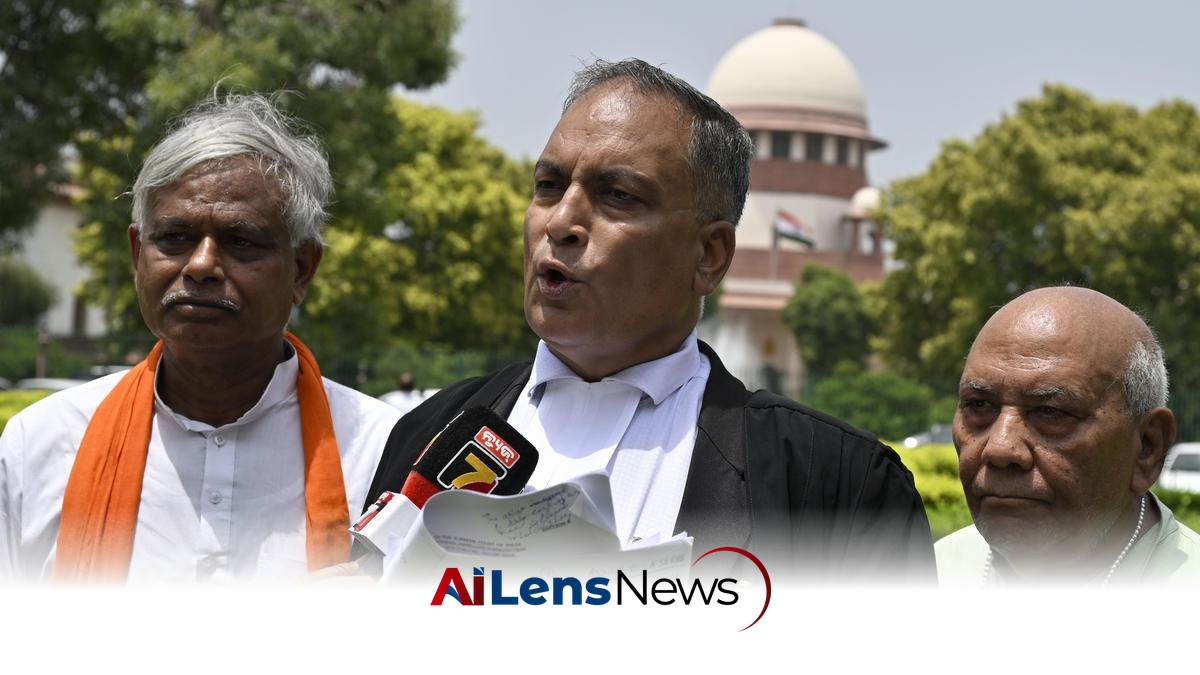


Dara Singh, convicted for the murder of missionary Graham Staines and his sons, is set to be released after 26 years due to good behavior.
New Delhi, India Jul 15, 2026 ALN: Dara Singh, the principal convict in the infamous and brutal murder of Australian Christian missionary Graham Staines and his two minor sons, Philip and Timothy, in January 1999, is on the verge of being released from prison. This development follows a recommendation from the Odisha State Sentence Review Board, which highlighted Singh's 'good behavior' during his lengthy incarceration. Singh has spent over 26 years behind bars, with his time divided among various correctional facilities, including his current location in Keonjhar district jail.
The tragic events that led to the conviction of Singh and his accomplices unfolded on the night of January 22, 1999. Staines, who was in India for a Christian jungle camp, along with his two sons, aged 11 and 7, was attacked while they slept in their vehicle. A mob, allegedly led by Singh, locked the van from the outside, poured an accelerant inside, and set it ablaze. This horrifying act resulted in the deaths of all three individuals, and the perpetrators were reportedly shouting slogans in support of the Bajrang Dal, a right-wing ist organization, while alleging that Staines was involved in forced conversions to Christianity.
The murder of Graham Staines and his sons shocked not only India but also garnered inter condemnation, leading to widespread protests and calls for justice. In the aftermath of the incident, the Indian government established a judicial commission of inquiry, which was headed by Supreme Court Justice D. P. Wadhwa. The commission's findings were significant; it concluded that the Bajrang Dal was not involved in the planning or execution of the crime, and there was no evidence to support claims that Staines had engaged in forced conversions. Instead, the report highlighted Staines' humanitarian work, specifically his efforts in running a shelter for leprosy-affected individuals in the region.
Despite the commission's findings, the case remained contentious and highlighted the deep-seated communal tensions in India. A total of 51 individuals were arrested in connection with the murder, leading to a protracted legal battle that lasted several years. In the initial trial, 37 of those arrested were acquitted, while 14, including Dara Singh, were convicted by a designated Central Bureau of Investigation (CBI) court. The Orissa High Court later acquitted 11 more individuals, further complicating the legal landscape surrounding the case. Singh was initially sentenced to death, but this was later commuted to life imprisonment.
The recommendation for Singh's release comes after a review of cases involving life convicts by the Odisha State Sentence Review Board. In a meeting held in July, the board evaluated several cases, including Singh's, and ultimately recommended 18 cases for release while deferring 14, including Singh's, pending further review. The board's decision was influenced by a fresh report requested from authorities in Auraiya district, Uttar Pradesh, which is Singh's home district. The last report was dated back to 2022, and the board deemed it necessary to obtain updated information regarding Singh's conduct and rehabilitation during his time in prison.
Singh's potential release has not been without controversy. In 2022, a campaign led by Suresh Chavhanke, the editor-in-chief of Sudarshan TV, sought to secure Singh's release, emphasizing the notion of good behavior and rehabilitation. However, Chavhanke was denied permission to meet Singh in jail, and the current Chief Minister of Odisha, Mohan Charan Majhi, who was an MLA from Keonjhar, publicly protested outside the jail, demanding Singh's release. Such developments reflect the ongoing societal divisions and differing perspectives regarding justice and rehabilitation in cases involving communal violence.
As the review board prepares to finalize its recommendations, the implications of Singh's potential release are significant. If the government approves the recommendations in November 2025, Singh will become the last person convicted in the murder of Graham Staines and his sons to leave prison. This could further ignite debates surrounding justice for victims of communal violence in India, the efficacy of the legal system, and the broader issues of religious intolerance and violence in the country.
The case of Graham Staines has remained a touchstone for discussions about religious freedom, the treatment of minorities, and the role of extremist groups in India. It serves as a reminder of the challenges that Indian society faces in reconciling its diverse religious identities while ensuring justice for victims of violence. The potential release of Dara Singh may reignite discussions about the adequacy of punishment for hate crimes and the need for a more robust framework to prevent such tragedies in the future.
In conclusion, the recommendation for Dara Singh's release after over two decades of imprisonment raises complex questions about justice, rehabilitation, and communal harmony in India. As the situation develops, it will be crucial to observe how various stakeholders respond, including the government, civil society, and religious organizations, and whether this case will lead to a broader dialogue about the treatment of those involved in communal violence and the rights of victims and their families.
To understand the implications of Singh's potential release, it is important to consider the broader context of communal violence in India. The murder of Graham Staines is not an isolated incident but part of a pattern of violence against religious minorities, particularly Christians and Muslims, in the country. This violence often stems from a combination of political rhetoric, social tensions, and the activities of extremist groups that seek to impose a singular religious identity on the nation.
The Bajrang Dal, mentioned in connection with the Staines murder, is part of a larger network of organizations affiliated with the Rashtriya Swayamsevak Sangh (RSS), which promotes a ist agenda. These organizations have been accused of fostering an environment that condones violence against minorities and undermines secular principles enshrined in the Indian Constitution. The case of Staines has highlighted the challenges faced by the Indian judiciary in addressing such communal violence and ensuring accountability for perpetrators.
The recommendation for Singh's release also raises questions about the effectiveness of rehabilitation programs for convicts in India. While the notion of good behavior is a common criterion for parole and release, it is essential to scrutinize what constitutes rehabilitation in the context of such a heinous crime. Critics argue that merely serving time in prison does not equate to genuine remorse or transformation, especially for individuals convicted of hate crimes motivated by religious intolerance.
Furthermore, Singh's potential release could have a chilling effect on the families of victims of communal violence. It may lead to feelings of insecurity and fear among those who have suffered from similar acts of violence, raising concerns about the message it sends regarding the severity of punishment for such crimes. The case of Graham Staines remains emblematic of the struggle for justice in a society marked by deep-rooted divisions, and Singh's release could be perceived as a failure to adequately address the grievances of the victims and their communities.
In light of these complexities, it is vital for civil society organizations, human rights advocates, and the government to engage in meaningful dialogue about the implications of Singh's release. This dialogue should focus on creating a more inclusive society that respects the rights of all individuals, regardless of their religious beliefs. It should also address the need for robust legal mechanisms to prevent communal violence and ensure that perpetrators are held accountable for their actions.
As public opinion continues to evolve regarding issues of justice and rehabilitation, the case of Dara Singh serves as a critical juncture for India. The reactions to his potential release will likely reflect broader societal attitudes towards communal violence, the treatment of minorities, and the role of the justice system in addressing these challenges. It is an opportunity for India to reaffirm its commitment to justice, equality, and the protection of human rights for all its citizens.
To learn more about the latest developments in Crime & Law, stay updated with our exclusive reports and analyses on AiLensNews.

