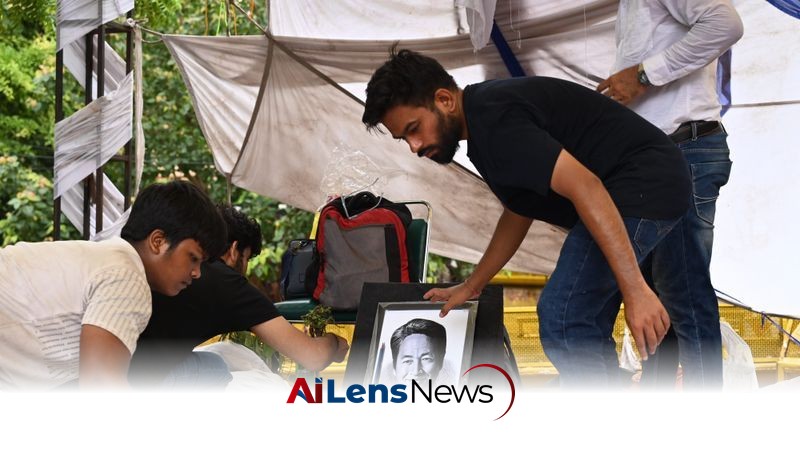


The Cockroach Janta Party's protest in Delhi continues for the 24th day, with thousands gathering despite police crackdowns. Abhijeet Dipke has issued an apology to injured supporters.
New Delhi, India Jul 21, 2026 ALN: In a remarkable display of resilience, the Cockroach Janta Party (CJP) protest at Jantar Mantar has entered its 24th day, drawing thousands of supporters who have defied police crackdowns. The protest, aimed at marching to Parliament, has faced significant resistance from law enforcement, including the deployment of batons and tear gas shells to disperse crowds. This situation reflects a growing trend of civil unrest in India, where citizens are increasingly turning to protests as a means of expressing their discontent with government policies and actions.
Despite these efforts, demonstrators have repeatedly regrouped, showcasing their determination to voice their demands. The atmosphere remains charged as supporters rally around the CJP's message, underscoring the ongoing unrest in the capital. The CJP, a party known for its unconventional approach and grassroots mobilization, has been vocal about various socio-political issues, including governmental accountability, economic disparity, and civil rights. Such issues resonate with many citizens, particularly in the context of rising economic challenges and perceived governmental overreach.
In a recent development, CJP leader Abhijeet Dipke publicly apologized to those injured during the confrontations with police. His statement aimed to acknowledge the sacrifices made by supporters and to reinforce the party's commitment to their cause. This gesture is significant as it illustrates the party's attempt to maintain morale among its supporters while also addressing the concerns of those who have faced harm during the protests. Such acknowledgments can serve to strengthen the emotional bond between the leadership and the base, fostering a sense of community among demonstrators. This is particularly important in maintaining the momentum of the protest, as leaders often play a crucial role in motivating and galvanizing their supporters during challenging times.
The protest has garnered attention not only for its scale but also for the issues it raises regarding civil liberties and the right to assemble peacefully. The right to protest is enshrined in many democratic societies, including India, where citizens have historically utilized public demonstrations as a means of expressing dissent and demanding change. The heavy-handed tactics employed by law enforcement raise important questions about the balance between maintaining public order and respecting the constitutional rights of individuals to assemble and express their views. The use of force against peaceful protesters can lead to further escalation and may deter individuals from participating in future demonstrations.
As the situation unfolds, the CJP continues to call for solidarity among its supporters, urging them to remain steadfast in their pursuit of justice. This call for unity is crucial in maintaining momentum, especially as protests can often wane without a strong collective commitment. The CJP's leadership has been actively engaging with supporters through social media and public addresses, emphasizing the need for continued vigilance and participation in the movement. The role of social media in contemporary protests cannot be overstated; it allows for rapid communication and organization, helping to mobilize supporters and spread awareness of the issues at hand.
The backdrop of this protest is a broader context of political dissent in India, where various groups have increasingly taken to the streets to voice their concerns over governmental policies, social injustices, and economic challenges. The CJP's protest is part of a larger tapestry of activism that has been woven in recent years, reflecting a growing discontent among the populace. Issues such as rising unemployment, inflation, and perceived governmental overreach have galvanized diverse segments of society, leading to a surge in public demonstrations. This trend highlights a significant shift in the political landscape, where citizens are more willing to challenge authority and demand accountability.
Moreover, the CJP's protest at Jantar Mantar is emblematic of a significant shift in political engagement among younger generations, who are more inclined to utilize social media platforms to organize and mobilize. This digital activism complements traditional forms of protest, allowing for rapid dissemination of information and fostering a sense of community among participants. The integration of technology into activism has not only expanded the reach of movements like the CJP's but has also introduced new dynamics in how protests are organized and perceived by the public and authorities alike. The ability to share experiences and updates in real-time has transformed the nature of protests, making them more dynamic and responsive to changing circumstances on the ground.
The implications of the ongoing protests extend beyond the immediate demands of the CJP. The way law enforcement responds to these demonstrations could set precedents for future protests across the country. If the government continues to adopt a confrontational approach, it may further alienate segments of the population and exacerbate tensions. Conversely, a more conciliatory stance could open avenues for dialogue and negotiation, potentially leading to reforms that address the concerns raised by protesters. The balance between maintaining order and respecting citizens' rights is a delicate one, and the government's choices in handling this situation will have lasting effects on public trust and engagement.
As the protest continues, observers are closely monitoring the situation for any signs of escalation or resolution. The coming days will be crucial in determining the trajectory of this protest and the broader implications for political dissent in India. The resilience of the CJP's supporters, coupled with the government's response, will likely influence the political landscape in the months to come. The outcome of this protest could serve as a litmus test for the current government's approach to dissent and civil liberties.
In addition to immediate concerns, the CJP's protest also raises questions about the future of civil society in India. As more citizens engage in activism, there is a potential for a reinvigoration of democratic processes, where public opinion plays a more significant role in shaping policy decisions. The CJP's emphasis on accountability and transparency resonates with many who feel disenfranchised by traditional political structures. This growing movement for accountability may lead to increased pressure on politicians and policymakers to address the grievances of the populace.
Furthermore, the protest highlights the importance of intersectionality in activism. The diverse demographics of the CJP's supporters reflect a wide range of issues, including gender equality, environmental concerns, and social justice. By addressing these interconnected challenges, the CJP is positioning itself as a multifaceted movement that seeks to unify various strands of activism under a common banner. This approach not only broadens the appeal of the CJP but also emphasizes the need for comprehensive solutions to the complex issues facing society.
In conclusion, the ongoing protest by the Cockroach Janta Party at Jantar Mantar is not merely a reaction to immediate grievances but a manifestation of deeper societal currents. The resilience shown by protesters, the leadership's response to challenges, and the government's approach to dissent will all play pivotal roles in shaping the future of political engagement in India. As the nation watches closely, the outcome of this protest could have lasting implications for civil liberties, democratic practices, and the relationship between the state and its citizens. The ongoing developments will be critical in determining how the future of activism and civil society unfolds in the face of governmental resistance and societal demands.
To learn more about the latest developments in Politics, stay updated with our exclusive reports and analyses on AiLensNews.

