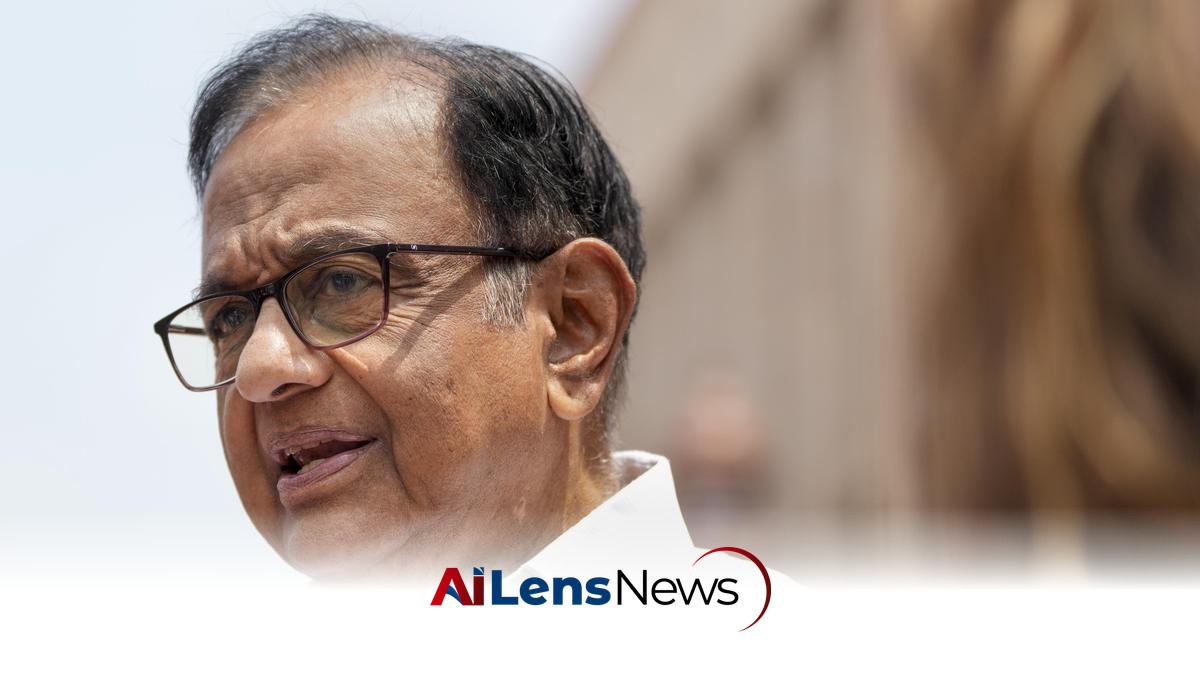



Congress leader P. Chidambaram defends his stance as a 'dimagi Naxal' after PM Modi's remarks, highlighting ideological dissent in politics.
New Delhi, India Aug 17, 2026 ALN: Senior Congress leader P. Chidambaram has responded to Prime Minister Narendra Modi's recent 'dimagi naxal' comment, asserting, "I am proud to be a dimagi naxal." This statement comes in the wake of Modi's warning about ideological dissenters who he claims have infiltrated the political system. The term 'dimagi naxal' has emerged as a contentious label in Indian political discourse, suggesting a connection between intellectual dissent and the violent Naxalite movement that has plagued parts of India for decades.
During his speech from the Red Fort on the 80th Independence Day, Prime Minister Modi cautioned the nation about these 'dimagi naxals,' suggesting they pose a threat to societal stability by manipulating policies. He urged citizens to "identify and isolate" these individuals, framing them as obstacles to progress and unity. This rhetoric reflects a broader strategy by the Modi administration to consolidate power by delegitimizing dissenting voices, especially those that challenge the government's narrative or policies.
Modi emphasized that while armed Naxalism has been largely eradicated from rural areas, its ideological supporters are still active and seeking to promote violence and chaos. He noted, "For years, people with a Maoist mindset had established themselves in the corridors of power, influencing public policy and serving as advisers on government committees." This assertion points to a perception within the ruling party that ideological extremism, even in its non-violent forms, continues to undermine democratic values and governance in India.
In response, Chidambaram took to social media platform X, stating, "I am proud to be a dimagi naxal!" This retort highlights the ongoing ideological battle within Indian politics, as Modi's remarks were interpreted by many as an attempt to stigmatize dissent. Chidambaram's embrace of the term 'dimagi naxal' signifies a rejection of the government's attempts to marginalize intellectuals and critics, positioning himself as a defender of free thought and expression in a democratic society.
The Prime Minister also reflected on the historical impact of Naxalism and Maoist violence, which he claimed has devastated the lives of millions, resulting in the deaths of over 3,500 police and security personnel—far exceeding the casualties of soldiers in wartime. This statistic is often cited by the government to underscore the severity of the Naxalite threat and to justify stringent measures taken against such groups. The reference to police casualties highlights the ongoing conflict between state forces and Naxalite insurgents, which has been characterized by violence, human rights abuses, and socio-economic challenges.
He remarked, "Naxalism held a very large part of India and a huge population in its grip, at gunpoint." Modi's government, which came to power in 2014, has prioritized the eradication of Naxalism, aiming to bring an end to decades-old challenges that have hindered development. The government's approach has included both military action and developmental initiatives aimed at addressing the root causes of Naxalism, such as poverty, unemployment, and lack of access to education and healthcare.
In his address, Modi expressed satisfaction with the progress made in reducing Naxalite and Maoist violence, stating, "In areas where the bullets of Naxalites once rang out, the tricolor of development, trust, and effort is now flying because these areas have been freed from Naxalism." This statement reflects a narrative that seeks to portray the Modi administration as successful in restoring peace and stability to regions previously affected by insurgency, thereby fostering an environment conducive to economic growth and social progress.
This exchange between Modi and Chidambaram underscores the deep ideological divides in Indian politics, particularly regarding the interpretation of dissent and the legacy of Naxalism. The term 'dimagi naxal' serves as a symbol of the broader struggle between the ruling party's vision of ism and the opposition's advocacy for civil liberties and dissent. As the political landscape in India continues to evolve, the implications of such rhetoric may resonate beyond immediate political debates, influencing how dissent is perceived and treated in society.
The historical context of Naxalism is crucial in understanding the current political climate. Originating in the late 1960s, the Naxalite movement was rooted in agrarian discontent and Marxist ideology, advocating for the rights of marginalized communities, particularly in rural areas. Over the decades, this movement has transformed, with various factions emerging, some adopting violent tactics to achieve their goals. The government's response has often been a mix of military action and socio-economic development programs, aiming to tackle the underlying issues that fuel such insurgencies.
Furthermore, the use of terms like 'dimagi naxal' reflects a broader trend in political discourse where labels are employed to delegitimize opponents. This tactic can stifle constructive debate and lead to an environment where dissent is viewed as a threat rather than a fundamental aspect of democracy. As political polarization increases, the implications of this rhetoric may have lasting effects on public perception, policy-making, and the overall health of democratic institutions in India.
In conclusion, the exchange between Prime Minister Modi and P. Chidambaram is emblematic of the ongoing ideological battles within Indian politics, particularly concerning the interpretation of dissent and the legacy of Naxalism. As both leaders continue to navigate this complex landscape, the discourse surrounding terms like 'dimagi naxal' will likely shape the political narrative in India for years to come, influencing not only political strategies but also societal attitudes towards dissent and ideological diversity.
To learn more about the latest developments in Politics, stay updated with our exclusive reports and analyses on AILensNews.

