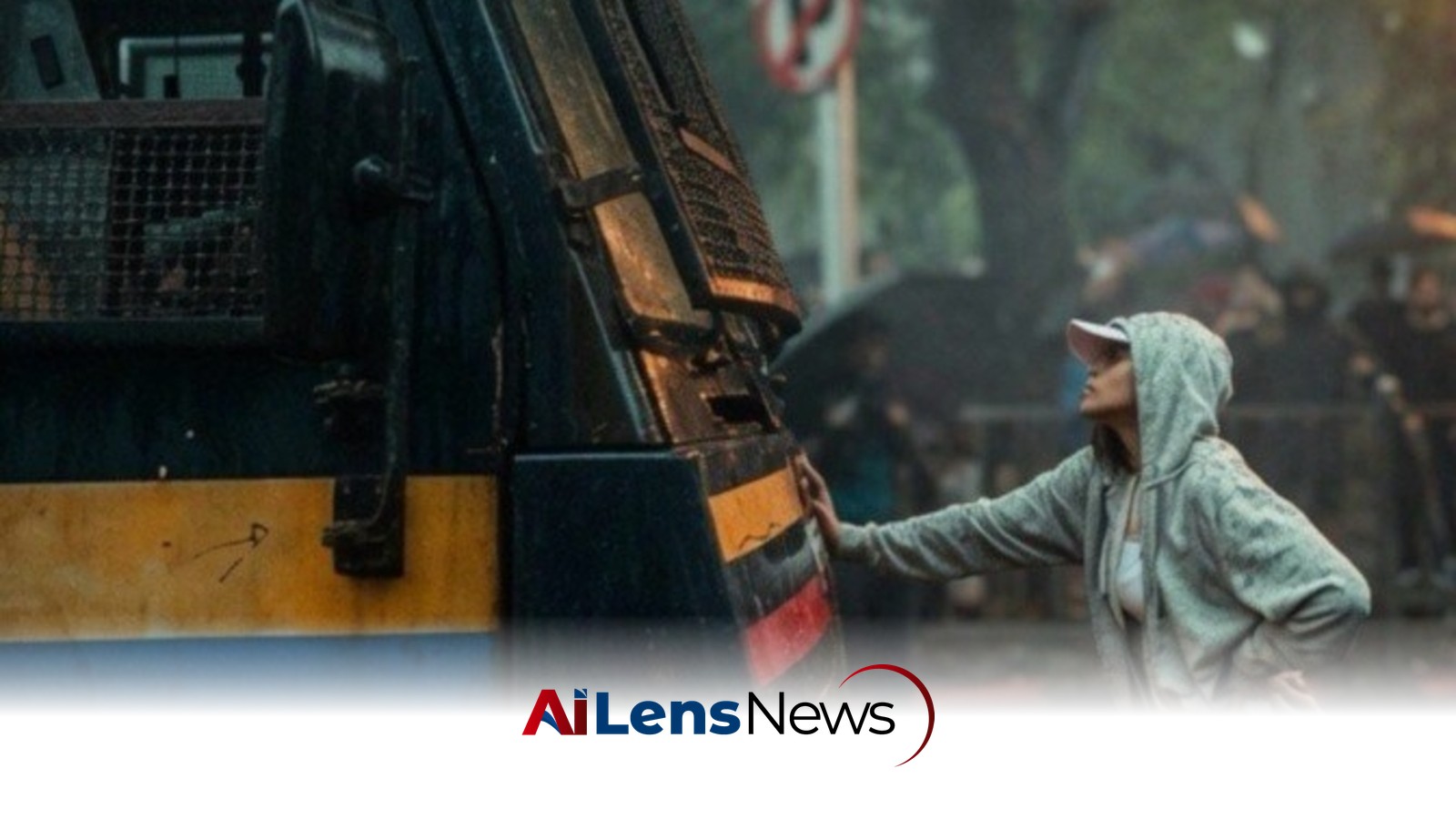


Rhiya Ahir, a 27-year-old model, gained attention for blocking a police van during a protest in Mumbai, believing detainees were being unjustly removed.
Chandigarh, India Jul 23, 2026 ALN: A young woman in a grey hoodie, standing firmly with her arms spread out to block a police van, has emerged as one of the most striking images from Mumbai's protests supporting the Cockroach Janta Party's agitation over the NEET paper leak. This incident has drawn significant attention not only due to the dramatic nature of the confrontation but also because it highlights the ongoing tensions between citizens and law enforcement in the context of public protests in India.
As the CJP-led protest against examination irregularities continued in Delhi, young demonstrators in Mumbai took to the streets on Thursday to express solidarity and protest against what they described as alleged police action during the 'Sansad Chalo' march. This march was part of a larger movement aimed at addressing grievances related to the National Eligibility cum Entrance Test (NEET), which has faced scrutiny over alleged leaks and irregularities that have raised questions about fairness and transparency in the examination process.
Rhiya Ahir is a 27-year-old model who found herself at the center of the protest after intervening when she saw protesters being taken away by the police. She said she believed the detainees were being removed unnecessarily and immediately rushed towards the vehicle. Her actions have resonated widely, inspiring many and prompting discussions about the role of youth in activism and the importance of standing up against perceived injustices.
Ahir has a strong presence on Instagram, with nearly one lakh followers, and has also appeared in music videos. Her most recent appearance was in the video song 'Dilbara'. While she is primarily known for her modeling career, her decision to engage in activism has brought her into the spotlight for reasons beyond her professional work.
She was walking from Kohinoor Square in Dadar towards Shivaji Park when she noticed the police van filled with detainees, as per an earlier HT report. This particular stretch of Mumbai has historically been a site for protests and gatherings, making it a focal point for various social movements.
| Woman who blocked Mumbai police van in viral video is 27-yr-old model Rhiya Ahir
"I couldn’t help myself," she said. "Their chants—they pulled me towards them. I was like, if I’m going for the protest, it starts from here. They’re taking them away, and I cannot let that happen." This statement encapsulates the emotional and moral drive behind her actions, reflecting a broader sentiment among many young Indians who feel compelled to take a stand against governmental actions they perceive as unjust.
Ahir said the police told her the detainees would be released after the vehicle had travelled some distance, but she refused to accept that explanation. Her refusal to back down in the face of authority has sparked conversations about the rights of citizens during protests and the responsibilities of law enforcement in such scenarios.
| 'I'll put powder in bag': Inside the viral video of Mumbai cop threatening student protesters
"They didn’t say anything. They knew that they were wrong," Ahir said, indicating her belief that the police were aware of the questionable nature of their actions. This assertion points to a growing concern among citizens regarding police conduct during protests, especially in light of increasing reports of heavy-handed tactics used against demonstrators across the country.
Although videos from the scene showed her standing firmly in front of the van, Ahir said she was nervous throughout the confrontation. "When I confronted them, I was shaking on the inside," she said. This admission highlights the emotional toll that activism can take on individuals, particularly when they are faced with the potential for confrontation with law enforcement.
Despite that fear, she chose not to move. "I knew that what I was doing was right." This conviction is a powerful motivator for many activists, who often find themselves in precarious situations as they advocate for change. Ahir claimed police initially tried to move the vehicle forward. "They tried to accelerate a bit, but that didn’t budge me," she said, illustrating her determination to stand her ground.
She remained in front of the van until the detained protesters were released, a moment that not only marked a personal victory for her but also served as a symbol of resistance for many who were watching. The incident has since gone viral, further amplifying her message and the cause she was supporting.
In a video posted 16 hours ago, Ahir said, "Holding a peaceful rally to summon the Prime Minister is like... What are you living on 1947? If you want to summon the Prime Minister, you hold a big fat Indian wedding." This statement reflects a mix of humor and frustration, underscoring the challenges activists face when attempting to engage with political leaders and the system at large.
Mumbai Police have filed 13 FIRs since July 18 over the ongoing protests, citing charges including unlawful assembly and violation of prohibitory orders. Around 400 people have been booked in connection with the cases, news agency PTI reported. The high number of arrests and FIRs indicates a significant crackdown on dissent, raising questions about the balance between maintaining public order and respecting the right to protest.
Reportedly, demonstrations were held at multiple locations, including Shivaji Park, Chaityabhoomi, Chembur, and Shiv Sena Bhavan, despite no official permission being granted for the gatherings. The decision to protest without official sanction reflects a growing frustration among citizens who feel their voices are not being heard through traditional channels.
The police have also enforced prohibitory restrictions across Mumbai from July 23 to August 6, preventing gatherings of five or more people in public areas. These measures have sparked debate about the limits of state power and the rights of individuals to assemble peacefully. The implications of such restrictions are far-reaching, potentially stifling civic engagement and the ability of citizens to advocate for their rights.
The events surrounding Rhiya Ahir's actions and the protests in Mumbai serve as a reminder of the ongoing struggles for justice and accountability in India. They highlight the role of young activists in shaping the future of political discourse in the country, as well as the challenges they face in navigating a complex landscape of law, order, and civil rights. As the situation continues to evolve, it is clear that the dialogue around these issues will remain a critical part of India's democratic process.
To learn more about the latest developments in Crime & Law, stay updated with our exclusive reports and analyses on AiLensNews.

