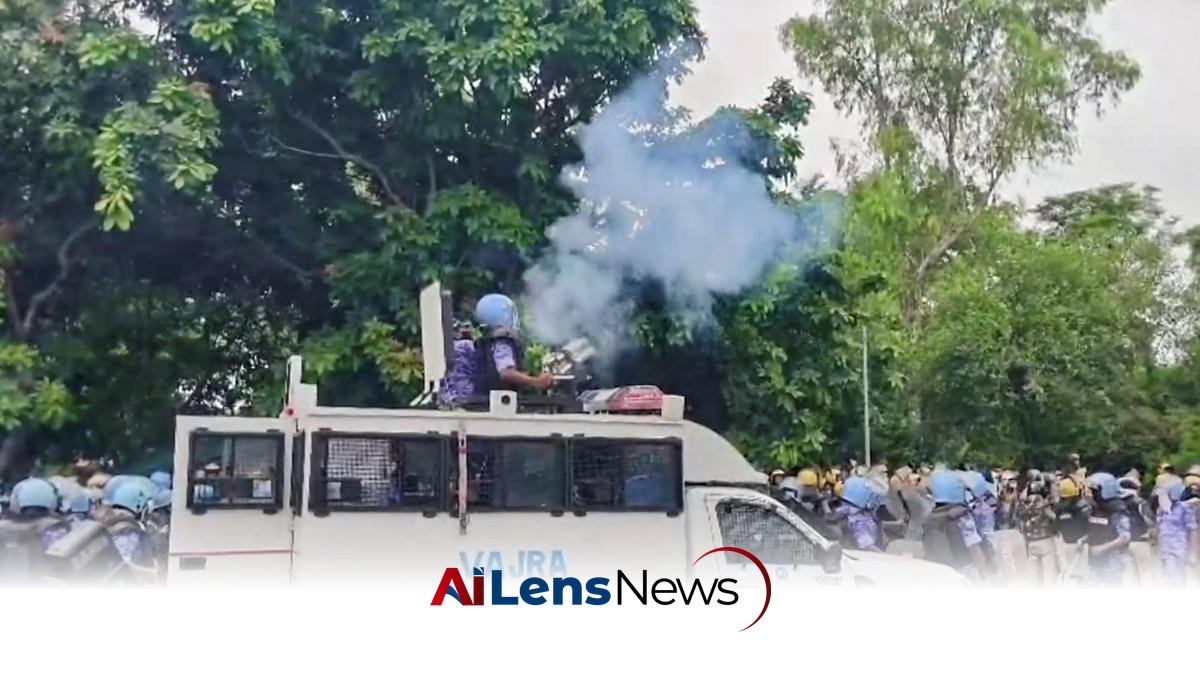


Police clashed with Qaumi Insaf Morcha protesters in Chandigarh, deploying tear gas and water cannons to disperse crowds demanding the release of Sikh prisoners.
New Delhi, India Aug 16, 2026 ALN: Chandigarh police on Saturday, August 15, 2026, employed tear gas shells and water cannons to disperse protesters who attempted to breach barricades during a march towards Punjab Governor Gulab Chand Kataria's residence. The protesters, organized under the banner of the Qaumi Insaf Morcha, were demanding the release of Sikh prisoners, including Jagtar Singh Hawara, who is serving a life sentence for the assassination of then Punjab Chief Minister Beant Singh in 1995.
The situation escalated as some protesters tried to remove barricades and barbed wire, with others attempting to pull them down using a tractor as they moved towards the Lok Bhavan in Chandigarh. The Qaumi Insaf Morcha has been vocal about the plight of Sikh prisoners, claiming that many have completed their sentences but remain incarcerated. This sentiment resonates deeply within certain segments of the Sikh community, especially considering the historical context of the Punjab insurgency during the 1980s and 1990s, which saw significant violence and political turmoil.
In response to the escalating situation, police fired several rounds of tear gas and deployed water cannons to disperse the crowd. Additionally, drones were used to drop tear gas shells on the protesters, marking a significant use of technology in crowd control. The police's actions reflect a broader trend in law enforcement where technology is increasingly being integrated into public order management, raising questions about civil liberties and the right to protest.
The Qaumi Insaf Morcha has called for a 'Punjab Bandh' on August 21 to press for the release of Sikh prisoners and urged the public to support the shutdown. Such calls for a bandh are not uncommon in India, particularly in regions with strong regional or communal identities, and often aim to disrupt normal life to draw attention to specific grievances.
Shiromani Akali Dal (Amritsar) president Simranjit Singh Mann was detained by Chandigarh police while attempting to reach the Governor's residence. Mann, who was seen with bandages on his head, sat down near a barricade before being taken away by police. His detention highlights the contentious relationship between the state and political leaders who advocate for the rights of marginalized communities. Mann's presence at the protest underscores the political dimensions of the movement, as various political factions vie for influence among the Sikh electorate.
Tight security measures were implemented at the Chandigarh-Mohali border to prevent protesters from reaching the Lok Bhavan. Multi-layer barricades topped with barbed wire were erected, and anti-riot vehicles and heavy police forces, including Rapid Action Force personnel, were deployed. Such security measures are often justified by authorities as necessary to maintain public order, but they can also exacerbate tensions and lead to clashes between protesters and police.
All border points between Chandigarh and Mohali were sealed, with tipper trucks stationed at various locations as part of the security arrangements. This level of security indicates the authorities' anticipation of potential unrest and their commitment to preventing it. However, it also raises concerns about the right to assembly and the ability of citizens to express dissent peacefully.
Director General of Police Sagar Preet Hooda, Deputy Commissioner Nishant Kumar Yadav, and Chandigarh Senior Superintendent of Police Kanwardeep Kaur supervised the security situation. SSP Kaur was seen appealing to the protesters to maintain peace, but the protesters remained determined to proceed towards the Governor's residence. This dynamic illustrates the challenges faced by law enforcement in balancing the need for public safety with the rights of citizens to protest and express their grievances.
A video that surfaced on Friday, August 14, featured Hawara, who is incarcerated in a Delhi jail, appealing to the Sikh community, particularly the youth, to ensure that the march organized by Qaumi Insaf Morcha is conducted peacefully. His appeal underscores the importance of maintaining a non-violent approach to advocacy, especially given the historical context of violence associated with the Sikh insurgency. The call for peace from a high-profile prisoner also serves to legitimize the movement and attract broader support.
SAD (Punar Surjit) leader Parminder Singh Dindsa also called for the release of Sikh prisoners, emphasizing the need to respect the sentiments of the entire 'Qaum'. Dindsa stated, "Today's gathering reflects the sentiments of people." This statement highlights the collective identity and solidarity among the Sikh community, which is often mobilized in response to perceived injustices against its members.
SAD (Punar Surjit) president Giani Harpreet Singh further pressed for the release of Sikh prisoners, questioning, "Are Sikhs not residents of this country? Is Punjab not part of India? If you consider Punjab part of India, and if you also consider the Constitution is equal for all, then Sikhs should also be given equal rights." His remarks reflect long-standing grievances within the Sikh community regarding their treatment by the Indian state and the ongoing struggle for recognition and justice.
Later, Qaumi Insaf Morcha leaders claimed that police used tear gas shells and water cannons on protesters when they approached the barricades. One leader stated, "We will continue to fight our battle for releasing Bandi Singhs in a peaceful manner." This commitment to non-violence is significant, especially in light of the historical context of Sikh activism, which has often been marked by confrontations with state authorities.
The leaders also demanded that Hawara be granted parole to meet his ailing mother. The Qaumi Insaf Morcha has been advocating for the release of 'Bandi Singhs' (Sikh prisoners) who they claim have completed their sentences but remain incarcerated. This plea for parole reflects the personal and familial dimensions of incarceration, which often resonate deeply within communities.
In addition to Hawara, the morcha has been demanding the release of Balwant Singh Rajoana and Devinderpal Singh Bhullar. Rajoana is a convict in the 1995 assassination of Beant Singh, while Bhullar is serving a sentence related to the 1993 Delhi bomb blast case. The inclusion of these high-profile cases in the demands of the Qaumi Insaf Morcha illustrates the complexities of the Sikh struggle for justice and the varying perspectives on issues of accountability and punishment.
The term 'Bandi Singhs' refers to Sikh prisoners convicted for their involvement in militancy during the Punjab insurgency of the 1990s. This terminology carries significant weight within the community, as it encapsulates a narrative of victimhood and resilience against state repression.
The Qaumi Insaf Morcha has been laying siege along Sector 52-53 in Chandigarh and YPS Chowk in Mohali since January 7, 2023, as part of its campaign for the release of Sikh prisoners. This prolonged protest indicates a deep-seated frustration within the community and a commitment to advocating for their rights. Several Sikh bodies and political outfits, including the Shiromani Akali Dal (Waris Punjab De), SAD (Punar Surjit), and Nihang organizations, have already extended their support to the Qaumi Insaf Morcha. This coalition of support reflects a broader movement within the Sikh community to address historical grievances and seek justice for those they believe have been wronged by the state.
To learn more about the latest developments in Crime & Law, stay updated with our exclusive reports and analyses on AiLensNews.

