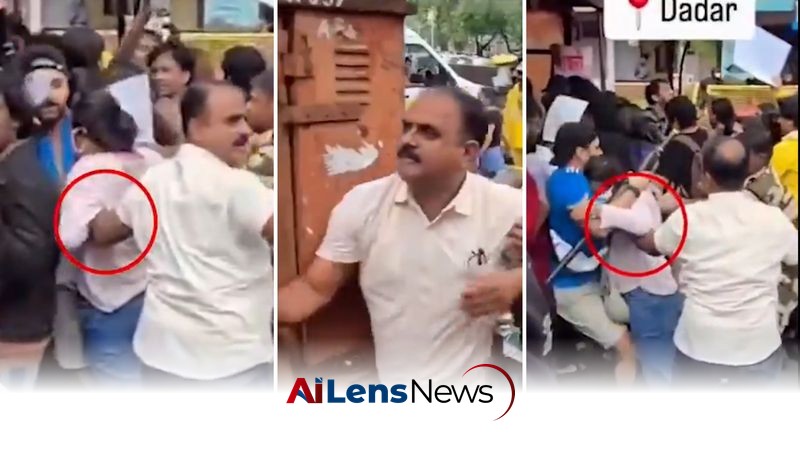


The Mumbai police have addressed a viral video showing a plainclothes officer allegedly groping a woman during a protest, claiming it was a misunderstanding.
Chandigarh, India Jul 24, 2026 ALN: The Mumbai police have recently addressed a viral video that has generated significant attention and controversy, depicting what appears to be a plainclothes officer engaging in a physical confrontation with a woman during a protest. This incident occurred amid a demonstration focused on the National Eligibility cum Entrance Test (NEET), a crucial examination for students aspiring to enter medical colleges in India. The NEET has been a source of considerable debate and unrest, particularly due to its perceived impact on educational opportunities and access to higher education.
The NEET, introduced in 2016, replaced various state-level entrance examinations and aimed to create a uniform standard for medical admissions across the country. However, it has faced criticism for being overly challenging and for favoring students from urban areas who have better access to coaching and resources. Many argue that this system disproportionately affects students from rural and marginalized backgrounds, limiting their opportunities for admission into medical programs. Consequently, the protests surrounding NEET have been fueled by a variety of concerns, including issues of accessibility, fairness, and the high stakes associated with the examination. As a result, the protests have drawn a diverse group of participants, all advocating for reforms in the educational system.
In the video, which has been widely shared across various social media platforms, the officer is shown in a tense exchange with protesters. Critics have quickly labeled the officer's conduct as inappropriate, particularly in relation to the woman who was caught in the midst of the altercation. In response to the uproar, the Mumbai police have issued a statement clarifying that the officer’s actions were misinterpreted. According to police spokespersons, the officer was attempting to restrain a male protester when the woman inadvertently came between them, complicating the situation.
The police emphasized that the officer's intention was not to harm the woman but rather to maintain order during a chaotic and rapidly evolving scenario. This clarification is particularly significant in light of ongoing discussions concerning police conduct during protests, especially regarding the treatment of women. The incident has reignited conversations around the need for improved training and established protocols for law enforcement officers when they are managing public demonstrations.
The Mumbai police have reiterated their commitment to ensuring public safety while respecting the rights of individuals participating in demonstrations. They have acknowledged the challenges faced by law enforcement when managing large crowds and the potential for misunderstandings that can arise in high-stress environments. This incident highlights the complexities of policing in a democratic society, where the right to protest is constitutionally protected, yet the need for maintaining public order is equally important.
In the aftermath of the incident, community leaders and activists have called for a comprehensive review of police practices during protests. Advocates for reform argue that there is an urgent need for training programs that emphasize de-escalation techniques, cultural sensitivity, and the importance of protecting the rights of all individuals involved in public demonstrations. Such training could help officers better navigate the often volatile dynamics of protests, where emotions can run high and misunderstandings can escalate quickly.
This call for change is part of a broader movement advocating for police accountability and transparency in interactions with the public. In recent years, there has been increasing scrutiny of police practices in India, with activists pushing for reforms that ensure officers are held accountable for their actions, particularly in situations involving vulnerable populations, such as women and marginalized communities. The incident involving the plainclothes officer has become a focal point in this ongoing dialogue, underscoring the need for systemic changes within law enforcement.
As protests continue over NEET and other educational issues, the implications of this incident extend beyond the immediate confrontation. It highlights the ongoing tensions between law enforcement and citizens, particularly in the context of social movements advocating for change. The relationship between the police and the community is complex, and incidents like this can exacerbate existing distrust and tensions. The viral nature of the video has amplified these sentiments, as social media serves as a powerful tool for mobilizing public opinion and driving conversations around justice and accountability.
Furthermore, the video incident is reflective of a larger societal issue regarding the treatment of women in public spaces, particularly during protests where emotions run high. The concerns raised by this incident may lead to increased scrutiny of police practices and a demand for more robust measures to protect individuals, especially women, in similar situations. Gender-based violence and harassment remain pressing issues in India, and incidents like this can serve as a catalyst for broader discussions about women's rights and safety in public spaces.
In the wake of this incident, it is expected that the police department will continue to monitor the situation closely, potentially releasing further statements to clarify their stance and provide updates on any internal reviews. The actions of the officer involved may also be subject to scrutiny as part of a broader effort to ensure accountability within the police force. This scrutiny is essential for rebuilding trust between law enforcement and the communities they serve, particularly in a climate where public confidence in police actions is critical for effective governance.
As discussions around police conduct and public demonstrations evolve, it is crucial for all stakeholders to engage in constructive dialogue aimed at fostering mutual understanding and respect. The challenges faced by law enforcement in managing protests must be balanced with the rights of individuals to express their opinions and advocate for change in a manner that is safe and dignified. This balance is vital for maintaining the democratic fabric of society, where diverse voices can be heard and respected.
Ultimately, the incident serves as a reminder of the complexities inherent in managing public demonstrations and the necessity for ongoing training and reform within police departments. As the situation develops, it will be essential for both the police and the community to work collaboratively to address the concerns raised and to seek solutions that uphold the principles of justice and equity for all. The ongoing dialogue regarding police practices, community safety, and the right to protest will likely shape the future of law enforcement in India, as both citizens and officers navigate the challenges of a rapidly changing social landscape.
To learn more about the latest developments in Crime & Law, stay updated with our exclusive reports and analyses on AiLensNews.

