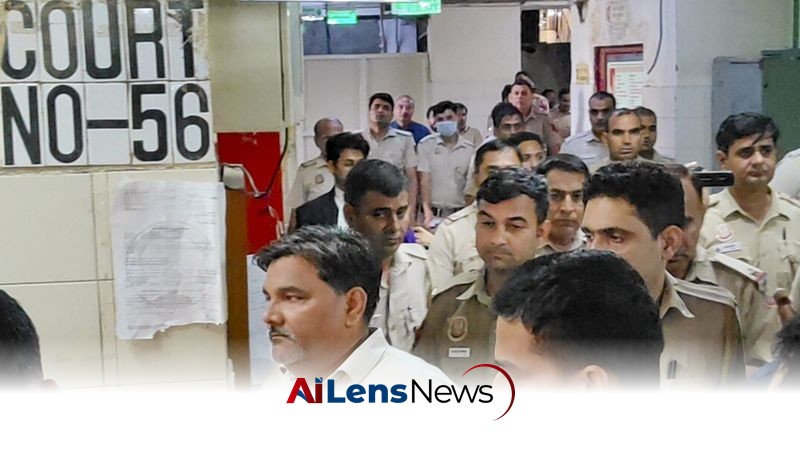


A Delhi court has sentenced former AAP councillor Tahir Hussain and four others to life imprisonment for the murder of Intelligence Bureau officer Ankit Sharma during the 2020 riots.
Chandigarh, India Aug 1, 2026 ALN: A Delhi court has sentenced former Aam Aadmi Party (AAP) councillor Tahir Hussain and four others to rigorous life imprisonment for their involvement in the murder of Intelligence Bureau (IB) officer Ankit Sharma. This verdict comes in the wake of the violent riots that erupted in northeast Delhi in February 2020, an event that has left a lasting impact on the political and social fabric of the region.
The court's decision was delivered on Friday, marking a significant moment in the legal proceedings surrounding the riots, which resulted in numerous casualties and widespread destruction. The case against Hussain and his co-defendants was built on substantial evidence, including witness testimonies and video footage from the riot-affected areas. The evidence presented was critical in establishing the culpability of the accused in the murder of Sharma, who was killed in a particularly brutal manner during the chaos.
Ankit Sharma was killed during the riots, which were fueled by tensions surrounding the Citizenship Amendment Act (CAA). The CAA, introduced by the Indian government in December 2019, aimed to provide a pathway to citizenship for non-Muslim refugees from neighboring countries. This legislation sparked widespread protests across the country, with many arguing that it was discriminatory against Muslims. The violence claimed the lives of over 50 individuals and left hundreds injured. The riots were characterized by brutal clashes between different communities, leading to significant property damage and loss of life.
The northeast Delhi riots were among the deadliest communal riots in India in recent years, and they highlighted the deep-seated communal tensions that exist within the country. The violence not only resulted in loss of life but also led to the destruction of homes, businesses, and places of worship, further exacerbating the divisions between communities. The aftermath of the riots saw a rise in communal polarization, with many citizens expressing concerns about safety and security in their neighborhoods.
The trial of Hussain and the others involved was closely monitored, given the high-profile nature of the case. The prosecution argued that Hussain played a pivotal role in orchestrating the violence that led to Sharma's death. They presented a range of evidence, including testimonies from eyewitnesses who recounted the events leading up to the murder, as well as video footage that depicted the chaos of the riots. The defense, on the other hand, contended that the evidence presented was insufficient to warrant such a severe sentence, arguing that Hussain was not directly responsible for the violence that transpired.
The proceedings were marked by intense scrutiny from both the media and the public, reflecting the broader societal concerns regarding accountability in cases of political violence. The legal arguments presented by both sides were indicative of the complexities involved in prosecuting cases that arise from communal riots, where multiple narratives often clash. The court had to navigate through a web of political implications, social unrest, and the quest for justice that resonated deeply in the community.
The sentencing has been met with mixed reactions from the public and political circles. Supporters of the ruling have expressed relief, viewing it as a step towards justice for the victims of the riots. Many families affected by the violence have long sought accountability for the loss of their loved ones, and this verdict is seen as a glimmer of hope in a landscape marred by impunity. Victims’ families and community leaders have voiced their approval, emphasizing the importance of holding individuals accountable for their actions during the riots.
Conversely, some critics argue that the legal system must ensure that all individuals involved in the riots are held accountable, regardless of their political affiliations. There are concerns that the focus on high-profile figures like Hussain may overshadow the need for a comprehensive investigation into the riots as a whole. Activists and community leaders have called for a thorough examination of the roles played by various political actors during the unrest, emphasizing that justice must be inclusive and not selective. This sentiment reflects a broader concern about the politicization of justice and the potential for bias in legal proceedings.
This ruling may set a precedent for future cases related to the Delhi riots, as it underscores the judiciary's stance on violence and political accountability. Legal experts suggest that the case could influence ongoing investigations into other incidents of violence during the riots. The court's decision could embolden prosecutors to pursue similar cases with renewed vigor, potentially leading to more convictions in the aftermath of the riots. The implications of this verdict extend beyond the immediate case, as it may affect how future cases of political violence are approached by law enforcement and the judiciary.
As the legal landscape continues to evolve, many are watching closely to see how this verdict impacts the broader narrative surrounding the events of February 2020. The outcome of this case may also affect public perception of the legal system's ability to deliver justice in politically charged situations, which is crucial for maintaining trust in the rule of law. The judiciary's role in addressing issues of communal violence and political accountability will be closely scrutinized in the coming months.
In conclusion, the life sentences for Tahir Hussain and his co-defendants serve as a reminder of the tragic consequences of political violence and the enduring quest for justice in the aftermath of such events. The Delhi riots of 2020 remain a pivotal moment in India's ongoing discourse about communal relations, governance, and the protection of civil rights. As the nation grapples with the legacy of these events, the hope for a more just society remains a central theme in the discussions surrounding accountability and reconciliation. The path forward will require careful consideration of the lessons learned from these riots and a commitment to addressing the underlying issues that contribute to communal tensions in India.
To learn more about the latest developments in Crime & Law, stay updated with our exclusive reports and analyses on AiLensNews.

