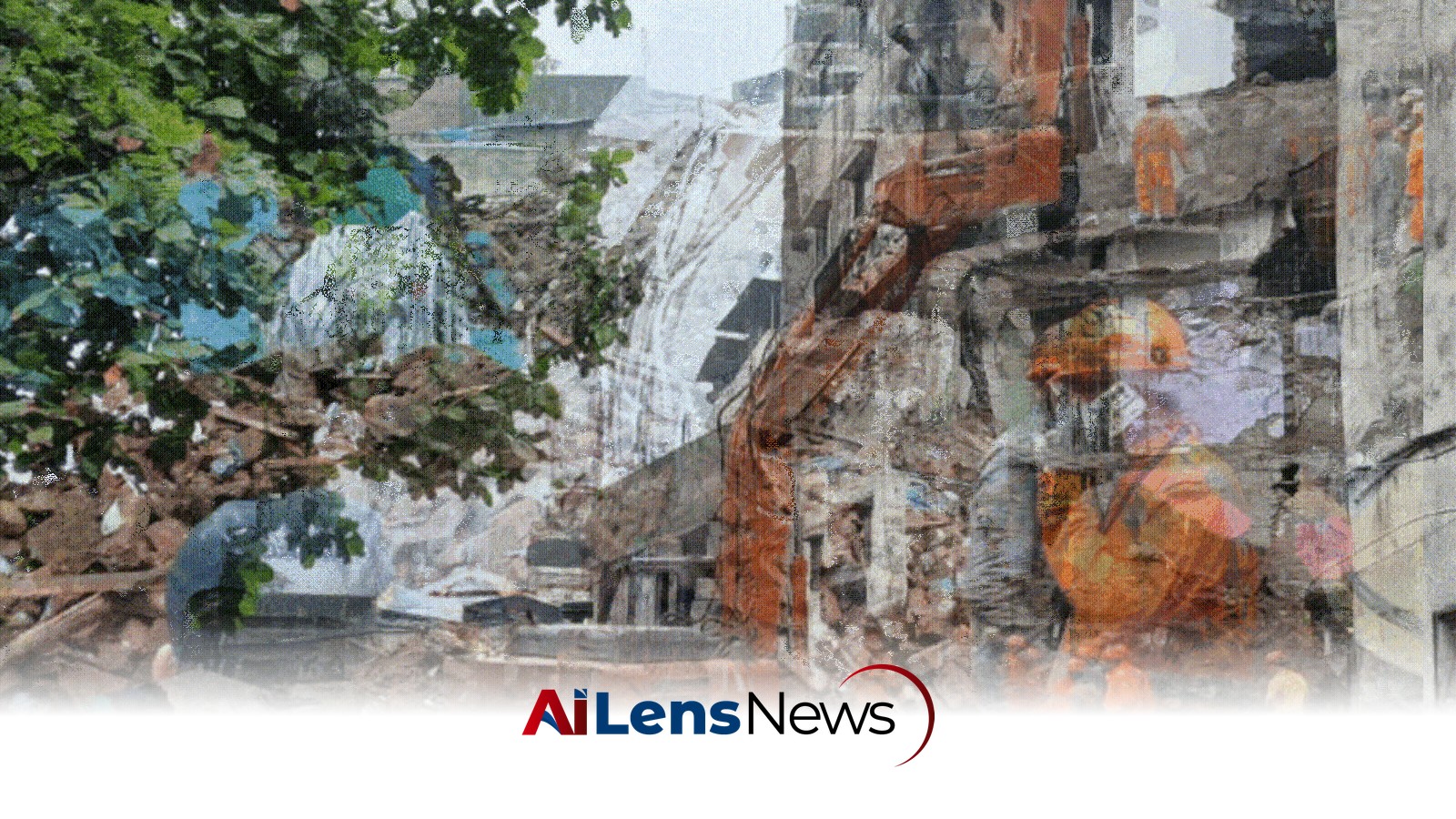


A four-storey building in Bhiwandi collapsed, killing at least nine people. Rescue operations are underway as more individuals are feared trapped beneath the debris.
New Delhi, India Jul 31, 2026 ALN: A portion of a four-storey building in Bhiwandi, located in Maharashtra's Thane district, collapsed late Thursday night, resulting in the tragic deaths of at least nine individuals. Preliminary reports indicate that residents heard loud cracking noises from the structure between 8 PM and 9 PM, prompting local residents to assist in evacuating several families. The situation escalated rapidly, highlighting the fragility of urban structures in densely populated areas.
This incident is a stark reminder of the ongoing challenges related to building safety in India, particularly in urban areas where rapid development often outpaces regulatory enforcement. Bhiwandi, a city that has seen significant population growth and industrial development, has been grappling with issues related to infrastructure and housing safety. The collapse of the Kohinoor Building in Balaji Nagar is not an isolated event; similar incidents have occurred in the past, raising concerns about the structural integrity of many buildings in the region.
Despite the local residents' efforts to evacuate families, the building's B Wing suddenly collapsed between 11 PM and 11:30 PM, trapping approximately 11 people under the debris. By 9 AM on Friday, rescue teams had recovered eight bodies, with fears that more individuals may still be trapped beneath the rubble. The urgency of the situation is compounded by the fact that building collapses can lead to significant loss of life, particularly in areas where buildings are overcrowded and emergency services may be stretched thin.
The rescue operations are currently being conducted by the National Disaster Response Force (NDRF) and the Bhiwandi Fire Brigade. These teams are trained to handle such emergencies and are equipped with specialized tools to navigate through debris. Nitin Chavan, a Fire Officer from the Bhiwandi Fire Brigade, stated, “According to local residents, six occupants of the building and five workers carrying out repair work were reported missing. So far, we have recovered eight bodies from the debris, and there is a possibility that more bodies may still be trapped underneath. Rescue operations are ongoing.” This statement underscores the precarious nature of the rescue efforts, as teams work against the clock to locate any survivors.
The Kohinoor Building, situated in a densely populated area, was previously declared dangerous by the Bhiwandi-Nizampur Municipal Corporation (BNMC). Despite this classification, repair work was underway at the time of the incident. This raises critical questions about the enforcement of building regulations and the accountability of local authorities in ensuring the safety of residents. The decision to conduct repairs on a structure deemed unsafe is particularly troubling and may warrant a thorough investigation into the practices of the BNMC and the contractors involved.
Officials believe several people may still be trapped beneath the rubble. Those initially reported missing include Shamji Pal (46), Santosh Pandey alias Munna (42), Miraj Sheikh (35), and several workers whose identities are yet to be confirmed. The presence of workers on-site at the time of the collapse highlights the risks faced by laborers in the construction and maintenance sectors, particularly in regions where safety regulations may not be strictly enforced. Emergency teams, including personnel from the Bhiwandi Fire Brigade, NDRF, and Bhoiwada Police Station, rushed to the scene immediately after the collapse, showcasing the rapid response capabilities of local emergency services.
According to a statement issued by the Thane Collectorate, search and rescue operations are being carried out with the assistance of trained sniffer dogs. Two ambulances and one JCB excavator have been deployed at the site as authorities continue their efforts to locate and rescue those trapped under the debris. The use of sniffer dogs is a crucial component of rescue operations, as they can detect human scent and help guide rescuers to potential survivors. The deployment of heavy machinery indicates the scale of the operation, as rescuers must carefully navigate the precarious situation to avoid further collapses.
As rescue operations and necessary administrative procedures continue, the exact cause of the collapse has not yet been officially determined. Investigations will likely focus on the structural integrity of the building, the quality of materials used in its construction, and the adherence to safety regulations during the ongoing repair work. The implications of this incident extend beyond the immediate tragedy, as it raises broader questions about urban planning, building safety, and the responsibilities of local government authorities.
In recent years, India has seen a significant rise in urbanization, leading to increased demand for housing and infrastructure. However, this rapid development has often come at the cost of safety, with many buildings constructed without proper oversight. The Bhiwandi incident may prompt calls for stricter enforcement of building codes and regulations, as well as a reevaluation of how urban development is managed in rapidly growing cities.
The emotional toll on the families affected by this tragedy is immeasurable. As they await news of their loved ones, the community must grapple with the aftermath of this disaster. Local leaders and community organizations may need to step in to provide support and assistance to those who have lost family members or their homes in this tragic event. The government may also face pressure to provide compensation and support to the victims' families, further highlighting the need for a comprehensive response to such disasters.
In conclusion, the collapse of the Kohinoor Building serves as a tragic reminder of the vulnerabilities present in urban infrastructure in India. As rescue operations continue and investigations are launched, it is crucial for local authorities to address the underlying issues that contribute to such disasters. Ensuring the safety of residents must be a priority, as communities across the country face similar challenges in the face of rapid urbanization.
To learn more about the latest developments in Crime & Law, stay updated with our exclusive reports and analyses on AiLensNews.

