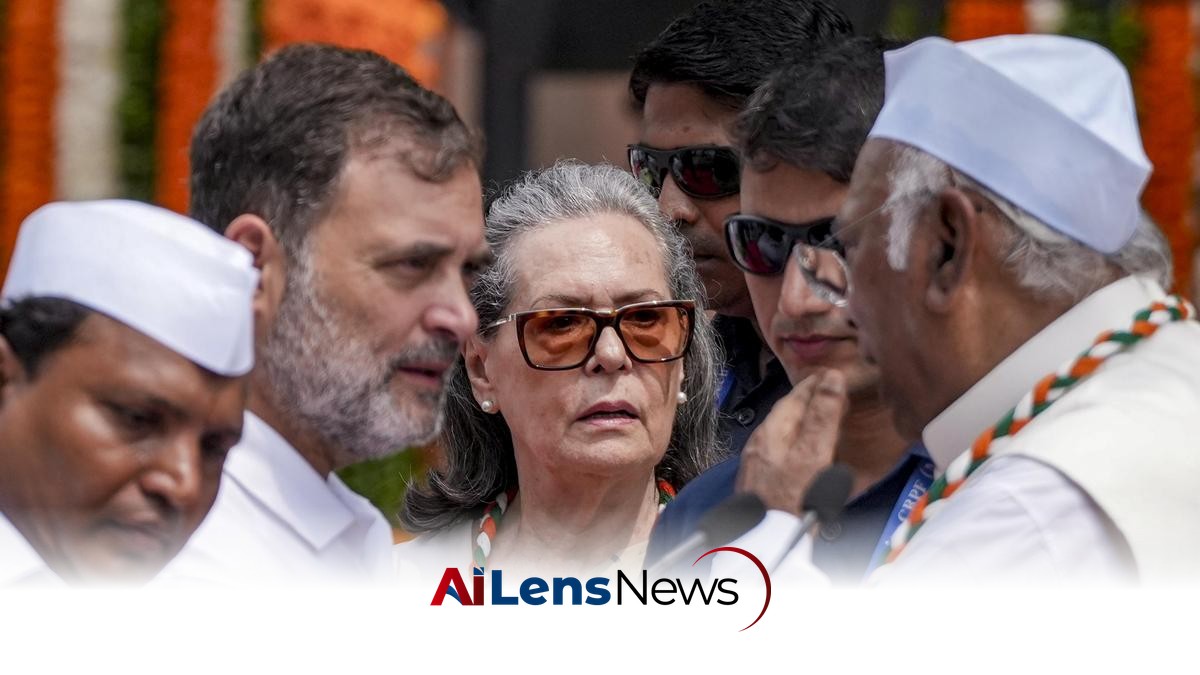


The BJP claims Sonia Gandhi attempted to halt the full rendition of Vande Mataram during a ceremony, while Congress refutes the charge, citing a request for seating.
New Delhi, India Aug 16, 2026 ALN: The rendition of the full six stanzas of Vande Mataram at the headquarters of the Indian Congress sparked controversy on August 15, 2026. This incident occurred when Congress Parliamentary Party (CPP) chairperson Sonia Gandhi was seen gesturing during the song, leading the Bharatiya Janata Party (BJP) to allege that she attempted to stop it. The Congress party has denied these accusations, asserting that the gestures were misinterpreted and taken out of context.
During a flag hoisting ceremony at Indira Bhawan, Ms. Gandhi gestured towards Congress president Mallikarjun Kharge while the song was being sung. A Seva Dal volunteer approached her to speak, which further fueled speculation about her intentions. The timing of the gesture, coinciding with the performance of a song, raised eyebrows and led to a flurry of accusations from the BJP, who have been vocal about their stance on symbols and patriotism.
Following this, Ms. Gandhi and Leader of the Opposition in the Lok Sabha, Rahul Gandhi, were observed engaged in an animated discussion with Seva Dal chief B.V. Srinivas and his predecessor, Lalji Desai. This interaction was interpreted by some as a sign of disrespect towards the song, igniting further debate among political commentators and the public alike.
A hot mic situation purportedly captured Mr. Gandhi stating that the Congress was singing “our version of Vande Mataram.” This comment was seized upon by BJP spokesperson Sudhanshu Trivedi, who criticized the Congress leadership, stating, “Today, on Independence Day, when Vande Mataram was sung in its entirety, the sight of Congress’s supreme leader Sonia Gandhi, super president Rahul Gandhi, and current president Mallikarjun Kharge conversing and displaying disrespect is utterly bizarre, ironic, and unfortunate.” This statement reflects the BJP's ongoing narrative that the Congress party is out of touch with sentiments and disrespectful toward India's cultural heritage.
Mr. Trivedi condemned the conduct of the Congress party’s top leadership and called for an apology to the nation, labeling it an insult to the song. The BJP’s reaction is indicative of the heightened sensitivities surrounding symbols and the importance of public displays of patriotism, especially on significant holidays like Independence Day.
In defense of the party, Congress’s communications chief Jairam Ramesh clarified that Ms. Gandhi was asking for a chair for Mr. Kharge, who had been standing for a prolonged period. “There is no question of a controversy over it,” he asserted, attempting to quell the uproar by providing context to the situation. This defense underscores the challenges political leaders face in public settings, where every gesture can be scrutinized and interpreted in various ways.
“On the advice of Gurudev Rabindranath Tagore, they decided that the initial stanzas of Vande Mataram would be sung at Congress sessions,” Mr. Ramesh noted, referencing a historical meeting attended by prominent leaders including Mahatma Gandhi and Jawaharlal Nehru. This historical context is significant as it highlights the Congress party's long-standing relationship with Vande Mataram, which has been a part of India's struggle for independence and is deeply embedded in the nation’s cultural and political fabric.
Mr. Ramesh also mentioned that the Congress had opposed a Bill that added criminal provisions for alleged insults while singing Vande Mataram, highlighting that this was discussed in Parliament for 16 hours. The opposition to this bill reflects the Congress party's stance on freedom of expression and its concerns regarding the potential misuse of such laws to stifle dissent or criticism of the government.
The controversy is significant in light of guidelines issued by the Union Home Ministry regarding the observance of the song, which were reiterated in July. The Prevention of Insults to Honour (Amendment) Act, 2026, was passed by Parliament, making attempts to stop or prevent the singing of the song an offense. This legislation aims to reinforce the importance of Vande Mataram as a symbol, akin to the anthem, Jana Gana Mana.
The law accords Vande Mataram a status equal to that of the anthem, Jana Gana Mana. Earlier, the Ministry of Home Affairs issued guidelines stating that all six stanzas of the official version should be rendered first whenever the song and anthem are performed together. This move underscores the government's commitment to ensuring that songs are treated with the utmost respect and are performed in their entirety during official events.
These guidelines mandate that the full six-stanza version is to be sung at key state occasions, including the arrival of the President, flag unfurling, and addresses by Governors. The Ministry has also directed that attendees at assemblies where the song is performed should stand to attention, reinforcing the expectation of reverence and respect for symbols during public events.
The incident has sparked a broader discussion about ism, patriotism, and the role of political leaders in representing sentiments. In a country as diverse as India, where multiple languages, cultures, and ideologies coexist, the interpretation of symbols can vary widely among different groups. The BJP's emphasis on a singular narrative of patriotism contrasts with the Congress's historical relationship with these symbols, which is rooted in a more pluralistic approach to identity.
The implications of this controversy extend beyond the immediate political landscape. It raises questions about how symbols are perceived and utilized in political discourse, particularly in the context of rising ism. The BJP's focus on patriotism as a political tool has been a hallmark of its governance, while the Congress party's historical ties to these symbols present a complex narrative that reflects the evolution of India's political identity.
As the political climate continues to evolve, incidents like this will likely remain focal points for debate and discussion, illustrating the intricate relationship between politics, culture, and identity in India. The ongoing discourse surrounding Vande Mataram and its significance will undoubtedly shape future interactions between political parties and their respective supporters, as well as influence public sentiment regarding pride and unity.
To learn more about the latest developments in Politics, stay updated with our exclusive reports and analyses on AiLensNews.

