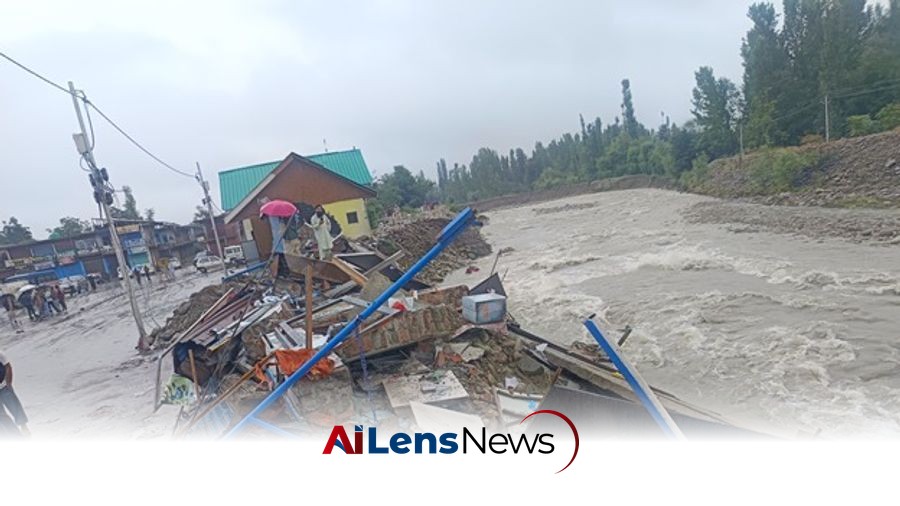


Traders in Beerwah seek urgent government assistance following severe flash floods that destroyed over 32 shops, leaving families without income.
New Delhi, India Jul 26, 2026 ALN: Owners of a shopping complex and traders who lost their businesses in the recent flash floods in Beerwah have urged the Jammu and Kashmir Government to provide adequate compensation, waive bank loans, and allow reconstruction of the damaged complex at the same site.
The shopping complex, located in the heart of Beerwah town, was completely destroyed after flash floods swept through the area, causing extensive damage to more than 32 shops and leaving dozens of families without a source of livelihood. The floods, which struck with little warning, have been attributed to a combination of heavy rainfall and the region's topography, which is prone to water accumulation and flash flooding during monsoon seasons.
Ghulam Mohammad Wani, one of the owners of the shopping complex, said the entire structure was reduced to ruins in the disaster. "The complex housed 32 shops, all of which have suffered extensive damage. We urge the government to provide suitable compensation and grant us permission to reconstruct the complex at the same location so that business activities can resume," Wani said. His appeal reflects a broader sentiment among the local business community, which is grappling with the immediate aftermath of the disaster.
Among the affected traders is Mohammad Akbar, whose mobile phone business was completely destroyed in the floods. He said the disaster has pushed many families into financial uncertainty. "More than 32 shops have been completely damaged. We had established these businesses to earn a livelihood and support our families. We hope the Jammu and Kashmir Government will provide financial assistance, fair compensation, and facilitate reconstruction so that we can restart our businesses. The government intervention is essential to help us recover from the losses, restore our businesses, and bring normalcy back," he said. This situation highlights the precarious nature of small businesses in the region, which often operate on thin margins and are vulnerable to natural disasters.
Another affected shopkeeper, Abdul Aziz Sofi, said his son's medical shop was among those badly damaged in the flooding. According to Sofi, more than 40 people were running businesses from the shopping complex before it was destroyed. "The families of the affected shopkeepers are facing a severe financial crisis as they have had no source of income for the past five days. They are anxiously waiting for government assistance, compensation, and permission to rebuild their shops at the same location," Sofi said. His comments underscore the urgent need for a coordinated response from local authorities to address the immediate and long-term needs of those affected.
The affected shopkeepers said immediate government intervention is essential to help them recover from the losses, restore their businesses, and bring normalcy back to their lives following the devastating flash floods. The economic implications of such disasters can be far-reaching, affecting not only the business owners but also their employees, suppliers, and the broader community that relies on these businesses for goods and services.
In the context of Jammu and Kashmir, the region has a history of facing natural disasters, including floods and landslides, particularly during the monsoon season. The topography, characterized by mountainous terrain and valleys, makes certain areas more susceptible to flooding. Over the years, the local government has implemented various measures aimed at improving disaster preparedness and response, but the effectiveness of these measures is often put to the test during extreme weather events.
The Jammu and Kashmir Government has a responsibility to ensure that affected communities receive timely support and resources to recover. This includes not only financial compensation but also the provision of infrastructure and services that can help businesses rebound. In the aftermath of such disasters, it is crucial for the government to assess the damage comprehensively and devise a recovery plan that addresses both immediate needs and long-term sustainability.
Furthermore, the plight of the Beerwah traders reflects a larger issue faced by small businesses in disaster-prone regions. Many small business owners lack adequate insurance coverage to protect against natural disasters, leaving them vulnerable to financial ruin. As a result, there is a pressing need for policy discussions around enhancing support systems for small businesses, including access to affordable insurance options and disaster recovery programs.
The community's resilience will also play a key role in the recovery process. Local organizations, non-profits, and community leaders can mobilize resources and support networks to help affected families during this challenging time. Initiatives that foster community solidarity, such as fundraising or volunteer rebuilding efforts, can provide critical assistance and help restore a sense of normalcy.
As the situation develops, it will be important to monitor the response from the Jammu and Kashmir Government and assess the effectiveness of the measures implemented to support the affected traders. The outcomes of this disaster will not only impact the immediate recovery of the Beerwah shopping complex but will also set a precedent for how similar situations are managed in the future.
In conclusion, the recent flash floods in Beerwah have left a significant mark on the local economy, particularly impacting small business owners who are now facing an uncertain future. The demand for government intervention highlights the crucial role of state support in disaster recovery, and the ongoing situation serves as a reminder of the vulnerabilities faced by communities in disaster-prone areas. As the affected traders await assistance, their plight underscores the need for comprehensive disaster management strategies that prioritize the resilience of local economies and the well-being of their residents.
To learn more about the latest developments in Crime & Law, stay updated with our exclusive reports and analyses on AiLensNews.

