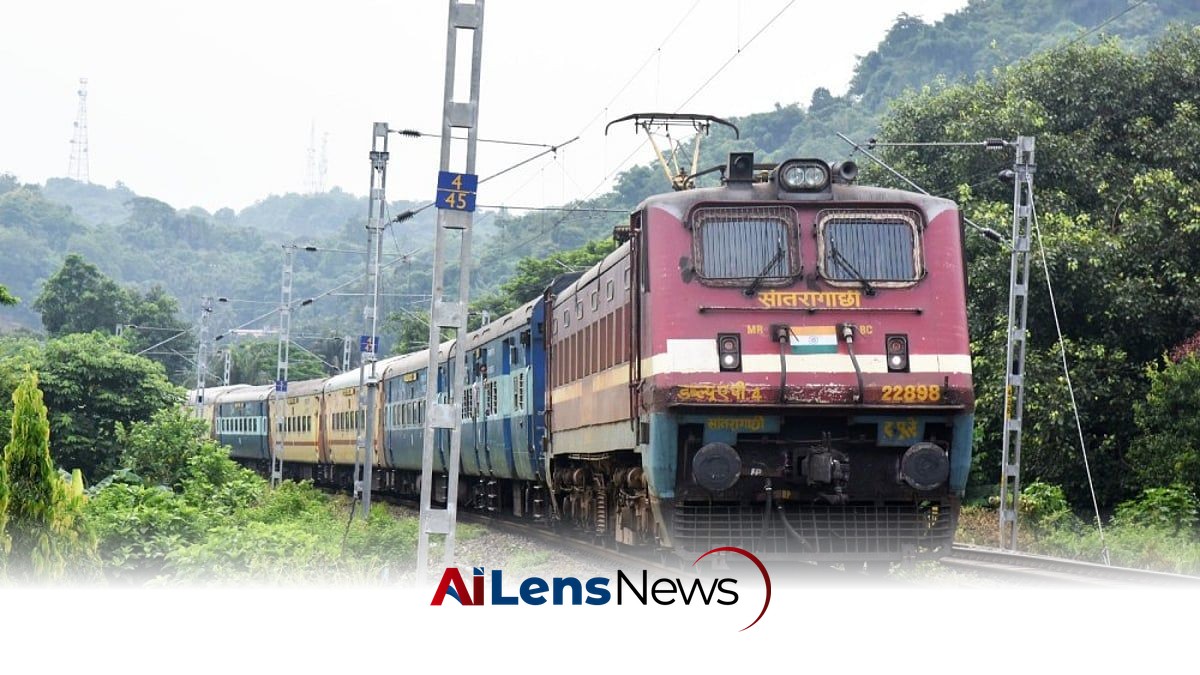


Severe flooding in Upper Assam due to the Dikhow River overflow has led the Northeast Frontier Railway to suspend services and divert several long-distance trains.
Dispur, India Jul 24, 2026 ALN: Severe flooding caused by the overflowing Dikhow River has disrupted railway operations in Upper Assam, prompting the Northeast Frontier Railway (NFR) to suspend train services on key sections and divert several long-distance trains. The flooding has raised significant concerns regarding the safety and reliability of railway transport in the region, especially as the monsoon season continues to affect various parts of India.
According to the NFR, continuous heavy rainfall in the upstream catchment areas has led to floodwaters inundating railway tracks and adjacent areas in and around Simaluguri town, which is located in Sivasagar district under the Tinsukia Division. The flooding situation has been exacerbated by the region's geographical vulnerability, as Assam is prone to seasonal floods due to its extensive river systems and heavy rainfall during the monsoon months. Water overtopped the railway track in the Simaluguri section, forcing authorities to suspend train movement between the Simaluguri–Namtiali and Simaluguri–Selenghat sections until further notice.
Railway officials reported that engineering teams, led by senior divisional officers, have been working round the clock to restore the affected sections. These teams are equipped with specialized machinery and resources to address the challenges posed by the flooding. Continuous monitoring and emergency restoration measures are being undertaken to resume normal train operations at the earliest. This involves assessing the integrity of the railway infrastructure, clearing debris, and ensuring that the tracks are safe for train movement before services can be resumed.
The impact of the flooding extends beyond the immediate disruption of train services. Long-distance trains originating from or bound for Dibrugarh and New Tinsukia have been diverted via the Rangiya–Rangapara–North Lakhimpur–Dibrugarh route. This diversion affects several popular trains, including the Rajdhani Express, Vivek Express, Avadh Assam Express, and Kamrup Express, as well as other mail and express services operating between Dibrugarh, New Delhi, Bengaluru, Chandigarh, Howrah, Mumbai, Kanniyakumari, and Rajendra Nagar on various dates between July 22 and July 27. The NFR has also short terminated and short originated the Guwahati–Dibrugarh Nagaland Express between Mariani and Dibrugarh during the affected period, as indicated in a press release.
In addition to the operational challenges, the flooding poses significant implications for passengers and freight transport. Travelers are likely to experience delays and cancellations, which can disrupt travel plans and impact those relying on the railway for transportation. Many passengers may seek alternative travel arrangements, leading to increased demand for road transport services, which may also be affected by the flooding. Freight services are similarly impacted, as disruptions in rail transport can lead to delays in the delivery of goods, affecting local economies and supply chains.
The northeastern region of India, including Assam, has a history of facing severe flooding, particularly during the monsoon season. The Brahmaputra River and its tributaries, including the Dikhow River, are known for their unpredictable behavior, often leading to annual flooding that affects millions of lives. The government and local authorities have been working on various flood management strategies, including the construction of embankments, better drainage systems, and improved forecasting methods to mitigate the impact of floods. However, the challenges remain substantial, as climate change continues to exacerbate weather patterns, leading to more intense and unpredictable rainfall.
In light of the current situation, the NFR has been proactive in communicating with passengers about the disruptions. The railway authorities have issued advisories and updates through various channels to keep travelers informed about the status of train services. Passengers are encouraged to check the latest information before embarking on their journeys and to consider alternative travel plans if necessary.
Moreover, the NFR has announced special trains for the Shravani Mela rush, an annual pilgrimage that attracts thousands of devotees to the region. This initiative aims to accommodate the increased passenger load during this festive period, demonstrating the railway's commitment to serving the public despite the ongoing challenges posed by the flooding. The railway's ability to adapt and provide services during such crises is crucial for maintaining connectivity and supporting the local economy.
As the situation evolves, it remains to be seen how quickly normal train operations can be restored. The NFR's efforts to address the flooding's impact will be closely monitored by both passengers and local authorities. In the meantime, the community's resilience and cooperation will be vital in navigating the challenges posed by the flooding and ensuring the safety of all those affected.
The flooding in Assam serves as a reminder of the region's vulnerability to natural disasters and the importance of effective disaster management strategies. The Northeast Frontier Railway's response to the situation highlights the critical role of rail transport in the region and the ongoing efforts to ensure the safety and reliability of train services amidst challenging circumstances. As recovery efforts continue, the focus will likely shift toward long-term solutions to mitigate the impact of flooding on infrastructure and communities in Assam.
Flooding in Assam is not a new phenomenon; it has been a recurring issue for decades, with the state experiencing heavy monsoon rains that lead to overflowing rivers, particularly the Brahmaputra and its tributaries. This annual occurrence often results in widespread devastation, displacing thousands, damaging crops, and disrupting essential services. The historical context of flooding in Assam underscores the need for robust infrastructure and preparedness measures.
In recent years, the state government has initiated various projects aimed at flood control and management. These include the construction of embankments along riverbanks, dredging of rivers to enhance water flow, and the establishment of early warning systems to alert communities about impending floods. However, the effectiveness of these measures has often been challenged by the sheer volume of rainfall and the rapid rise of river levels, which can overwhelm even the best-prepared systems.
Furthermore, the role of climate change cannot be overlooked. With changing weather patterns leading to increased rainfall intensity and frequency, the region's vulnerability to flooding has been exacerbated. Experts have warned that climate change may result in more severe weather events, making it imperative for local governments and agencies to adapt their strategies for disaster management and infrastructure development.
The social and economic implications of flooding are profound. For many communities in Assam, the railway serves as a lifeline, connecting them to larger markets and essential services. Disruptions in rail transport can hinder not only passenger travel but also the movement of goods, impacting local businesses and agricultural supply chains. The economic ripple effects of such disruptions can be felt across the region, affecting livelihoods and exacerbating poverty levels.
As the NFR continues to manage the current crisis, it also faces the challenge of balancing immediate operational needs with long-term infrastructure improvements. The railway network in the northeastern states has historically been underfunded and underdeveloped compared to other regions in India. There is a pressing need for investment in railway infrastructure to enhance its resilience against natural disasters. This includes upgrading tracks, improving drainage systems, and implementing advanced technology for monitoring weather patterns and track conditions.
In conclusion, the flooding in Assam highlights the intricate relationship between natural disasters, infrastructure resilience, and economic stability. The response of the Northeast Frontier Railway to the current flooding crisis is indicative of the broader challenges faced by the region in managing its transportation network amidst the realities of climate change and seasonal flooding. As communities work to recover and rebuild, the lessons learned from this situation may inform future strategies for disaster preparedness and infrastructure development in Assam and beyond.
To learn more about the latest developments in Transport & Mobility, stay updated with our exclusive reports and analyses on AiLensNews.

