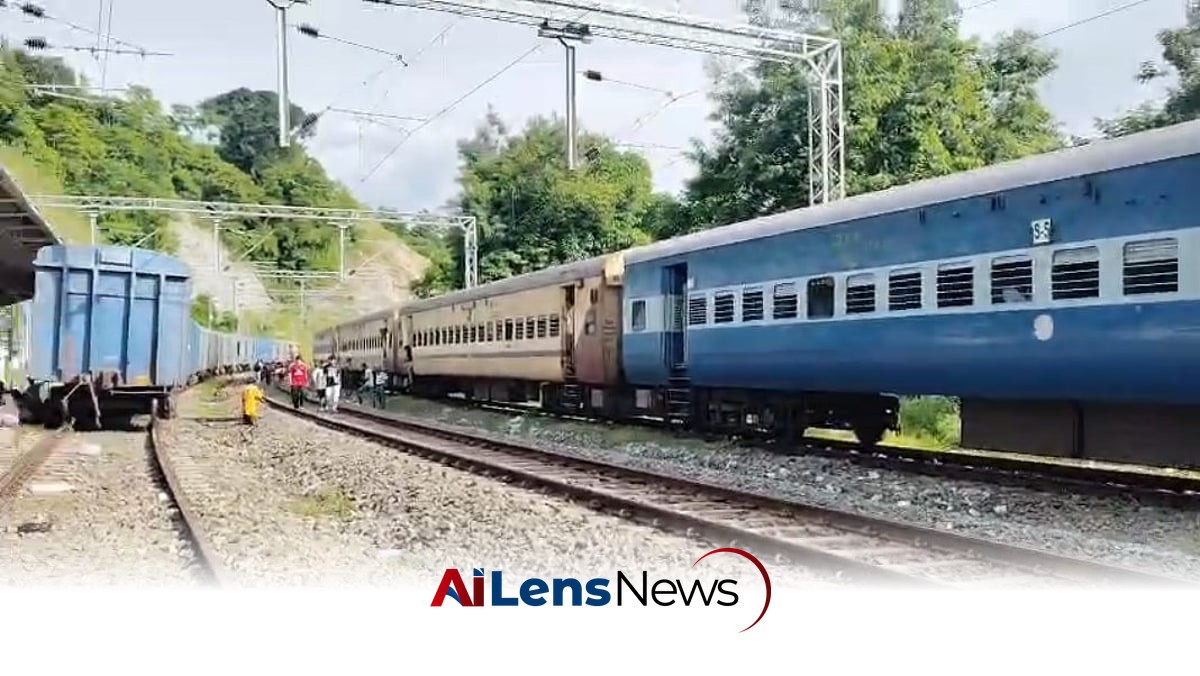


Heavy rainfall has caused a landslide at New Harangajao Railway Station in Assam, disrupting train services on the Lumding-Badarpur line.
Dispur, India Jul 24, 2026 ALN: Guwahati: The landslide caused by heavy rainfall has hampered train services along a stretch of hill railway tracks at Dima Hasao district's New Harangajao Railway Station on the Lumding-Badarpur line of the Northeast Frontier Railway (NFR) in Assam.
As per railway officials, the landslide took place on the night of 23rd July at kilometre 118/1–3, in the New Harangajao station yard. Almost 200 metres of line on both Lines 1 and 2 was heavily damaged, with both tracks curving as a result and not being suitable for trains to run on. Landslides are a common occurrence in hilly terrains, particularly during the monsoon season, which typically lasts from June to September in this region. The heavy rainfall that triggered this landslide is part of the annual monsoon pattern, which brings significant precipitation to northeastern India, often leading to infrastructure challenges.
Due to safety concerns, trains are not running on Lines 1 and 2 at this time. Trains continue to run on line 3 but are permitted to run at only 10 kmph to ensure the safety of passengers, causing delays to both passenger and freight services. The restrictions on speed and the limited operational capacity highlight the ongoing challenges faced by the NFR, which serves as a critical transport link in the region. The Lumding-Badarpur line is particularly vital as it connects various districts and facilitates the movement of goods and passengers, including essential supplies to remote areas.
The Northeast Frontier Railway has launched restoration work on a war footing to repair the damaged tracks and restore normal services at the earliest. Senior railway officials are closely monitoring the situation and supervising the repair work. Restoration efforts in such scenarios typically include clearing debris, assessing structural integrity, and replacing damaged tracks. The NFR's proactive approach is essential not only for minimizing disruption but also for ensuring the safety of rail operations in the future.
In addition to the immediate impact on rail services, the landslide has broader implications for the local economy and daily life. The disruption of train services can affect the transportation of goods, including perishables and essential commodities, leading to shortages and price increases in local markets. Furthermore, commuters who rely on these trains for daily travel may face significant inconveniences, prompting them to seek alternative modes of transport, which can be more costly and less reliable.
Local authorities and emergency services are also on high alert in the aftermath of the landslide. The risk of further landslides remains a concern, particularly if heavy rains continue. Communities in the Dima Hasao district, which is known for its picturesque landscapes and hilly terrain, must remain vigilant during this time. It is not uncommon for landslides to occur in succession during periods of heavy rainfall, and residents have been advised to stay informed about weather forecasts and potential evacuation measures.
The railway department stated that all efforts are being taken to restore the line safely and resume regular train services as soon as conditions permit. This includes engaging with local communities and stakeholders to ensure that restoration efforts are aligned with the needs of those affected. The NFR's commitment to safety and efficiency will be crucial in regaining public trust and ensuring the reliability of rail services in the region.
- Two Dead Bodies Found Near Badarpur Railway Gate
In a separate but related incident, two dead bodies were discovered near the Badarpur railway gate, raising concerns about safety in the area. While the circumstances surrounding these deaths are still under investigation, local authorities are looking into any potential connections to the recent landslide and its aftermath. The discovery of the bodies has added to the anxiety of residents already coping with the disruption caused by the landslide, as it highlights the potential dangers that can arise in such unstable environments.
The presence of railway infrastructure in hilly regions like Assam poses unique challenges, and the NFR has been making efforts to enhance the resilience of its operations against natural disasters. This includes investing in better drainage systems, regular maintenance of tracks, and employing advanced technology for early warning systems. However, the unpredictable nature of weather patterns, exacerbated by climate change, continues to pose significant risks.
As the situation develops, it will be crucial for the NFR, local government, and emergency response teams to work collaboratively to address both the immediate and long-term impacts of this landslide. The restoration of rail services is not just a logistical challenge but also a vital component of maintaining economic stability and community connectivity in the region.
In conclusion, the landslide on the Lumding-Badarpur line serves as a stark reminder of the vulnerabilities faced by infrastructure in hilly terrains, particularly during the monsoon season. As restoration efforts continue, the focus will need to remain on ensuring safety, minimizing disruption, and preparing for future challenges in this dynamic and often unpredictable environment.
The Lumding-Badarpur line, which is a part of the Indian Railways, plays a significant role in the socio-economic fabric of northeastern India. It not only connects various towns and cities but also serves as a crucial conduit for the transportation of goods, including agricultural products, timber, and other local commodities. The disruption of services on this line highlights the fragility of infrastructure in the face of natural disasters, particularly in regions that are prone to extreme weather conditions.
The NFR has been actively working to improve the resilience of its network against such natural calamities. This includes enhancing the infrastructure to withstand the impacts of heavy rainfall and landslides, which are exacerbated by climate change. The railway authorities have been investing in research and development to implement innovative solutions that can help mitigate the risks associated with such events.
Moreover, the socio-economic implications of the landslide extend beyond immediate transportation issues. The disruption of train services can lead to increased costs for local businesses that rely on timely deliveries of goods. In rural areas, where access to markets is already limited, the interruption of rail services can have dire consequences for farmers and small enterprises. The potential for price hikes on essential commodities due to supply chain disruptions further complicates the situation, posing challenges for local consumers.
Local government officials have also expressed concern over the potential for increased traffic on alternative routes as commuters seek other means of transportation. This can lead to congestion on local roads, which may not be equipped to handle the increased volume of traffic. Additionally, the strain on local transport services can lead to higher fares and longer wait times for commuters, further impacting their daily lives.
In light of these challenges, community leaders have called for collaborative efforts between the railway authorities, local government, and residents to develop comprehensive disaster response strategies. This would not only address the immediate aftermath of the landslide but also prepare the region for future occurrences. Public awareness campaigns focusing on disaster preparedness and response can also play a crucial role in ensuring that residents are equipped to handle such emergencies.
As the NFR continues its restoration efforts, it is essential to prioritize safety and efficiency in the repair process. This includes conducting thorough inspections of the affected areas and implementing preventive measures to reduce the likelihood of future landslides. The railway authorities must also remain transparent with the public regarding the status of restoration work and any potential delays in services.
In conclusion, the landslide on the Lumding-Badarpur line serves as a significant reminder of the vulnerabilities faced by infrastructure in hilly terrains, particularly during the monsoon season. The ongoing efforts to restore services will require not only technical expertise but also a collaborative approach that involves local communities and stakeholders. By addressing the immediate impacts of the landslide while also planning for long-term resilience, the NFR can enhance the safety and reliability of rail services in this critical region.
To learn more about the latest developments in Transport & Mobility, stay updated with our exclusive reports and analyses on AiLensNews.

