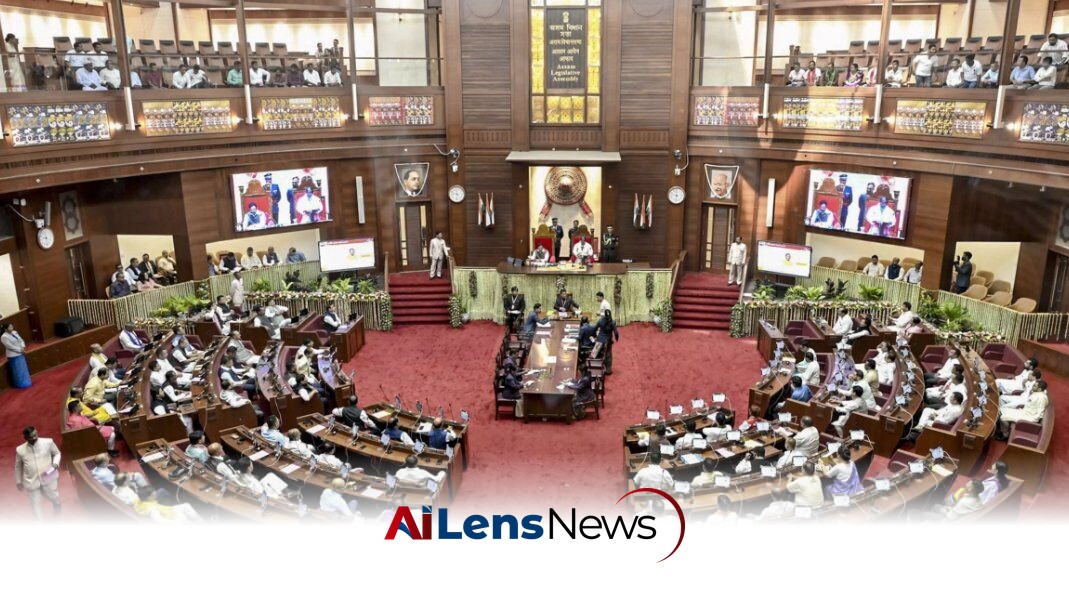


In the Assam Legislative Assembly, discussions focused on doctor shortages in rural hospitals, rehabilitation for evicted families, and flood relief funding.
Dispur, India Jul 24, 2026 ALN: The Assam Legislative Assembly Budget Session, which has been ongoing for eleven days, saw significant discussions concerning pressing issues such as the shortage of healthcare professionals in government hospitals, the rehabilitation of families evicted from government land, and the state's ongoing flood relief measures. These topics, which are critical to the welfare of the population, drew attention from various MLAs, who raised concerns and sought assurances from government ministers regarding corrective actions across these sectors.
One of the most alarming issues brought to the forefront was the acute shortage of doctors in the healthcare system, particularly in Lakhimpur district. Nowboicha MLA Jay Prakash Das emphasized the dire situation at the Telahi Model Hospital, which serves nearly three lakh residents. He pointed out that despite being a critical healthcare facility, the hospital suffers from a significant lack of medical personnel. "Except for one model hospital at Telahi in Nowboicha, there are virtually no doctors. Even when doctors are posted, they are often unavailable. Around three lakh people depend on this hospital. There are also several nearby char areas where pregnant women are often forced to deliver babies in boats while being taken to hospital. We urgently need doctors and a boat ambulance," Das stated, highlighting the inadequacies of the healthcare infrastructure in the region.
In response, Health & Family Welfare Minister Ashok Singhal acknowledged the issue, confirming that eight doctor positions at the Telahi Model Hospital remain unfilled. He assured the assembly that efforts are underway to address the vacancies, stating, "There are eight vacancies at Telahi Model Hospital. We will fill them as doctors become available under the National Health Mission. We have been holding district-wise meetings with MLAs to resolve healthcare issues, and I invite the Nowboicha MLA to meet us so that this matter can be addressed." This assurance reflects the government's recognition of the healthcare crisis and its commitment to resolving it.
Moreover, the issue of healthcare was not isolated to Lakhimpur. Makum MLA Sanjoy Kishan also raised concerns regarding the Sabjan Primary Health Centre, which is reportedly operating without a senior medical officer and is under-staffed. He elaborated, "The health centre has no senior doctor. A doctor from Philobari has been temporarily adjusted there, while only one of the two sanctioned resident doctors is available, and he too has gone for higher studies. We need a regular doctor at the health centre." The plight of these healthcare facilities underscores the systemic challenges faced by the state's medical infrastructure, particularly in rural and semi-urban areas.
Minister Singhal responded positively to these concerns, assuring the assembly that the government is making strides to mitigate the shortage of medical personnel. He stated, "The shortage of doctors has reduced significantly. We are recruiting around 1,500 doctors and establishing new medical colleges. As these institutions become fully operational, healthcare services will improve further. Around 40 doctors will be posted in the Makum constituency." This statement indicates a proactive approach by the government to bolster the healthcare workforce, which is critical for improving health outcomes in the state.
Aside from healthcare, the assembly also addressed the sensitive issue of rehabilitation for families evicted from government land. Congress MLA Zubair Anam Mazumdar from the Algapur–Katlicherra constituency raised concerns regarding the demolition of 522 houses after eviction notices were served, with many families asserting that they had resided there since 1965. He questioned the government's stance on rehabilitation, asking, "The eviction was peaceful, and people vacated after receiving notices. But when we sought information on rehabilitation, we were told there is no policy for rehabilitating those evicted from unauthorized occupation of government land. The courts have repeatedly emphasized rehabilitation for weaker sections. If that is the position, who is wrong, the government or the courts?" This inquiry highlights the complex interplay between legal frameworks, government policy, and social justice issues in Assam, particularly concerning marginalized communities.
In response, Revenue and Disaster Management Minister Keshab Mahanta clarified that the evictions were conducted on protected forest land, where 516 families had been identified as illegal occupants. He stated, "Out of the 516 families, 283 submitted applications stating that they are landless. Under the law, genuinely landless families may be allotted land if they fulfill the eligibility criteria. However, there is no separate rehabilitation policy for people evicted from illegal occupation of protected forest land." This clarification raises important questions about the government's responsibility to provide for those who find themselves displaced due to legal actions against illegal land occupation.
When Mazumdar pressed for a timeline regarding land allotment for eligible families, Mahanta responded that such processes depend on both the eligibility of the applicants and the availability of land. He remarked, "If they satisfy the eligibility conditions, including being genuinely landless, and suitable government land is available, they will receive land." This statement indicates a cautious approach by the government, balancing legal considerations with the need for humanitarian assistance.
The assembly also scrutinized the state's flood response, which has been a recurring issue in Assam, particularly during the monsoon season. Congress MLA Jakir Hussain Sikdar raised concerns about the adequacy of financial assistance for districts in Upper Assam that are currently grappling with the effects of flooding. He noted, "The district administrations often cite lack of funds for maintenance and relief work. I want to know whether Jorhat, Sivasagar and Charaideo have received adequate allocations during the present floods." This question reflects the ongoing challenges faced by the government in managing disaster response and ensuring timely support for affected communities.
In his response, Mahanta assured the assembly that the government has already allocated additional funds to assist the affected districts. He stated, "Jorhat had an advance of about Rs 66 lakh, and we released another Rs 1 crore two days ago. Sivasagar had around Rs 1.9 crore, and an additional Rs 4 crore has been sanctioned. Charaideo had an advance of Rs 56 lakh, and we have released another Rs 4 crore. We have also allotted 1,000 metric tonnes of rice, with more supplies being arranged. Under the Chief Minister's initiative, relief packages are being prepared in Guwahati, Dibrugarh and Tinsukia for direct distribution in flood-affected areas." This response indicates a proactive approach by the government to address immediate needs arising from the flood crisis, although the effectiveness of these measures will depend on timely implementation and monitoring.
Throughout the Question Hour, the rehabilitation of evicted families emerged as a significant topic of discussion, underscoring the complexity of land rights and social justice issues in Assam. The government maintained that families already owning land elsewhere would not be eligible for land allotment, while genuinely landless families would be considered based on eligibility criteria and the availability of government land. This stance raises further questions about the adequacy of existing policies and the need for a comprehensive approach to rehabilitation that considers the historical context of land occupation and the rights of displaced families. The assembly's discussions reflect broader societal concerns about equity, justice, and the role of government in addressing the needs of its most vulnerable citizens.
To learn more about the latest developments in Health & Public Safety, stay updated with our exclusive reports and analyses on AiLensNews.

