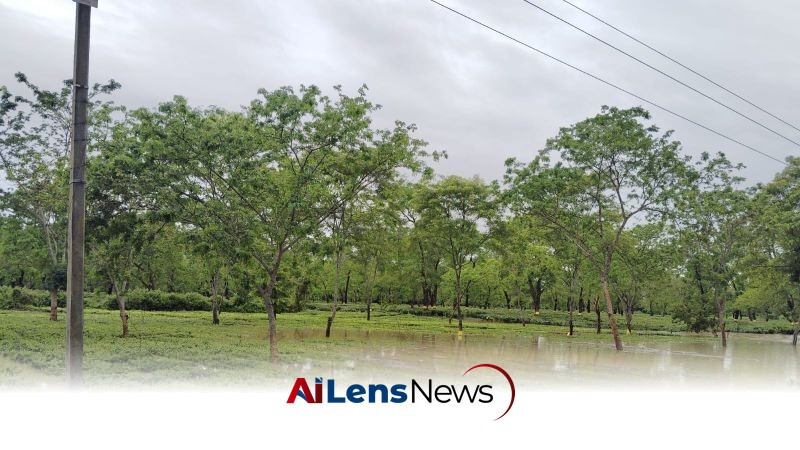


Severe flooding in Assam's Sivasagar district has cut off access to medical facilities, forcing a pregnant tea worker to deliver her baby inside a factory.
Dispur, India Jul 20, 2026 ALN: A pregnant tea garden worker was forced to deliver her baby inside a factory after floodwaters cut off access to medical facilities in Assam's Sivasagar district, as widespread flooding continued to devastate tea estates across Upper Assam on Monday. This incident highlights the dire circumstances faced by many in the region as they grapple with the effects of severe weather and inadequate infrastructure.
Describing the incident as one of the gravest consequences of the ongoing floods, the Tea Association of India (TAI) reported that the floodwaters made it impossible to reach a medical facility in time. The situation underscores the vulnerability of tea garden workers, who often live in remote areas with limited access to healthcare services. The tea industry in Assam employs a significant number of workers, many of whom are women, and their health and well-being are critical not only for their families but also for the broader economy of the state.
"In an extraordinary and distressing incident, a pregnant worker delivered a baby inside the factory premises under extremely challenging circumstances as floodwaters made it impossible to reach a medical facility in time,” the association stated. This incident is a poignant reminder of the broader humanitarian challenges that arise during natural disasters, particularly for marginalized communities who may already be facing economic hardships. The lack of timely medical intervention can have lasting implications for both the mother and the newborn, emphasizing the need for improved healthcare access in rural areas.
The association added that another expectant mother, who was on the verge of delivery, also required urgent medical attention, highlighting the severe humanitarian challenges confronting stranded tea workers. The situation is made worse by the fact that many tea workers and their families lack the resources to evacuate to safer areas when flooding occurs, leaving them vulnerable to the impacts of such disasters. This incident raises questions about the preparedness of the region’s healthcare system to respond to emergencies, particularly in remote areas where access to facilities is limited.
According to the Assam unit of TAI, the Nazira subdivision in Sivasagar, one of Assam's largest tea-growing belts, has been among the worst-hit after incessant rainfall and a cloudburst in neighbouring Nagaland triggered a sudden rise in rivers originating from the hill state. The geographical characteristics of the region, combined with climatic factors, have made it particularly susceptible to flooding. The tea estates, which are crucial for the local economy, are often located in low-lying areas, making them particularly vulnerable to rising water levels.
"The sudden surge of water in the rivers originating from Nagaland resulted in all major rivers flowing above the danger level. The breach of the embankment on Dorika River further aggravated the situation, causing extensive inundation across the tea estates of the Nazira region," the association explained. This breach, indicative of aging infrastructure, raises concerns about the long-term sustainability of tea production in the area, which is vital to Assam's economy. The situation is further complicated by the fact that many tea estates have been operating for decades, and their infrastructure may not be equipped to handle the increasing frequency of extreme weather events.
Among the affected gardens, Bamonpookrie Tea Estate has suffered the worst devastation. TAI reported that almost all tea estates in the region have been submerged, with workers' residential quarters, estate hospitals, schools, roads, and other essential infrastructure remaining under floodwaters. The destruction of these facilities not only disrupts daily life but also poses long-term challenges for recovery and rebuilding efforts. The loss of educational facilities, in particular, will have a lasting impact on the children of tea workers, potentially affecting their future opportunities.
"Thousands of tea workers and their family members have been compelled to leave their homes and seek refuge in factory buildings, managers' bungalows, and other elevated structures within the estates," it stated. The displacement of families can lead to a range of social issues, including increased vulnerability to health problems, loss of income, and educational disruptions for children. The psychological toll of such dislocation can also be significant, as families are forced to navigate the stress of uncertainty and loss.
Despite the adverse conditions, TAI noted that estate managements had extended all possible support to displaced workers. This includes providing food, shelter, and medical assistance where possible. However, the scale of the disaster may overwhelm local resources, necessitating further support from government and non-governmental organizations. The local administration's capacity to respond effectively is crucial, and collaboration with various stakeholders will be essential to address the immediate needs of the affected populations.
The association also praised the response of the district administration. "The Tea Association of India also acknowledged and sincerely appreciated the prompt response of the Sivasagar district administration, which coordinated rescue operations, facilitated the evacuation of stranded persons, and ensured timely medical assistance for those in need," it added. The effectiveness of such responses is crucial in mitigating the impacts of natural disasters, and timely intervention can save lives and reduce suffering. The coordination between government agencies and community organizations will be vital in ensuring that aid reaches those who need it most.
Meanwhile, the Sivasagar District Agriculture Department has activated a 24x7 Flood Control Room to document crop and agricultural losses. Farmers have been urged to report damage through the helpline numbers 94357 09414, 69008 72364, 93652 14638, and 94012 08784. This initiative aims to assess the extent of agricultural damage, which is significant in a region where agriculture and tea cultivation are the primary sources of livelihood. The assessment of losses will be critical for planning recovery efforts and determining the support needed for affected farmers.
The flooding in Sivasagar is part of a broader pattern of extreme weather events linked to climate change, which has been impacting Assam and other northeastern states in India. The region has experienced increasing rainfall and erratic weather patterns, leading to more frequent and severe flooding. This situation raises questions about the resilience of local communities and the need for improved infrastructure to withstand such events. The increasing unpredictability of weather patterns necessitates a reevaluation of disaster preparedness strategies and infrastructure investments to enhance community resilience.
Additionally, the economic implications of the flooding are profound. Assam's tea industry is a crucial part of the state's economy, contributing significantly to employment and exports. Disruptions caused by flooding can lead to decreased production, affecting not only the workers but also the broader economy. The long-term recovery of the tea estates will depend on the coordinated efforts of the government, industry stakeholders, and local communities. The economic fallout from such disasters can lead to increased poverty levels and exacerbate existing inequalities, particularly for the most vulnerable populations.
In conclusion, the incident of a pregnant tea worker delivering her baby in a factory due to flooding in Sivasagar serves as a stark reminder of the vulnerabilities faced by those living in flood-prone areas. The ongoing crisis highlights the urgent need for improved disaster preparedness, infrastructure investment, and support for affected communities to build resilience against future climate-related challenges. The situation calls for a comprehensive approach that includes not only immediate relief efforts but also long-term strategies to address the root causes of vulnerability in these communities. Building resilience requires collaboration between government, civil society, and the private sector to create sustainable solutions that can withstand the impacts of climate change and ensure the well-being of all residents.
To learn more about the latest developments in Health & Public Safety, stay updated with our exclusive reports and analyses on AiLensNews.

