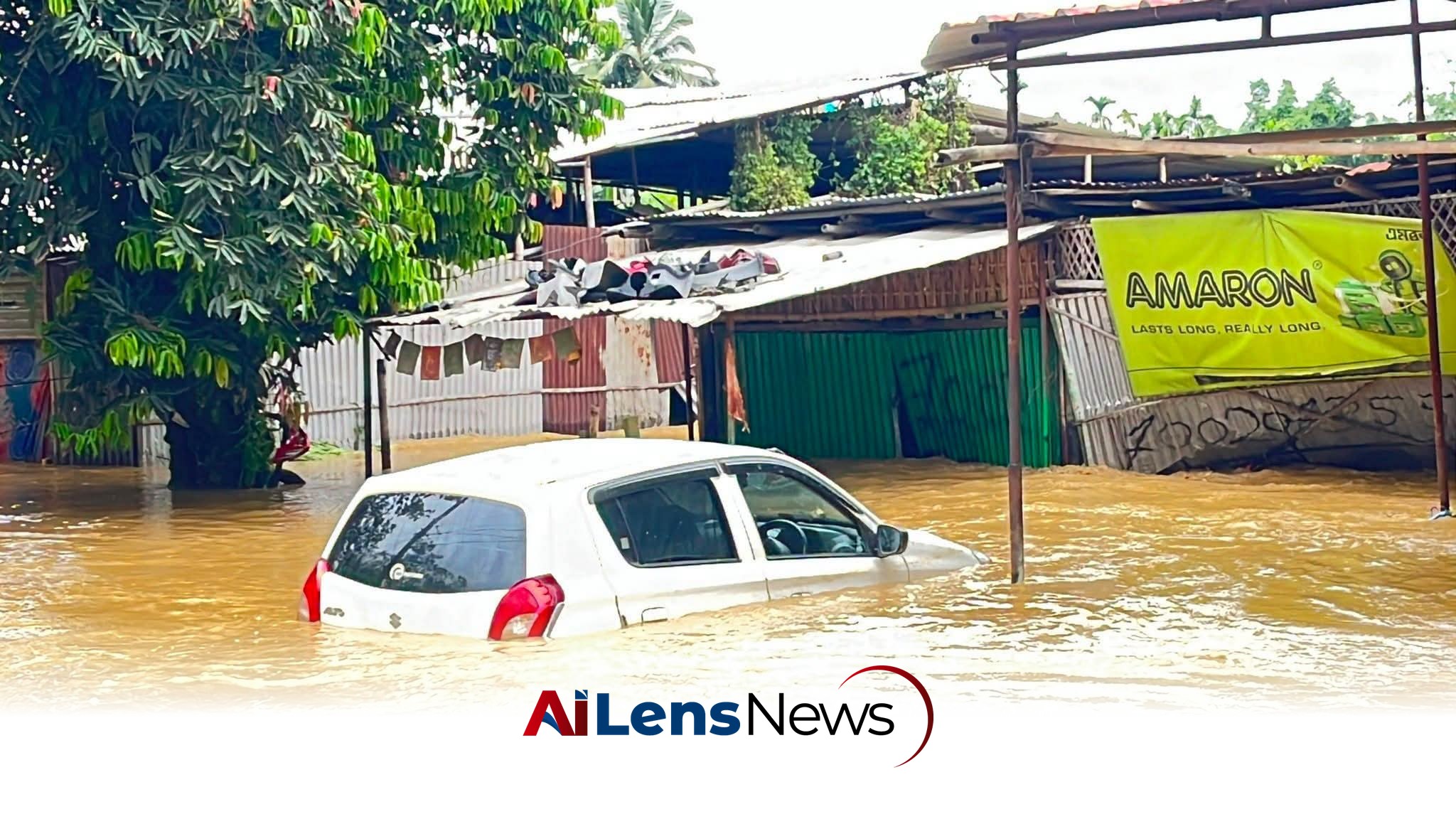


Heavy rainfall has led to the submersion of NH-37 in Assam, causing significant traffic disruptions and affecting essential supply chains.
Dispur, India Jul 20, 2026 ALN: Dibrugarh: The flood situation in Upper Assam worsened on Monday after a key stretch of National Highway-37 (renumbered as NH-715) near Teok was submerged, bringing road traffic to a near standstill and disrupting connectivity across the region.
Long queues of trucks, buses, private vehicles, and emergency service vehicles were stranded for several kilometres as floodwaters overtopped sections of the highway. Commuters reported being stuck for hours, while the movement of essential commodities and fuel supplies was also affected. This disruption highlights the fragility of the region's infrastructure in the face of natural disasters, especially in the monsoon season when heavy rainfall is common.
The Teok stretch is a crucial road corridor linking Jorhat, Sivasagar, Dibrugarh, Tinsukia, and other districts of Upper Assam. With the highway inundated, normal transportation has been severely disrupted, adding to the challenges faced by flood-affected residents. The economic implications are significant; the highway is a vital artery for trade and transport, and its closure can lead to shortages of goods and increased prices, which disproportionately affect the lower-income population.
The disruption comes amid relentless rainfall that has inundated large parts of Jorhat, Sivasagar, and neighbouring districts. Overflowing rivers, waterlogging in low-lying areas, and embankment breaches have compounded the crisis, prompting authorities to remain on high alert. Rescue and relief operations are underway in several flood-hit districts. The situation is exacerbated by the fact that many of these areas are prone to flooding, a recurring issue that local governments have struggled to manage effectively over the years.
Traffic authorities and the district administration have advised motorists to avoid unnecessary travel through the affected stretch and exercise caution until water levels recede. Officials said the situation is being monitored continuously, and efforts are underway to restore normal traffic movement as soon as conditions permit. The local government has also initiated public awareness campaigns to inform residents about safe travel practices during such emergencies.
The prolonged disruption has also affected commercial transport, with hundreds of goods-laden trucks stranded along the highway. Transport operators fear that if the situation persists, it could impact the supply chain of essential commodities across Upper Assam. This is particularly concerning for perishable goods, which may spoil if not delivered promptly. The economic ripple effects could extend beyond the immediate area, affecting markets and prices in other regions that rely on supplies from Upper Assam.
With more rainfall forecast for the region, authorities remain vigilant as floodwaters continue to threaten key transport infrastructure. The monsoon season in Assam typically lasts from June to September, with the peak of rainfall occurring in July and August. This annual cycle of flooding poses significant challenges for infrastructure maintenance and disaster preparedness in the region.
The Assam government has issued a temporary traffic advisory following the inundation of multiple stretches along the Guwahati-Dibrugarh highway in Jorhat and Sivasagar districts. Such advisories are crucial for ensuring the safety of motorists and minimizing further congestion on alternative routes.
According to the Dibrugarh district administration, vehicles travelling from Guwahati towards Dibrugarh are being diverted from Kaliabor via Tezpur, Biswanath Chariali, and the Bogibeel Bridge. The diversion will remain in place until floodwaters recede and normal traffic can safely resume on the affected highway sections. Bogibeel Bridge, a significant infrastructure project completed in 2018, serves as a lifeline for connecting the northern and southern banks of the Brahmaputra River, especially during flood situations.
Motorists have been urged to follow designated diversion routes, cooperate with the local administration and traffic police, and avoid unnecessary travel through flood-affected areas. The cooperation of the public is vital to ensure that emergency services can operate effectively and that the situation does not deteriorate further.
Rail connectivity in Upper Assam has also been severely affected after rising water levels in the Dikhow River inundated the Simalguri railway yard. The region's rail network plays a crucial role in transporting goods and passengers, making the impact of flooding on rail services particularly significant.
According to the Northeast Frontier Railway (NFR), engineering officials have suspended train operations on the Simalguri-Namti Ali and Simalguri-Seleng Hat sections as a safety measure. The suspension of services is a precautionary measure to prevent accidents and ensure the safety of passengers and railway staff. The disruption has led to the cancellation, diversion, short origination, and short termination of several trains, creating inconvenience for many travelers.
Among the major services affected are the Dibrugarh-New Delhi Rajdhani Express, Dibrugarh-Kanyakumari Vivek Express, Dibrugarh-Chandigarh Express, Kamrup Express, Nagaland Express, Intercity Express, and several passenger and DEMU services. The cancellation of these services not only affects individuals but also has broader implications for the economy, as many businesses rely on timely transportation of goods and personnel.
Two passenger special trains—the Lumding-Jorhat Town Passenger Special and the Ledo-Sivasagar Town Special—have also been affected. NFR has advised passengers to check the latest train status before commencing their journey. Services will resume only after water levels recede and the affected railway sections are declared safe for operations. The uncertainty surrounding train schedules can add to the stress and challenges faced by those impacted by the floods.
In light of the ongoing situation, it is essential for local authorities to evaluate the effectiveness of their flood management strategies and consider long-term solutions to mitigate the impact of future floods. This may involve investing in improved drainage systems, reinforcing riverbanks, and enhancing early warning systems to better prepare communities for such natural disasters. The current flooding serves as a reminder of the vulnerabilities faced by many regions in Assam and the ongoing need for proactive measures to safeguard lives and livelihoods.
To learn more about the latest developments in Crime & Law, stay updated with our exclusive reports and analyses on AiLensNews.

