

More
Checking your session
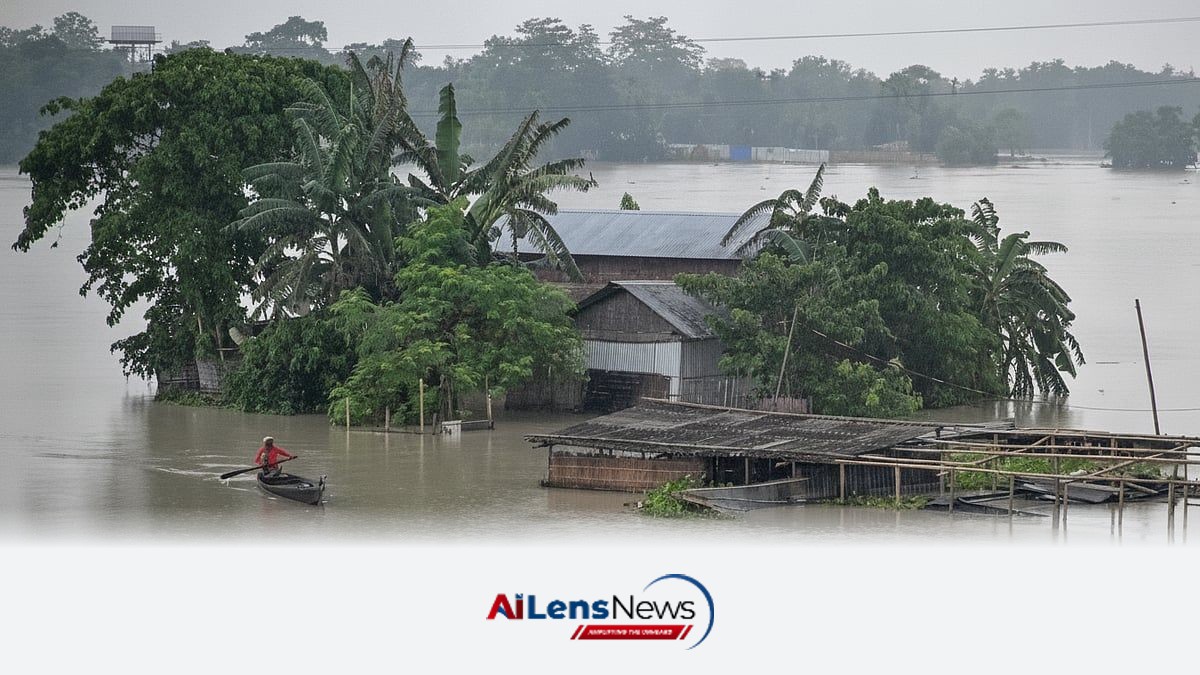



In a collaborative effort, various organizations in Assam have come together to promote peace and address pressing issues following recent floods and border disputes.
Dispur, India Aug 23, 2026 ALN: In a significant initiative aimed at strengthening peace, harmony, and mutual understanding between the people of Assam, the All Tai Ahom Students’ Union (ATASU), Konyak Union, Konyak Students’ Union, and KNSK held a joint press conference at Hotel Brahmaputra in Sivasagar on Saturday. This gathering is particularly noteworthy given the complex socio-political landscape of the region, which has been marked by both natural disasters and inter-community tensions.
ATASU president Basanta Gogoi addressed the press conference and highlighted the need for greater cooperation and dialogue in the wake of the recent flood disaster in Upper Assam and the prevailing situation in the region. The floods, which struck on July 19, have had devastating effects, displacing thousands and causing significant damage to infrastructure and livelihoods. The aftermath of such disasters often exacerbates existing tensions among communities, making initiatives like this one crucial for fostering dialogue and healing.
The organisations discussed a range of issues, including the Assam-boundary question, the historical ties between the Ahom and Konyak communities, the devastating floods of July 19, and concerns over illegal stone and coal mining and environmental degradation. The Assam-boundary question is a particularly sensitive topic, as it involves disputes over land that have historical roots and have led to conflicts in the past. By addressing these issues collaboratively, the groups aim to reduce misunderstandings and build a foundation for lasting peace.
Konyak Union president K Yamao Konyak expressed that the July 19 incident had caused deep sorrow and emphasised the importance of maintaining peace and communal harmony. He pointed out that although natural resources such as coal and stone belong to the Konyak region, their transportation to Assam has been ongoing, which raises questions about resource management and the rights of local communities. His comments reflect a broader concern among indigenous communities regarding the impact of resource extraction on their lands and livelihoods, as well as the need for equitable resource sharing.
The participants underscored the longstanding social and cultural links between the people of Assam and the Konyak community, which date back centuries. These ties are rooted in shared histories, intermarriage, and cultural exchanges that have enriched both communities. The recognition of these connections is vital, as it fosters a sense of unity and collective identity that can help bridge divides in times of crisis.
Following detailed deliberations, the four organisations adopted a set of joint resolutions aimed at promoting cooperation and finding peaceful solutions to outstanding issues. As per the resolutions, the organisations will submit a joint memorandum to the governments of Assam and , seeking appropriate measures to mitigate the prevailing disaster situation. This memorandum is expected to outline specific actions that can be taken to assist those affected by the floods, including relief measures and long-term recovery strategies.
They also resolved to undertake a joint survey of disputed areas along the Assam- border and examine other related issues. This survey is intended to provide a clearer understanding of the geographical and social dynamics at play, which could help de-escalate tensions and pave the way for constructive dialogue between the two states. The significance of this step cannot be overstated, as border disputes have historically been a source of conflict in Northeast India.
Another important decision was to constitute a joint Peace Committee comprising representatives of the ATASU Central Committee and the Konyak Committee to facilitate dialogue and coordination. This committee is expected to serve as a platform for ongoing discussions, allowing for the continuous engagement of both communities in peacebuilding efforts. By institutionalising dialogue, the committee aims to ensure that the voices of both the Tai Ahom and Konyak communities are heard and respected in future negotiations.
The organisations further resolved to promote cultural exchanges between the Tai Ahom and Konyak communities as a means of strengthening mutual understanding, friendship, and harmony, spreading a message of peaceful coexistence. Cultural exchanges can play a pivotal role in breaking down barriers and fostering empathy between diverse groups. By sharing traditions, festivals, and customs, both communities can celebrate their unique identities while also appreciating their shared humanity.
The meeting was attended by Konyak Union secretary Kaiba Konyak, KNSK president Ponglem Konyak, secretary Monglong Konyak, Konyak Students’ Union president Temwang Konyak, and secretary Khampai Konyak, among others. Their collective presence underscores the importance of unity among community leaders in addressing the challenges that face their regions. The joint initiative was viewed as a positive step towards strengthening people-to-people relations and fostering a peaceful and cooperative environment between Assam and .
In conclusion, the collaboration between these organisations reflects a growing recognition of the need for dialogue and cooperation in addressing both immediate challenges, such as the aftermath of natural disasters, and long-standing issues, such as border disputes and resource management. As Assam and continue to navigate their complex relationship, initiatives like this one may prove essential in building a foundation for lasting peace and mutual respect among their diverse communities.
To learn more about the latest developments in Local & Regional, stay updated with our exclusive reports and analyses on AILensNews.