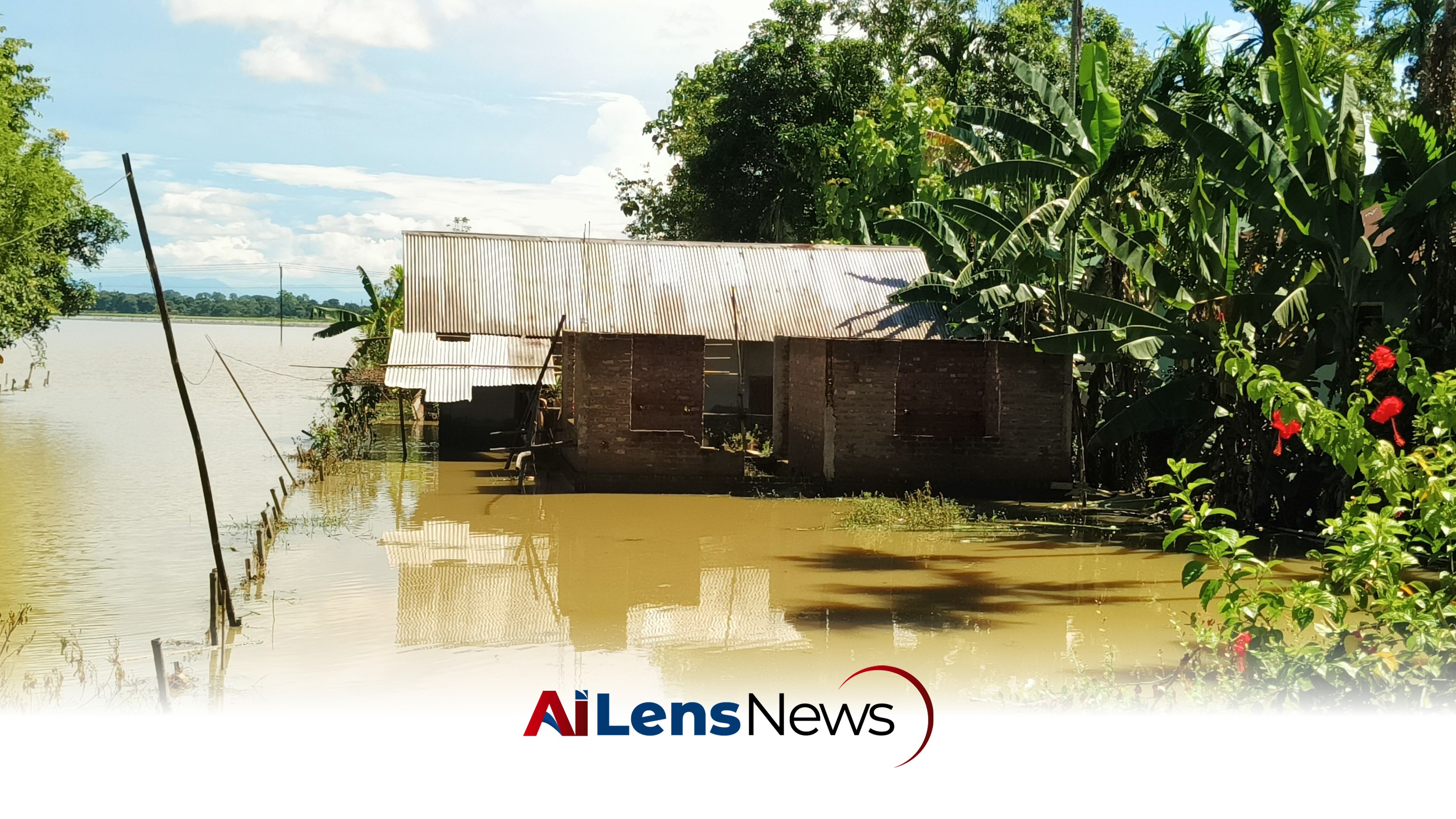


The flood situation in Assam has improved slightly, but the death toll has risen to 75. Over 3.32 lakh people remain affected across seven districts.
Dispur, India Jul 29, 2026 ALN: Dibrugarh: The flood situation in Assam has shown signs of improvement, but the disaster has claimed seven more lives, taking this year’s cumulative death toll to 75 from 68 reported earlier. The floods have impacted large swathes of the state, leading to significant human and economic losses, and have necessitated extensive relief and rehabilitation efforts from both the government and non-governmental organizations.
The latest DRIMS Assam Flood Report dated July 28 highlights the continuing challenges faced by the affected regions. Currently, seven districts—Sivasagar, Charaideo, Golaghat, Jorhat, Nagaon, Sonitpur, and Kamrup (Metro)—are grappling with the consequences of the floods. These districts have experienced varying degrees of inundation, with a total of 21 revenue circles and 622 villages remaining underwater. Approximately 3,32,639 people are reported to be affected, showcasing the scale of the crisis.
In terms of agricultural impact, around 45,341.98 hectares of cropland remain submerged, raising concerns about food security and the livelihoods of farmers in the region. The agricultural sector in Assam is vital to the local economy, and prolonged flooding can lead to significant losses in crop yields, exacerbating the already precarious economic situation for many families.
The report indicates that 115 relief camps and distribution centers are operational across the affected districts, highlighting the ongoing humanitarian response. As many as 32,477 individuals have sought shelter in these camps, where essential relief materials are being distributed. The government and various NGOs are working collaboratively to ensure that food, clean water, and medical assistance reach those in need.
Sivasagar has emerged as the worst-affected district, accounting for all seven flood-related deaths reported in the latest DRIMS bulletin. The Dhansiri (South) River at Numaligarh is still flowing above the danger level, although it is noteworthy that no river is currently above the highest flood level, suggesting a potential stabilization in the situation. Authorities are closely monitoring river levels and are prepared to respond if conditions worsen.
As floodwaters gradually recede in several areas, rescue, relief, and restoration work are ongoing. The government is prioritizing the safety and well-being of affected populations, with Chief Minister Himanta Biswa Sarma announcing a comprehensive relief and rehabilitation package for families impacted by the floods. This package includes enhanced ex gratia payments, cash assistance, educational support, and compensation for damaged property.
Under this relief package, families of those who died in flood-related incidents will receive the statutory ₹4 lakh ex gratia payment without the requirement of a post-mortem. Additionally, families of individuals who have been missing for more than 30 days will also be eligible for the ₹4 lakh ex gratia, contingent upon the prescribed legal process. This provision aims to provide some financial relief to families grappling with the loss of loved ones.
Furthermore, the Chief Minister announced that the Orunodoi assistance program, which provides financial aid to low-income families, will resume from August 1. Beneficiaries in Charaideo, Jorjat, Golaghat, and Sivasagar will receive ₹2,500 for the month, providing essential support at a critical time.
In a bid to further assist those impacted by the floods, the state government will provide an additional ₹5 lakh from the Chief Minister’s Relief Fund to the families of the deceased, supplementing the statutory ₹4 lakh compensation. This additional support underscores the government's commitment to addressing the immediate needs of those who have suffered the most.
More than one lakh severely flood-affected families are set to receive ₹15,000 each as immediate cash assistance to meet essential needs. This financial aid is crucial for families that have lost their homes, livelihoods, or access to basic resources due to the floods. The government is also ensuring that this assistance reaches a broad spectrum of affected individuals, including government employees, ASHA workers, Mid-Day Meal workers, and others who are typically vulnerable in such crises.
In a recent update shared on X, Chief Minister Sarma expressed gratitude for the solidarity shown by people across the state and the country during this challenging time. He stated, “As Assam battled an unprecedented flood, people from across the state and the country stood firmly with us. So far, ₹26,58,00,000 has been contributed to the Chief Minister’s Relief Fund. Every rupee will go towards rebuilding the lives of those affected.” This acknowledgment of support highlights the collective effort required to address the aftermath of such disasters.
Sarma emphasized that every flood-affected family in the worst-hit districts will receive ₹15,000 as immediate interim assistance. This support aims to alleviate the immediate financial burden faced by families and facilitate their recovery process. The provision of assistance to government employees and other workers reflects an inclusive approach to disaster relief, recognizing the diverse needs of the impacted population.
As the situation evolves, it is imperative for government agencies, humanitarian organizations, and community leaders to work together to ensure that recovery efforts are effective and sustainable. The implications of the floods extend beyond immediate relief; they also highlight the need for long-term strategies to mitigate the impact of future flooding events in Assam. This could involve investments in infrastructure, improved drainage systems, and community education on disaster preparedness.
In conclusion, while the flood situation in Assam is showing signs of improvement, the challenges remain significant. The loss of life and the widespread impact on communities underscore the urgent need for comprehensive disaster management strategies. The ongoing relief efforts, combined with community resilience and support, will be crucial in helping the affected populations recover and rebuild their lives in the aftermath of this disaster.
To learn more about the latest developments in Crime & Law, stay updated with our exclusive reports and analyses on AiLensNews.

