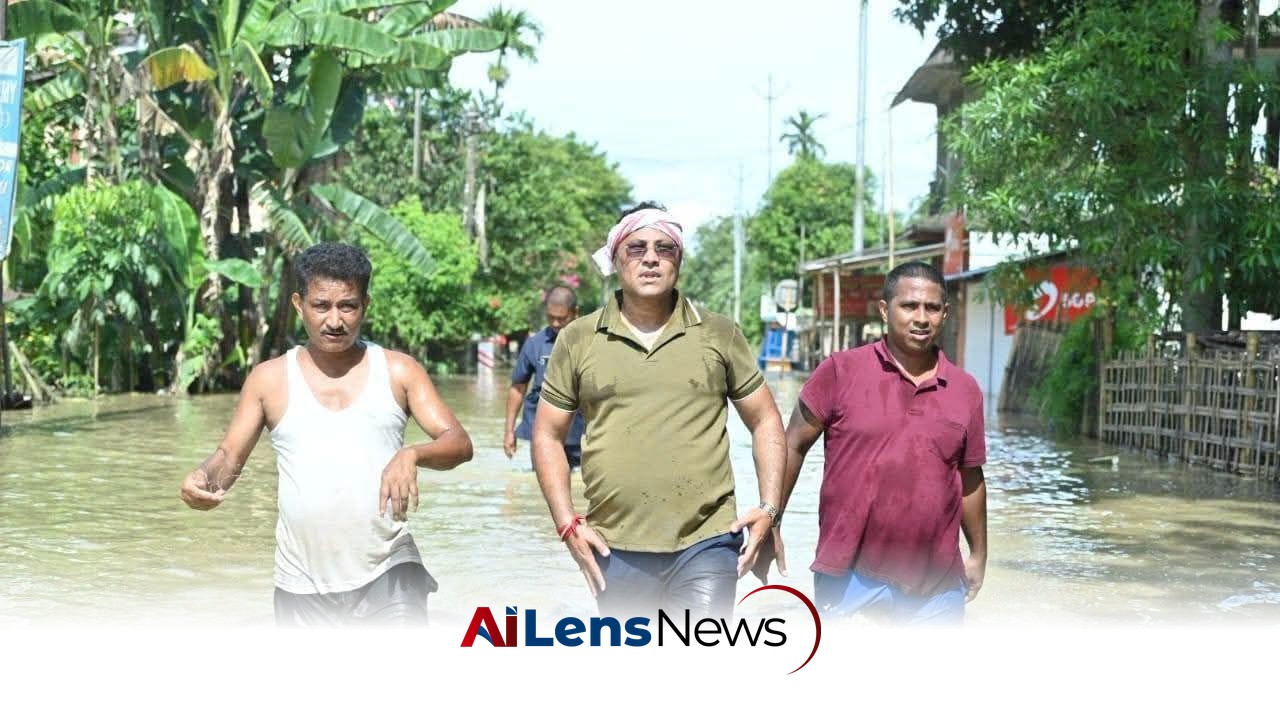


The flood situation in Assam remains dire, with 47 fatalities and over 720,000 people affected across 11 districts, particularly in Sivasagar.
Dispur, India Jul 24, 2026 ALN: Dibrugarh: The flood situation in Assam has escalated into a humanitarian crisis, as the death toll has tragically risen to 47. Over 720,000 individuals have been affected across 11 districts, with significant impacts on local communities and infrastructure. The floods have been attributed to a cloudburst in the neighboring state of Nagaland, which has led to unprecedented rainfall and subsequent flooding in Assam.
The affected districts include Karbi Anglong, Golaghat, Charaideo, Kamrup, Sivasagar, Jorhat, Dibrugarh, Nagaon, Dhemaji, Hojai, and Kamrup (Metro). Among these, Sivasagar has emerged as the worst-hit district, with a staggering 392,195 individuals affected by the floods. Following Sivasagar, Charaideo has reported 110,755 affected individuals, Jorhat 97,690, Golaghat 25,591, and Dibrugarh 13,390.
The Assam State Disaster Management Authority (ASDMA) has reported that a total of 643,350 people across 35 revenue circles and 889 villages remain affected by the floods. The extent of the devastation is evident in the displacement of families, with 103 relief camps currently sheltering 24,124 displaced individuals and 255 relief distribution centers operational to provide aid. Furthermore, approximately 25,375 hectares of cropland have been inundated, posing a significant threat to local agriculture and food security.
Despite some areas experiencing a slight receding of water levels, the situation remains critical, particularly in Sivasagar. Reports indicate that while some relief efforts are underway, challenges persist, particularly in accessing clean drinking water. An official stated, "The situation in Sivasagar remains critical. In some areas, the water level has receded, but people are facing immense problems. The Sivasagar district administration has been providing relief to the flood victims. Drinking water shortages have been reported in some areas." This highlights the ongoing struggle for basic necessities in the wake of the disaster.
In response to the crisis, Assam Chief Minister Himanta Biswa Sarma has been actively engaging with national authorities. In a post on X, he mentioned receiving a call from the Union Home Minister, Amit Shah, who indicated that an inter-ministerial central team would soon visit Assam to assess the extent of the damage and determine the necessary Central assistance for rebuilding livelihoods. Sarma expressed gratitude for the support extended by the Union government, emphasizing the collaborative effort required to address the devastating impact of the floods.
During a visit to a relief camp at Komarbondha in Golaghat district, Chief Minister Sarma reiterated the urgency of the situation, stating that officials from various Union ministries would arrive in Assam soon to conduct damage assessments. This proactive approach aims to ensure that the state receives the necessary resources and support to recover from this calamity.
The ongoing rescue operations are being conducted by the National Disaster Response Force (NDRF), State Disaster Response Force (SDRF), as well as the Army and Air Force. Local authorities, including Assam Cabinet ministers Bimal Borah and Susanta Borgohain, have also been involved in assisting with the rescue efforts. Their presence underscores the importance of a coordinated response to the crisis, which has put immense strain on the affected communities.
One particularly poignant account comes from Nilima Tayeng, a 42-year-old resident of Janzimukh village in Dibrugarh, who has been living in fear and anxiety since floodwaters inundated her home. The Burhidihing River, which has overflowed due to heavy rainfall in parts of Arunachal Pradesh, has left the village, which consists of 99 families and a population of 575, largely submerged. "We are facing a lot of problems after floodwaters entered our village. The entire village has been submerged. We have received relief materials, but they are not sufficient for our family. We urge the government to look after us and provide us with more relief materials," she stated, reflecting the sentiments of many affected residents.
The situation in Janzimukh Gaon is indicative of a broader emergency across the district. Official figures reveal that 85 villages in Dibrugarh district have been impacted by the floods, affecting 13,390 individuals. Among these, 22 villages fall under the Dibrugarh West Revenue Circle, with Janzimukh Gaon being one of the hardest hit. The reliance on small country boats, locally known as "Tulunga Naon," for crossing floodwaters further illustrates the precarious conditions faced by residents as they navigate the aftermath of the disaster.
In addition to the immediate humanitarian concerns, the floods pose long-term implications for the affected regions. With vast areas of cropland submerged, the agricultural sector, which plays a crucial role in Assam's economy, could face significant setbacks. This raises questions about food security for local communities, particularly given the reliance on agriculture as a primary source of livelihood for many families in the region. The economic ramifications of the floods could extend beyond agriculture, impacting local businesses and employment opportunities, thereby complicating recovery efforts.
As rescue operations continue and relief efforts are mobilized, the need for a comprehensive disaster management strategy becomes increasingly apparent. This includes not only immediate relief measures but also long-term planning to mitigate the effects of future flooding. The government and relevant agencies will need to assess the vulnerabilities that led to such extensive damage and develop strategies to enhance resilience against similar natural disasters in the future.
In conclusion, the ongoing floods in Assam represent a multifaceted crisis that demands urgent attention and coordinated response efforts. As the situation develops, the resilience of the affected communities and the effectiveness of relief measures will be crucial in determining the path to recovery. The commitment of both state and central authorities to support the affected individuals will be vital in rebuilding lives and livelihoods in the aftermath of this disaster.
To learn more about the latest developments in Crime & Law, stay updated with our exclusive reports and analyses on AiLensNews.

