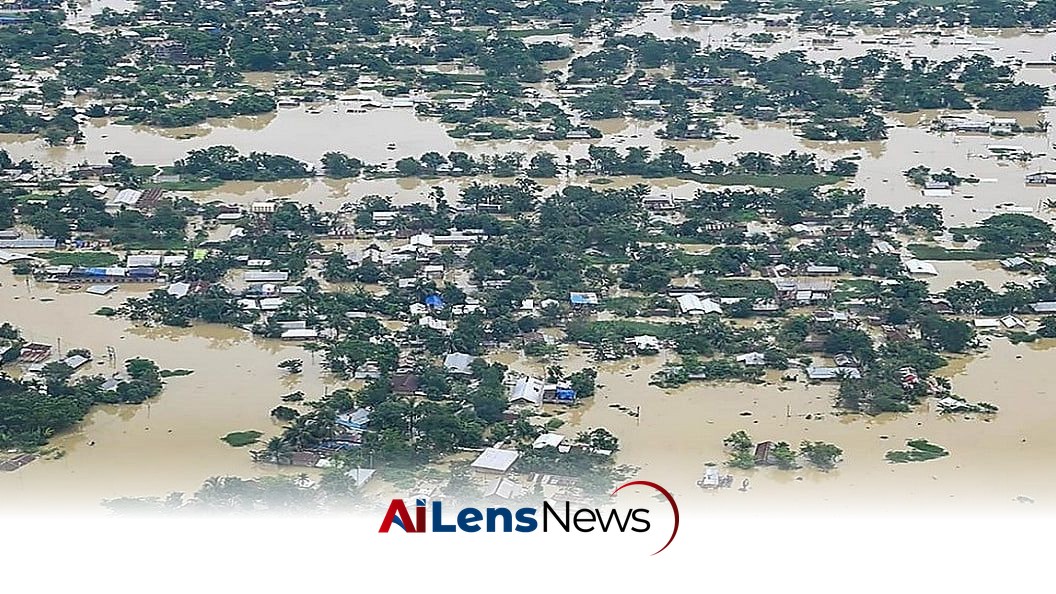


The Assam Government reports ongoing severe flooding affecting 25 districts, with significant loss of life and property.
Dispur, India Jul 22, 2026 ALN: Guwahati: The Assam Government's latest flood situation update (29th April – 21st July 2026) confirms that the state is still facing a serious flood situation, as 25 districts have been affected by the flooding, with over 7.27 lakh people impacted. The persistent flooding in Assam is not merely a seasonal event but a recurrent crisis that underscores the need for robust disaster management strategies and infrastructure improvements. This ongoing challenge highlights the vulnerabilities of communities living in flood-prone areas and raises questions about the adequacy of existing flood management systems.
According to the official data, 74 revenue circles and 1,700 villages are hit by floods in Assam. The state government has set up 95 relief camps which currently are hosting 18,574 people, and 469 relief distribution centres are distributing the necessary supplies to the affected. The establishment of these relief camps is a crucial step in providing immediate support to those displaced by the floods, offering not only shelter but also food and medical assistance. However, the sheer scale of the disaster means that these efforts, while essential, may only address the immediate needs of the population affected.
As per the report, 31 people have lost their lives due to floods and one due to urban flooding in Kamrup Metropolitan district. Three persons are still missing including from Dhemaji, Charaideo and Karbi Anglong. The loss of life in such natural disasters is a tragic reminder of the vulnerability of communities living in flood-prone areas, where early warning systems and timely evacuations can be critical in saving lives. The fatalities underscore the importance of not only immediate response but also long-term strategies that can prevent loss of life in future incidents.
The floods have also caused widespread property and livestock damage. 401 houses have been destroyed completely and 1,848 houses have been partially damaged. This level of destruction poses long-term challenges for recovery and rebuilding, as many families may find themselves without adequate shelter or resources to restore their homes. Additionally, 185 animals such as cattle, small livestock, and poultry have washed away and died during the flooding, which will have economic repercussions for the affected families who rely on livestock for their livelihoods. The loss of livestock not only affects food security but also the local economy, as many families depend on these animals for income and sustenance.
The affected districts are: Goalpara, Cachar, Lakhimpur, Dhemaji, Dibrugarh, Jorhat, Biswanath, Charaideo, Nalbari, Bajali, Chirang, Kokrajhar, Bongaigaon, Baksa, Sivasagar, Darrang, Sonitpur, Tinsukia, Udalguri, Golaghat, Nagaon, Karbi Anglong, Kamrup, Kamrup Metropolitan, and Hojai. The geographical diversity of these districts means that each area may face unique challenges in terms of flood management and recovery efforts. The topography, infrastructure, and local governance capacities vary widely, influencing the effectiveness of response measures. For instance, some districts may have better access to resources and infrastructure for relief distribution, while others may struggle with logistical challenges due to their remote locations or damaged transport networks.
The Assam Government continues to monitor the situation closely, with relief and rehabilitation efforts underway in the flood-affected areas. These efforts include not only the immediate distribution of food and medical supplies but also long-term rehabilitation plans that aim to restore normalcy in the affected regions. The government has been coordinating with various agencies and NGOs to ensure that aid reaches those who need it most. However, the coordination of relief efforts can often be hampered by bureaucratic hurdles and the sheer scale of the disaster, which can overwhelm local capacities to respond effectively.
In addition to the immediate relief efforts, there is a pressing need for a comprehensive strategy to address the underlying causes of flooding in Assam. Factors such as deforestation, unplanned urbanization, and climate change have exacerbated the frequency and intensity of floods in the region. The rapid pace of development in Assam has led to significant changes in land use, which can disrupt natural drainage patterns and increase runoff during heavy rains. Experts suggest that improving drainage systems, restoring natural waterways, and implementing sustainable land-use practices could significantly mitigate the impact of future floods. This includes reforestation efforts to stabilize soil and reduce runoff, as well as the construction of flood barriers and levees in vulnerable areas.
Furthermore, the seasonal nature of flooding in Assam, which typically occurs during the monsoon months, necessitates a proactive approach to disaster preparedness. The government and local communities must invest in early warning systems and community education programs that inform residents about evacuation routes and safety measures. Engaging local populations in disaster preparedness can enhance resilience and ensure that communities are better equipped to handle flooding when it occurs. Training local volunteers and establishing community response teams can also empower residents to take an active role in their own safety and recovery.
In the political arena, the BJP has lauded the Himanta-led administration for its round-the-clock flood relief and rehabilitation efforts in Assam. Political leaders often use such crises to bolster their standing with the electorate, highlighting their commitment to public welfare and effective governance. However, the effectiveness of these efforts will ultimately be judged by the speed and adequacy of the recovery process for those affected by the floods. The political response to natural disasters can often shape public perception and influence future electoral outcomes, making it crucial for leaders to demonstrate accountability and transparency in their relief efforts.
As Assam grapples with the ongoing flood situation, the focus will remain on both immediate relief and long-term strategies to prevent future disasters. The recent floods serve as a stark reminder of the challenges faced by the state and the urgent need for comprehensive disaster management policies that prioritize both human safety and environmental sustainability. Policymakers must also consider the socio-economic factors that contribute to vulnerability, ensuring that marginalized communities receive the support they need to recover and rebuild.
In conclusion, the floods in Assam have far-reaching implications not just for the immediate victims but also for the state’s economy, infrastructure, and future disaster preparedness. As the situation unfolds, it will be crucial for the government, civil society, and international organizations to collaborate effectively to address the immediate needs of those affected while also laying the groundwork for a more resilient future. The interplay of environmental, social, and political factors in disaster management will be key to ensuring that Assam can better withstand the impacts of flooding in the years to come.
To learn more about the latest developments in Health & Public Safety, stay updated with our exclusive reports and analyses on AiLensNews.

