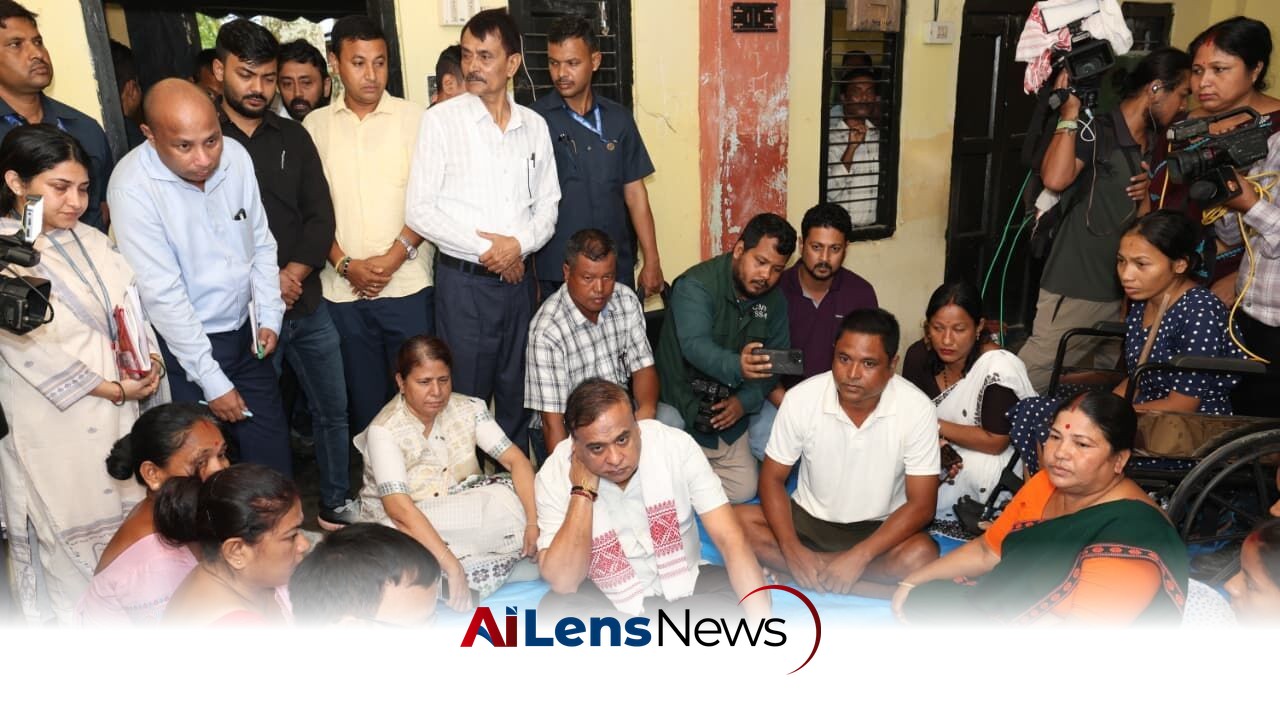


Chief Minister Himanta Biswa Sarma announces the start of flood rehabilitation efforts in Assam as waters recede, with relief kits and damage assessments underway.
Dispur, India Jul 26, 2026 ALN: With floodwaters showing signs of receding, Chief Minister Himanta Biswa Sarma announced on Saturday that the rehabilitation process in Assam would commence by August. This announcement comes after a series of devastating floods that have impacted the state, causing significant damage to infrastructure, agriculture, and the livelihoods of countless residents.
The floods, which are a recurrent natural disaster in Assam, have been exacerbated by various factors, including heavy monsoon rains and the overflow of rivers such as the Brahmaputra. The state, located in the northeastern part of India, experiences severe flooding almost annually, impacting thousands of families and displacing many from their homes. The government’s proactive approach to rehabilitation is crucial in ensuring that affected communities can recover and rebuild their lives.
Chief Minister Sarma informed that an inter-ministerial Central team arrived on Saturday to assess the extent of damage caused by the floods. This assessment is vital for determining the necessary resources and support required for effective rehabilitation. The presence of a Central team indicates the government's recognition of the need for a coordinated response involving both state and central resources.
During a media briefing following a Cabinet meeting, the Chief Minister stated that ministers from all line departments have been assigned the responsibility of evaluating the losses and initiating remedial measures. This comprehensive approach aims to ensure that all aspects of the disaster are addressed, from immediate relief efforts to long-term recovery strategies. The evaluation will likely include damage to infrastructure such as roads, bridges, and schools, as well as the impact on agriculture and local economies.
As part of the relief initiative, the government will provide a family kit of rations to affected families to help them manage their daily needs. These kits typically include essential food items such as rice, lentils, cooking oil, and other staples that families require for sustenance during the recovery period. The distribution of these kits is a critical component of the immediate relief efforts, aimed at alleviating the hardships faced by those displaced by the floods.
In his remarks, Sarma emphasized that all villages and localities impacted by the floods have been reached. This assertion is significant as it reflects the government's commitment to ensuring that no community is left behind in the relief efforts. The Chief Minister also urged those interested in contributing relief materials to affected families to provide new clothes instead of used ones. This request is rooted in the dignity of the affected individuals, as new clothing can provide a sense of normalcy and hope amidst the devastation.
Other essentials that can be contributed include phenyl, baby food, children’s clothing, sador mekhela (traditional attire), T-shirts, and educational kits like geometry boxes. These items are particularly important for families with young children, as they address both immediate needs and the continuity of education, which can be disrupted during such crises.
In addition to the flood rehabilitation efforts, the Cabinet approved an increase in the MBBS seat quota for students belonging to the Moran, Motok, Tai Ahom, Chutia, and Koch Rajbangshi communities by one seat. This decision reflects the government’s commitment to promoting educational opportunities for underrepresented communities, thereby fostering inclusivity in higher education.
A decision was also made to reserve two MBBS seats on an experimental basis for orphans. This initiative aims to support vulnerable populations and provide them with access to medical education, which can lead to better healthcare outcomes in the community in the long run.
Furthermore, wards of individuals residing outside the State due to their occupations will also be eligible to apply for seats in Assam's medical colleges, provided they have been residents of the State for the last three generations. This policy change recognizes the need to accommodate families who, due to various circumstances, may have moved away but still maintain strong ties to their home state.
The Cabinet also decided to waive stamp duty for women members of self-help groups, even if they opt to take loans in their personal capacity. This decision is likely aimed at empowering women economically and encouraging entrepreneurship among female members of the community, who often play a crucial role in managing family finances and household stability.
Additionally, the State Cabinet resolved to introduce service rules for Ayurveda doctors. This move is significant as it acknowledges the importance of traditional medicine in the healthcare system and aims to regulate and enhance the practice of Ayurveda, which has a long-standing history in India.
A decision was made to mandate the registration of agreements for sale deeds and powers of attorney within a specified timeframe to prevent property-related crimes. This measure is intended to enhance transparency and security in property transactions, which can often be fraught with legal and financial complications.
Lastly, the Cabinet meeting concluded with a decision to appoint a nodal person for the Orunodoi scheme in every legislative assembly constituency. The Orunodoi scheme is a flagship welfare program in Assam aimed at providing financial assistance to economically weaker sections of society. Appointing a nodal person will likely enhance the implementation and monitoring of the scheme, ensuring that benefits reach the intended recipients efficiently.
In conclusion, the announcements made by Chief Minister Sarma reflect a multifaceted approach to governance that seeks to address immediate challenges posed by natural disasters while also laying the groundwork for long-term social and economic development. The government's commitment to rehabilitation, education, and women's empowerment underscores its holistic vision for the future of Assam, particularly in the wake of the recent floods that have disrupted many lives.
To learn more about the latest developments in Crime & Law, stay updated with our exclusive reports and analyses on AiLensNews.

